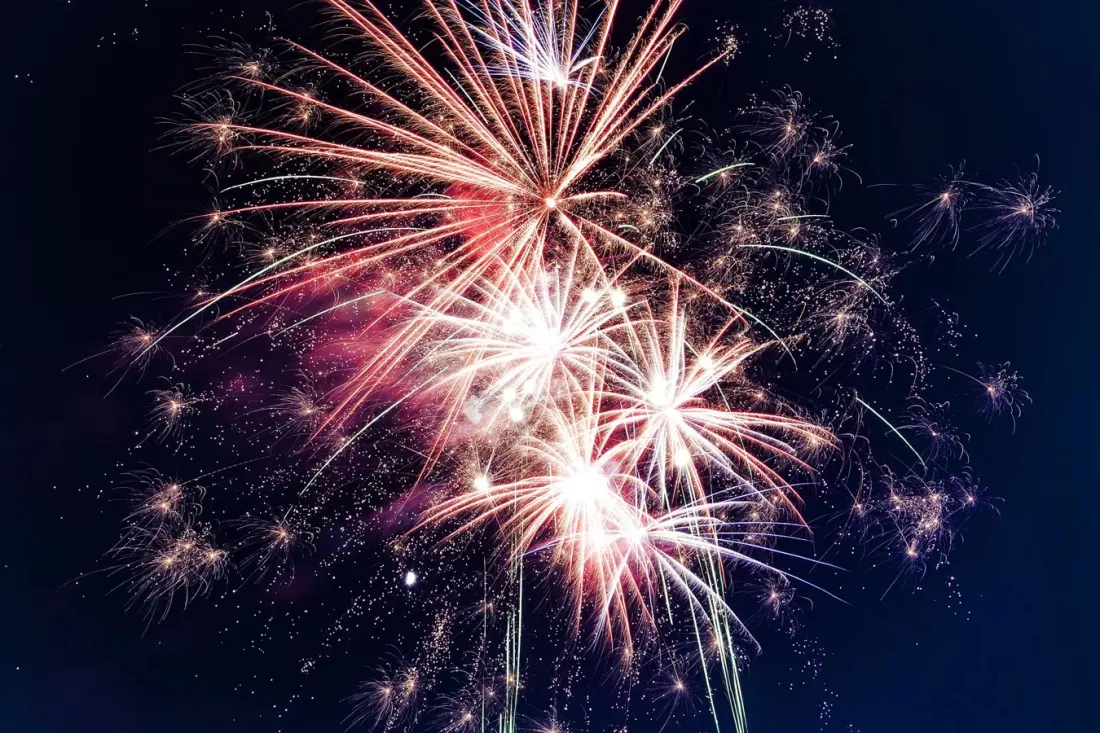
The morning after Diwali, New Delhi's air was barely breathable. Monitoring station data from the Mandir Marg area showed fine particulate matter (PM2.5) at 879 micrograms per cubic metre roughly eight hours after fireworks peaked — nearly 59 times the World Health Organization's recommended daily maximum. Levels were still dangerously high into the following morning, long after the celebrations ended.
India's Supreme Court had allowed only so-called green firecrackers, designed to emit less, but restrictions are routinely ignored during the festival. And fireworks are just one ingredient in a much larger recipe. India's environment ministry breaks down the capital's winter pollution roughly as follows: secondary particles formed in the atmosphere account for 27%, vehicle emissions about 23%, biomass burning (including agricultural stubble fires) around 20%, and industry — including coal-fired power plants — about 9%. In a metro area of more than 30 million people, the combined effect produces the thick seasonal smog Delhi is known for.
The stakes are high beyond hazy skies. A 2024 study in The Lancet Planetary Health linked air pollution to approximately 3.8 million deaths in India between 2009 and 2019, one of the starkest public health figures attached to the crisis anywhere in the world. Authorities have responded with restrictions on traffic and construction in recent weeks, though the deeper problem resists quick fixes.
For travellers, the practical takeaway is timing. Diwali's date shifts each year (usually October or November), and it lands squarely at the start of Delhi's worst pollution season, when cool air traps emissions close to the ground. If your trip overlaps the festival, pack an N95-style mask, check real-time AQI readings via apps like IQAir, plan indoor activities for peak-smog days, and consider basing yourself outside the capital — Rajasthan, Kerala or the hills offer far cleaner air in the same travel window. Travellers with asthma, heart conditions or young children should be especially cautious about visiting Delhi between November and February, when the city routinely ranks among the most polluted capitals on earth.