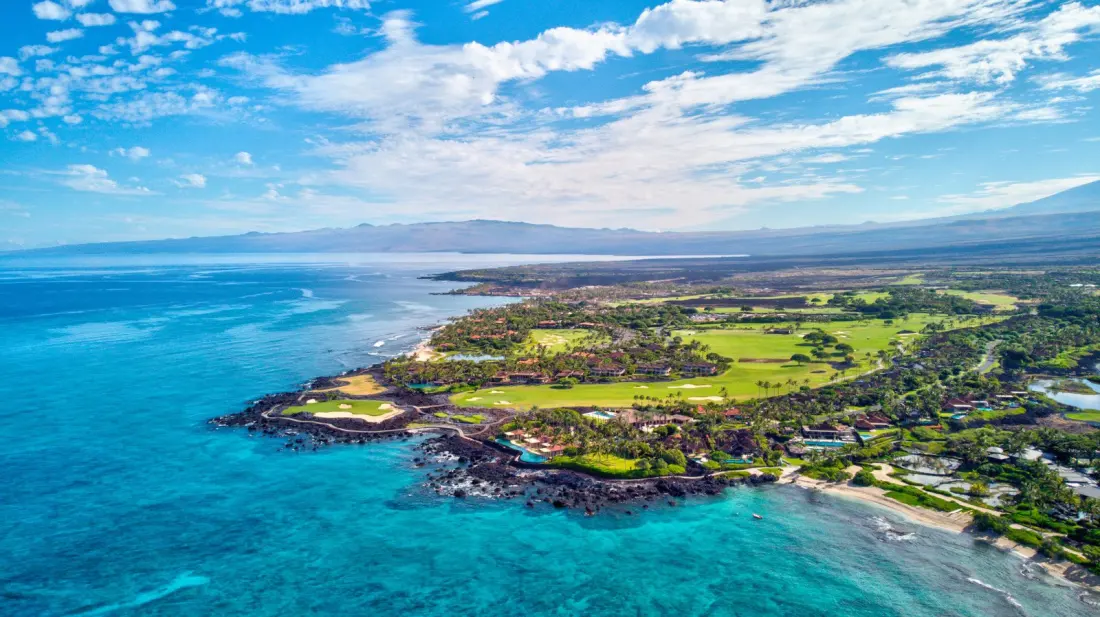
The Big Island of Hawaii gets skipped by travellers chasing Maui or O'ahu, which is a mistake. At 4,028 square miles it could swallow every other island in the chain, and its mix of rainforest, black-sand coast and active volcanoes packs a lot of variety into one trip. A Big Island local recently shared the five spots they show every visiting friend — and the list doubles as a solid first-timer's itinerary.
Start in the north at Pololū Valley, one of seven lush valleys carved into the cliffs of dormant Kohala volcano. A short but steep trail drops about 350 feet to the valley floor and a black-sand beach — roughly a mile round trip and doable in 25 minutes down. Go early: parking is very limited and the track is off-limits when wet. There are no restrooms at the lookout, so stop in the town of Kapaau on the way. Neighbouring Waipi'o Valley is even more dramatic but restricted to a lookout or approved tours.
Hawaii Volcanoes National Park is the headline act. Established in 1916 and covering 523 square miles, it includes Kilauea, which sometimes throws lava fountains over 1,000 feet high, plus Mauna Loa, Earth's largest active volcano topping out at 13,680 feet. Even without lava on show you can walk lava tubes, cross lava fields, spot centuries-old petroglyphs and overnight at the historic Volcano House, which dates to 1846.
On the rainy east side near Hilo, ʻAkaka Falls State Park offers an easy half-mile paved loop through rainforest with orchids, bamboo and giant ferns, culminating in views of the 442-foot ʻAkaka Falls and its 100-foot neighbour Kahuna Falls. Parking, restrooms and a small entry fee make this the lowest-effort stop on the list.
For beach time, the writer's personal favourite is Waialea Beach — nicknamed Beach 69 after its old mile marker — on the Kohala Coast about 25 miles north of the Kona airport. It's a protected Marine Life Conservation District with shaded coves under kiawe and palm trees, rocky reefs full of fish just offshore, frequent sea turtle sightings, and humpback whales spouting offshore between January and March. World top-10 ranked Hāpuna Beach is right next door if you want a big sweep of sand.
Finally, Puʻuhonua o Hōnaunau National Historical Park, about an hour's drive from Kona, is the so-called City of Refuge — a sacred site where ancient lawbreakers could earn absolution if they reached it. Recreated statues of the gods Kāne and Kanaloa guard the shore, the Hale o Keawe temple sits on a former royal mausoleum site, and exhibits display artefacts like old fish hooks.
Who's it for: anyone planning a first Hawaii trip who wants volcanoes, waterfalls, snorkelling and culture without island-hopping. The island's two airports — Kona on the dry west side and Hilo in the east — make it easy to string these stops into a loop.