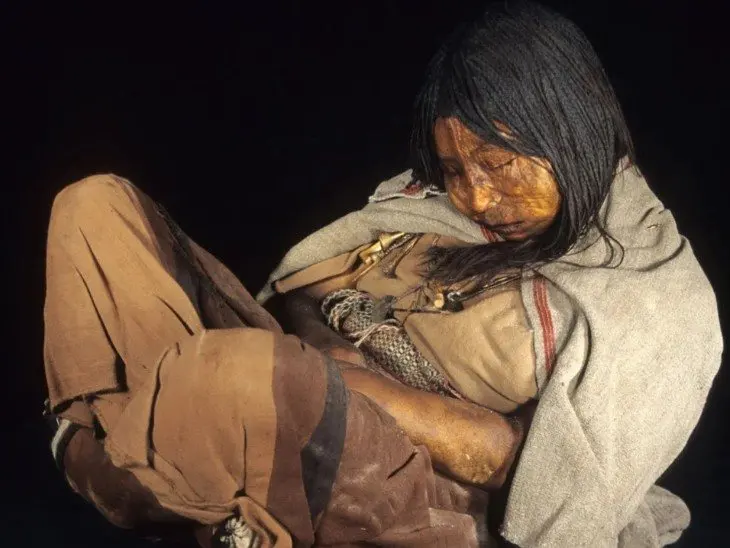
Five hundred years ago, children aged 6 to 14 made grueling treks to summits above 6,000 meters in the Andes — and never came back down. They were victims of capacocha, an Inca ritual sacrifice performed across the empire in the 15th and 16th centuries. Because freezing, dry, high-altitude conditions preserved many of the bodies so well they look merely asleep, these "ice mummies" are now yielding remarkable new detail about their final months.
The most famous discovery came in 1995, when anthropologist Johan Reinhard spotted a bundle in an ice-filled crater near the summit of Mount Ampato in southern Peru while photographing a volcanic eruption. It turned out to be the 14-year-old girl now known as Juanita, the Ice Maiden, followed that same year by two more child mummies on the same peak. Between 1996 and 1999, Reinhard found 15 more mummies on Andean mountains above 5,500 meters, in what is now Peru, Chile and Argentina.
Recent analysis of hair and nails from eight child mummies, published in Antiquity, confirmed the children were given drugs before death: all had consumed coca leaves (traces of cocaine), several had drunk chicha maize beer, and one — the girl known as Juanita — showed the compound harmine, associated with ayahuasca. Levels in the hair of an 8-year-old from Mount Chuscha in Argentina suggest drugging began months before the rituals ended. Researchers believe the substances were meant to keep the children calm, even happy, as Spanish chronicles indicate they "needed to go happy to the gods."
Fresh CT scans are also overturning old assumptions about how they died. The girls from Cerro Esmeralda in Chile's Atacama were long thought strangled — the neck marks were likely from their burial textiles. The El Plomo Boy, found near a 5,400-meter summit in central Chile, was assumed to have frozen, but his skull shows blunt force trauma consistent with a star-headed Inca mace. Juanita, too, suffered skull, chest and pelvic trauma. Stable isotope analysis of hair tells of epic journeys: the El Plomo Boy walked some 2,600 kilometers over nine months, his hardened feet evidence of the trek, his diet shifting as communities along the route fed the procession.
New dating of plant remains buried with a 14-year-old girl on Mount Llullaillaco (6,739 meters, one of the best-preserved mummies ever found) narrowed her sacrifice to 1462-1507 — the era of emperors Topa Inca and Huayna Capac. That timing suggests political motives: anchoring Inca power in newly conquered territory.
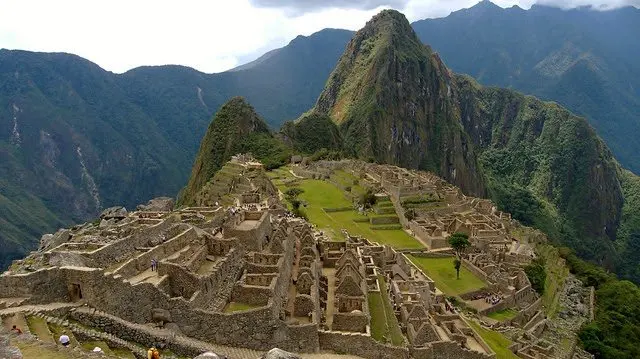
For travellers, this science is a reason to look beyond Machu Picchu. The best-known mummies are displayed in specialized museums — Juanita at the Museo Santuarios Andinos in Arequipa, and the Llullaillaco children at the Museo de Arqueología de Alta Montaña in Salta, Argentina — offering a sobering, unforgettable window on the Inca world.