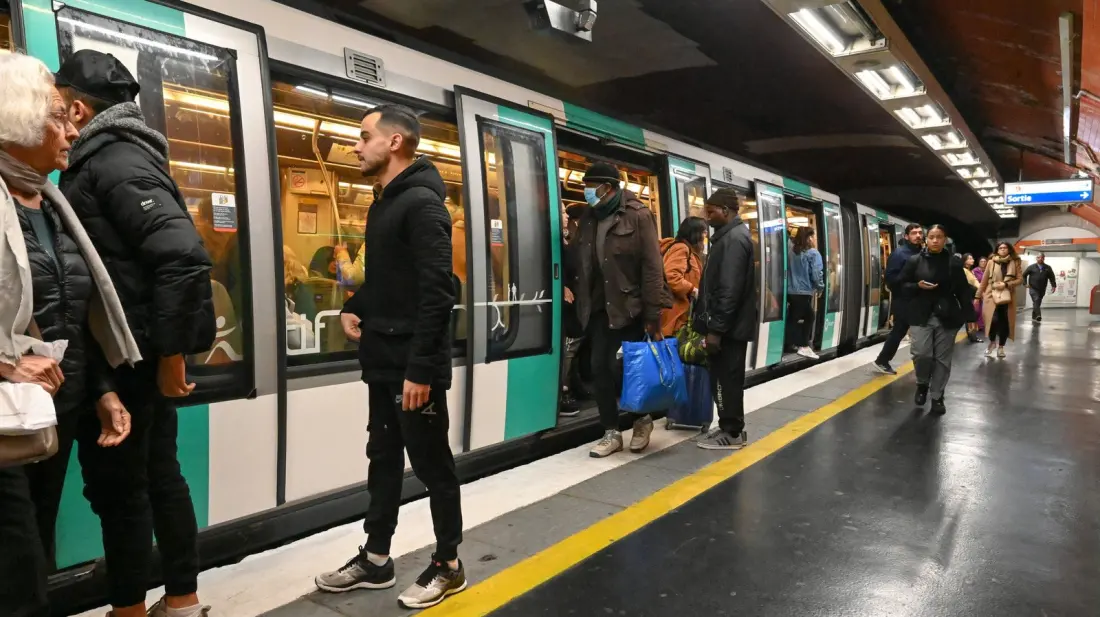
Paris has run its Metro since 1900, and the busiest line — Line 14 — moves around 820,000 passengers every weekday. Locals navigate it with the muscle memory of a lifetime; tourists tend to announce themselves within minutes. A Paris-based writer with two decades of riding under her belt has laid out the habits that give Americans away, and they're easy fixes.
First: keep your ticket or pass on you the whole ride. Rush-hour crowds can sweep you through an open gate before you've tapped, a reader might silently fail, or you might have bought the wrong fare type. Inspectors patrol trains and corridors, and an unvalidated or missing ticket can mean an on-the-spot fine of about €70. If you genuinely weren't trying to dodge the fare, you can contest the fine by registered letter to the transport operator.
Second, doors. Only Lines 1, 4 and 14 are fully automated. On older trains, you open the door yourself — a lever or a button — and if you're nearest the door, it's on you to open it when you hear "La porte, s'il vous plaît." Rick Steves suggests stepping onto the platform briefly to let people flow. Don't try to hold doors open for stragglers: they close automatically, they're heavy, and another train is minutes away.
Third, the fold-down seats by the doors — the strapontins. They're charming, but at rush hour they should be folded up to make room. Occupying one in a packed carriage earns you glares and sighs, and leaves you exposed to swinging backpacks at head height. Off-peak, they're fair game.
Fourth, luggage. You can bring bags on the Metro — a proposed restriction caused a backlash in 2025 and was dropped — but think hard before doing it. From Charles de Gaulle you arrive on the RER B, from Orly on the extended Line 14, and those trains are roomier than the older Metro lines. Narrow turnstiles, long staircases and stations like Châtelet–Les Halles make suitcases a workout. Check Bonjour RATP for elevators and escalators at your station, dodge rush hour (7:30–9:30 a.m. and 4:30–7:30 p.m.), and consider a taxi if you're heavily loaded.
Finally, stay switched on. Paris is a pickpocketing hotspot — the U.S. Embassy keeps a whole page on it — so keep belongings close, use a money belt, and never stand scrolling by the doors, where a phone can vanish as they close. And if you need to check a map, don't stop dead in the middle of the flow. Step toward the platform wall, where station maps mark the exits.
None of this is complicated; it's mostly about moving with intent and keeping your wits. Master these five and you'll blend into the crowd instead of becoming the obstacle in it.