South Africa's history doesn't start with castles or townships or gold rush architecture — it starts billions of years back, written into rock faces, craters and caves you can actually visit. A recent roundup highlighted five spots that together form a timeline of deep time, from the planet's infancy to the birth of humanity itself.
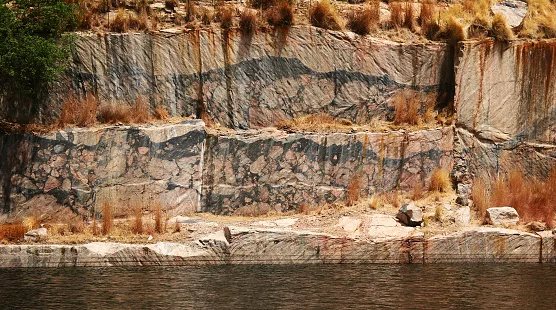
Start with the Barberton Makhonjwa Mountains in Mpumalanga, declared a UNESCO World Heritage Site in 2018. Part of the Barberton Greenstone Belt, these volcanic and sedimentary rocks date from roughly 3.6 to 3.25 billion years ago — among the oldest and best-preserved on Earth. There's no single fossil to hunt; the reward is seeing exposed rock that records ancient volcanism, meteorite strikes and the very formation of continents.
Fast forward two billion years and you're standing in the Vredefort Dome in the Free State, the site of a colossal meteorite impact around 2,023 million years ago. UNESCO calls it the oldest, largest and most deeply eroded impact structure known. Erosion has stripped away most of the crater, exposing rock from deep beneath the impact zone, so what you explore today is riverside hills, farms and outcrops laced with shock-formed geological features.
For dinosaur-era drama, head to Golden Gate Highlands National Park, also in the Free State. Its glowing sandstone cliffs formed around 200 million years ago, laid down as mud on floodplains and sand in ancient deserts. The park is famous for Massospondylus fossils — including dinosaur embryos — and the Kgodumodumo Dinosaur Interpretation Centre, opened in 2025, brings that prehistoric world to life.
The story gets personal at the Cradle of Humankind, the UNESCO-listed network of sites spanning Gauteng, Limpopo and North West. Sterkfontein, Swartkrans and Kromdraai, plus Makapan Valley and the Taung Skull Fossil Site (where the Taung Child was found in 1924), have yielded human-evolution evidence spanning at least 3.5 million years. The Maropeng Visitor Centre makes it accessible, and the caves themselves are the draw — underground limestone deposits preserved fossils that would otherwise have vanished.
Finally, the West Coast Fossil Park near Langebaan shows a wildly different Western Cape from about 5.2 million years ago: subtropical, forested and roamed by sabre-toothed cats, short-necked giraffes, hunting hyenas and African bears. Unusually, you can see fossils in situ at an active excavation site on a former phosphate mine.
Why bother? Because few countries let you trace a coherent 3.6-billion-year arc across a single road trip — and each stop works as a proper holiday on its own, with hiking, scenery and small towns thrown in. Ideal for travellers who like their landscapes with a side of wonder.