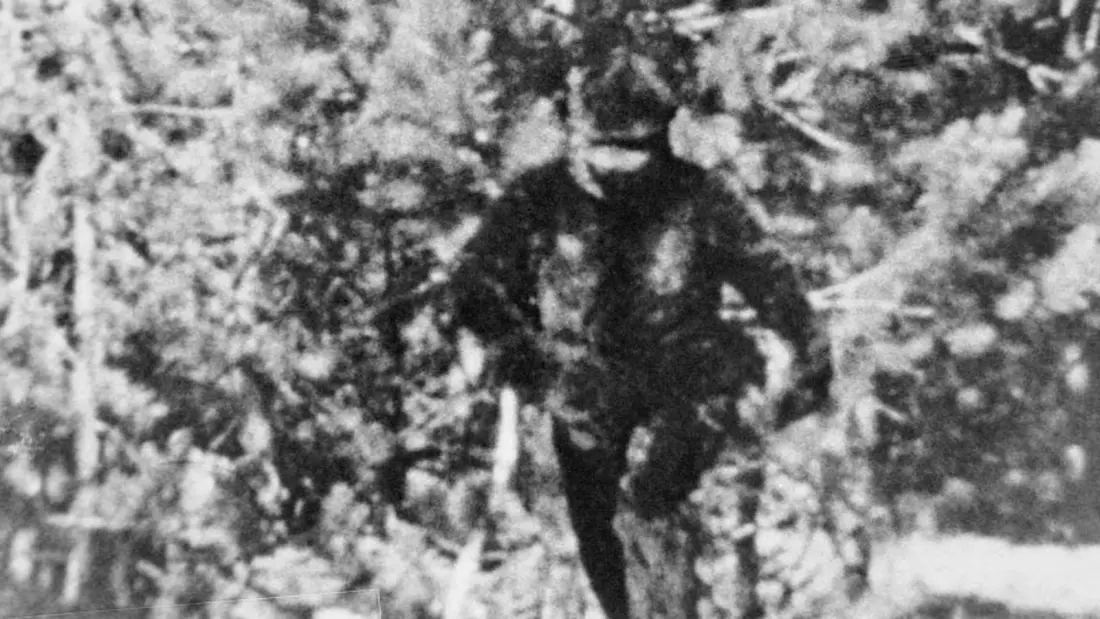
The U.S. Forest Service doesn't strike most people as a hotspot for paranormal gossip, but on October 15 the agency released a trio of historical documents recounting sasquatch encounters on federal land in Washington, Oregon, and Montana. The files are now publicly available on the USFS website, and they read like a cross between a ranger's field journal and a campfire story.
The oldest account comes from Montana. In a 1980 retelling, hunter Leo Kinney described a 1940s incident along Petty Creek, west of Missoula. After shooting a six-point bull elk, he and three companions returned to find only the entrails — the carcass gone. Two-legged tracks led away through the snow, and a three-foot-diameter fallen log showed drag marks where the elk's antlers had apparently been hauled over it. The group followed the trail for half a mile before deciding, as Kinney put it in his own account, that nobody was keen to meet whatever was ahead. A year later, a hunter named W.W. Schmitz reported matching tracks, a strong odour, and grunting noises nearby.
A second Montana file is far more recent: a January 2003 article from the Clark Fork Valley Press describing hundreds of human-like footprints in fresh snow outside Jim Rohweder's sawmill shop near Plains, about 70 miles from Petty Creek. Neighbour Bob Mesing measured the prints at 16.5 inches long and 8.5 inches wide, with toes, an arch, and a five-foot stride. He and Dean Peterson, a former Kalispell police officer, tracked them 100 yards into the woods before the trail faded. Mesing suspected a motion-sensor light spooked whatever made them; Peterson's dog had barked at 3:40 that morning.
The third file is the most sceptical. A 1982 USDA account has wildlife biologist Rodney Johnson investigating three sets of tracks in the Mill Creek Watershed of Umatilla National Forest, which straddles the Washington-Oregon border. He photographed and cast prints at two sites but concluded they were almost certainly faked: the stride stayed a fixed four feet regardless of slope, the tracks started and stopped abruptly, and pine needles appeared to have been deliberately brushed aside. His verdict, essentially: an elaborate hoax, whoever pulled it off went to impressive lengths.
Why does this matter to travellers? Partly because it's a fun bit of lore attached to real, hikeable country — the Clark Fork corridor in western Montana and the Mill Creek backcountry near Walla Walla. But it's also a neat snapshot of how federal agencies archive the strange things people report from the woods. If you're planning a trip to the northern Rockies or the Blue Mountains, the files make entertaining pre-trip reading, and the small towns involved — Plains, Missoula, Walla Walla — have plenty of more grounded reasons to visit, from fly fishing to wine country. Just maybe keep the dog nearby if you're camping in January.
Story sourced from Outside Online.