
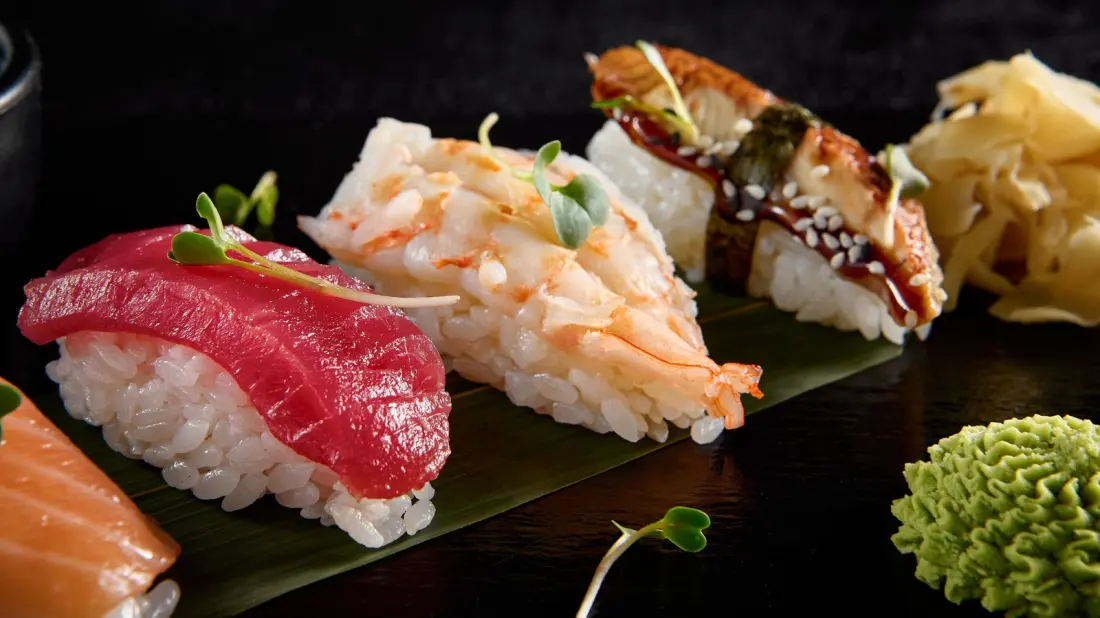
Japan was recently voted the politest country on earth in a Remitly survey of 4,600 people across 26 nations, taking 35% of the vote. That politeness extends to the sushi counter, where visitors who show up with American habits can inadvertently insult the chef before their first piece of fish lands. Here are the customs worth knowing, whether you're booked into a pricey omakase in Tokyo or a neighbourhood sushi bar back home.
The garnish ritual trips up nearly everyone. Stirring wasabi into a dish of soy sauce is a standard move in casual US sushi spots, but at a proper counter the chef has already seasoned each piece with the right amount of wasabi for that fish. Instead, pick up nigiri with two fingers and dip it fish-side down — fingers are actually the traditionally correct way to eat it, and they keep the rice intact far better than chopsticks. Pickled ginger isn't a topping either; it's a palate cleanser to nibble between different pieces. Bonus trick: use a slice of ginger to brush soy sauce onto sauced nigiri that can't be dipped. Do that, and the chefs will notice you know your stuff.
Size matters. Good nigiri is built to be eaten in one bite, so small pieces aren't stinginess — they're precision. Complaining online that portions are "too small" marks you out as a rookie. (If you want absurdly oversized sushi, America has that niche covered: Nehmo Bento & Sushi in Santa Ana, California went viral in 2025 for its fist-sized salmon nigiri.)
The counter itself is treated like an altar, often carved from a single slab of valuable wood. Don't put your phone on it, remove dangly jewellery and watches that could scratch it, and think twice before photographing every course — many Japanese bars frown on photography, much like an art gallery. Ask politely if you're unsure.
Resist showing off. The cheery greeting "irasshaimase" is reserved for chefs to say, not customers, and insider slang like calling soy sauce "murasaki" or the bill "oaiso" comes across as off-putting rather than knowledgeable. The bill one is a genuine trap: "oaiso" is traditionally the owner's humble apology for any unfriendliness, and even some Japanese diners get it wrong. Listen, enjoy, and let the professionals use the jargon.
Finally, be punctual — obsessively so. Japanese diners typically arrive ten minutes early, and many omakase restaurants run timed seatings that work like theatre showtimes. Turn up a few minutes late and you may lose your seat or miss courses already served. Even one minute's lateness can read as disrespect in Japan.
Sushi was originally fast food — it spread through Tokyo after a 1600s ban on cooked street food following a major fire, and only became haute cuisine in the 20th century. That history means the counter carries generations of custom, and following it makes the meal better for everyone. The rules apply just as much at stateside spots, like Reno's famed all-you-can-eat buffets, as in Japan: keep your phone down, eat in one bite, and arrive on time.