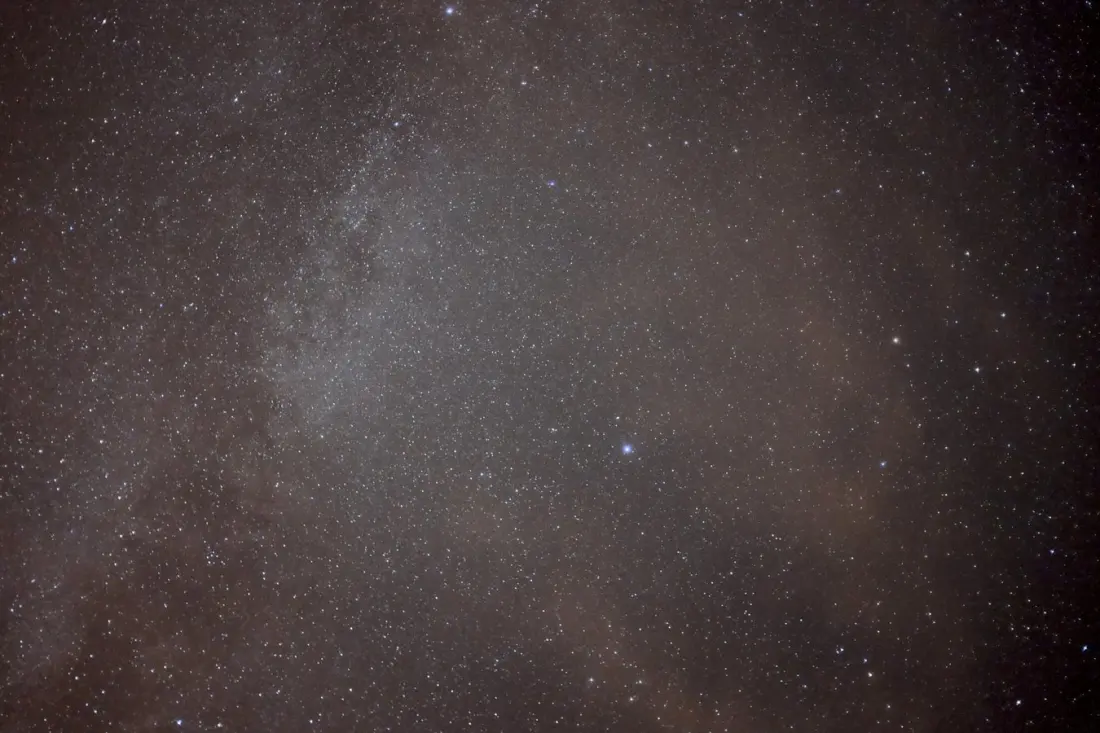
Most cities of 100,000 people wash out their night skies with light pollution. Flagstaff, Arizona, does the opposite: more than 1,000 stars are visible from the downtown core on a clear night, including the Milky Way, plain to the naked eye. It's the world's first designated International Dark Sky City, a title it has held since 2001.
The trick is regulation plus civic pride. Local bylaws cap brightness levels and mandate downward-facing amber streetlights that cut sky glow by 70 percent or more. The result, according to the Flagstaff Dark Skies Coalition, is a city producing 90 percent less light pollution than comparable metros. Residents guard the status fiercely — politicians who tamper with it do so at their electoral peril.
For a bigger sky show, head eight minutes from downtown to Buffalo Park, a 215-acre open space on McMillan Mesa where upwards of 2,500 stars come out on a clear night. It's an easy, free upgrade to any Arizona itinerary.
The real anchor of this trip, though, is Lowell Observatory on Mars Hill, just outside town. It's been operating for 125 years and is where Clyde Tombaugh spotted Pluto in 1930 — you can still visit the Pluto Dome housing the astrograph that captured the discovery. Astronomers here pushed for the city's early lighting ordinances nearly 70 years ago, so the observatory and the dark skies are a package deal.
The newer Marley Family Astronomy Discovery Centre has been named America's best science museum by Newsweek. Expect hands-on kids' areas, indoor and outdoor planetarium shows, and films on a seriously high-resolution screen — the writer caught one about exoplanets and the search for alien life, which notes that roughly 6,000 exoplanets have been found so far out of an estimated trillion-trillion.
The main event happens after dark on the "Campus," open until 10 p.m. most nights. Six staffed public telescopes — from 5.5 up to 32 inches across — are powerful enough to resolve Saturn's rings and distant nebulae. You may even cross paths with veteran astronomer Dr. Brian Skiff, credited on dozens of exoplanet discoveries. Arrive early, stay late, and leave time to simply sit in a dark corner and look up.
This is astrotourism done properly, and it pairs neatly with northern Arizona's other big draw: the Grand Canyon is about 90 minutes northwest. Stargazers, families with curious kids, and anyone tired of glow-washed city skies will get the most out of a night (or two) in Flagstaff. The observatory's site, lowell.edu, handles tickets; the city's tourism office and the Dark Skies Coalition cover the rest.
Story first reported by Explore Magazine Canada.