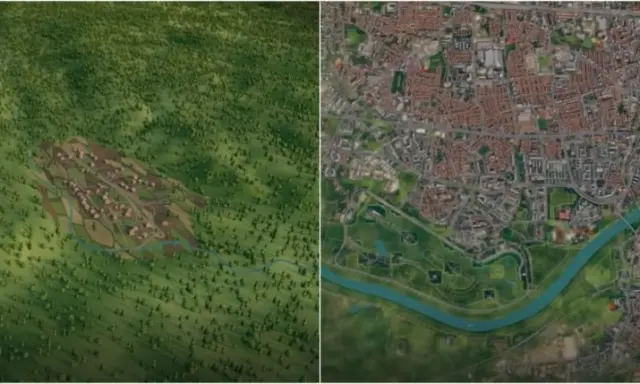
A new animated reconstruction shows how Croatia's capital grew from two rival hilltop settlements into a modern European capital — and it's all built on real historical records, not artistic guesswork.
The 13-minute film, titled 1,000 Years of Zagreb in 13 Minutes, Built from Real Historical Data, covers 1050 to 2026 and walks through the city's transformation year by year. It starts with the two medieval centres that made Zagreb what it is: Kaptol, the bishop's religious stronghold, and Gradec, home to merchants and craftsmen. The two hills still define the Upper Town visitors wander today.
The pivotal early moment comes in 1242, when the Mongol invasion pushed King Béla IV to grant Gradec the Golden Bull, making it a free royal town and triggering the building of defensive walls. From there, the timeline sweeps through centuries lived under the shadow of Ottoman expansion, with the city sitting close to the military frontier, and recurring blows from fires and plague. By the 18th century Zagreb had become a Baroque and administrative hub.
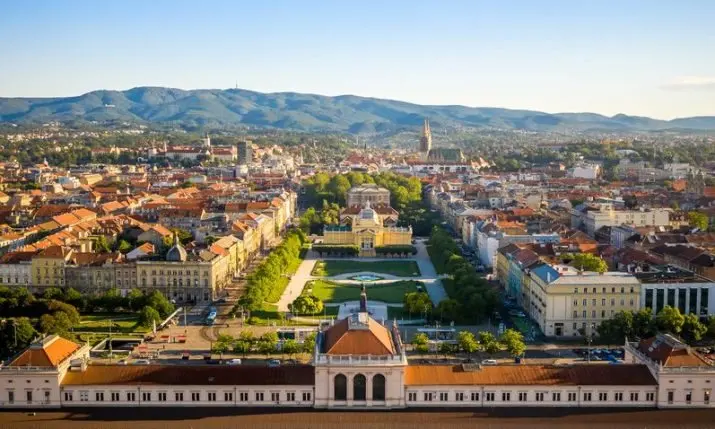
Formal unification arrived in 1850, when Kaptol, Gradec and surrounding settlements merged into a single city named Zagreb. But the reconstruction dwells longest on 9 November 1880, the date of the devastating earthquake that wrecked buildings across the city. The rebuilding effort that followed is credited with turning Zagreb into a modern European capital — including the creation of the Lower Town's Green Horseshoe, the chain of parks and squares that remains one of the city's signature features.
The final stretch moves fast through the 20th century: two World Wars, post-war expansion south across the Sava River into Novi Zagreb, and the 1987 Summer Universiade, which brought new sports facilities and the recreational development of Jarun Lake. The 1990s War of Independence appears, then the 2020 earthquake, which again damaged the historic core — making the reconstruction feel current rather than merely nostalgic. The story ends at 2026, with Zagreb as Croatia's capital and largest city.
For anyone planning a trip, the video doubles as a route map. Nearly every era it covers corresponds to something you can still see: Gradec's stone gate and St Mark's Church, Kaptol's cathedral, the Green Horseshoe parks, the Habsburg-era Lower Town, and lakeside Jarun. Watching it before you go gives context to streets that otherwise just look pretty — and explains why some facades in the Upper Town still carry earthquake repair scaffolding. It's a short primer that turns a weekend city break into a proper history lesson, and it's free to watch online.
Croatia Week