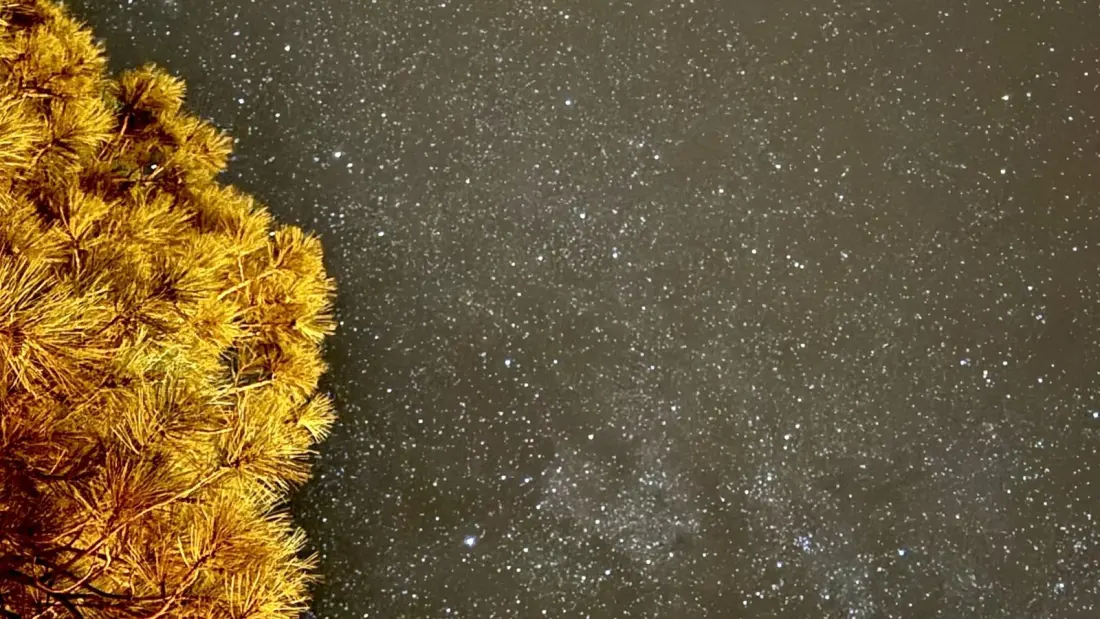
Most cities spend billions washing out the night sky with light. Flagstaff, Arizona went the other way — and in 1958 it passed the world's first ordinance protecting the darkness, eventually earning designation as the world's first and largest International Dark Sky City. The result: residents can step outside and see the Milky Way from their own backyards.
The formula is straightforward. The city favours amber-spectrum lighting over blue, requires shielded fixtures, and keeps overall light output down — what cultural astronomer Dr. Danielle Adams calls a "dark sky ethos." The payoff is fast, too. Unlike most environmental problems, light pollution reverses almost instantly once lighting is dialled back, which is why several other Arizona towns — Sedona, Fountain Hills, Camp Verde, Cottonwood, Bisbee and more — have since earned Dark Sky status.
Flagstaff is also home to Lowell Observatory, where Pluto was discovered and the first evidence of an expanding universe was found. Today visitors pay US$35 for general admission, which covers 150-plus exhibits, theatre shows and — on clear nights — stargazing at the Giovale Open Deck Observatory, home to one of the world's finest public telescope collections. One shows live colour video of faint deep-sky objects; another is a Victorian-style refractor ideal for planets. On a cloudy evening that cleared up, one visitor group watched Saturn, rings and all, in real time through instruments professional astronomers themselves use.
The stargazing doesn't stop there. About 1.5 hours from Sedona sits Meteor Crater, the best-preserved impact site on Earth — a bowl nearly a mile wide and 550 feet deep, blasted out 50,000 years ago by an iron-nickel meteorite. Entry runs US$29 per adult, and the rim walkways deliver serious views.
Sedona itself is worth more than a photo stop. Beyond the famous red rock, the area mixes green hills, forest and dramatic storms — best taken in from the Airport Mesa Scenic Overlook, with a meal at Mesa Grill or an off-road jeep tour if you're feeling adventurous.
There's a cultural layer to all of this, too. For the Navajo Nation, stars are woven into origin stories, ceremonies and planting seasons — a celestial map carried by medicine men who teach specifically about the sky. Arizona is home to 22 federally recognized tribes, and Phoenix's Heard Museum is a strong starting point for understanding these perspectives, with its long-running "Away From Home" exhibition and the newer "Substance of Stars" show exploring Indigenous readings of the cosmos inside an immersive Sky-Dome gallery.
Why it matters for travellers: dark-sky destinations are one of the few travel trends that cost almost nothing to enjoy — the main show happens every clear night, for free. And if Arizona feels too far, Canada has options closer to home, including Jasper and Point Pelee National Parks and Abbotsford's McDonald Park, a designated Dark Sky Park with essentially zero light pollution.
Story via Curiocity