Federal investigators have wrapped up their work at the site of a Learjet 60 crash in Greenacres, Florida, that killed all nine people on board earlier this month. The National Transportation Safety Board recovered the aircraft's cockpit voice recorder from the wreckage and shipped it to its Washington lab for analysis, marking the end of the on-scene phase of the investigation.
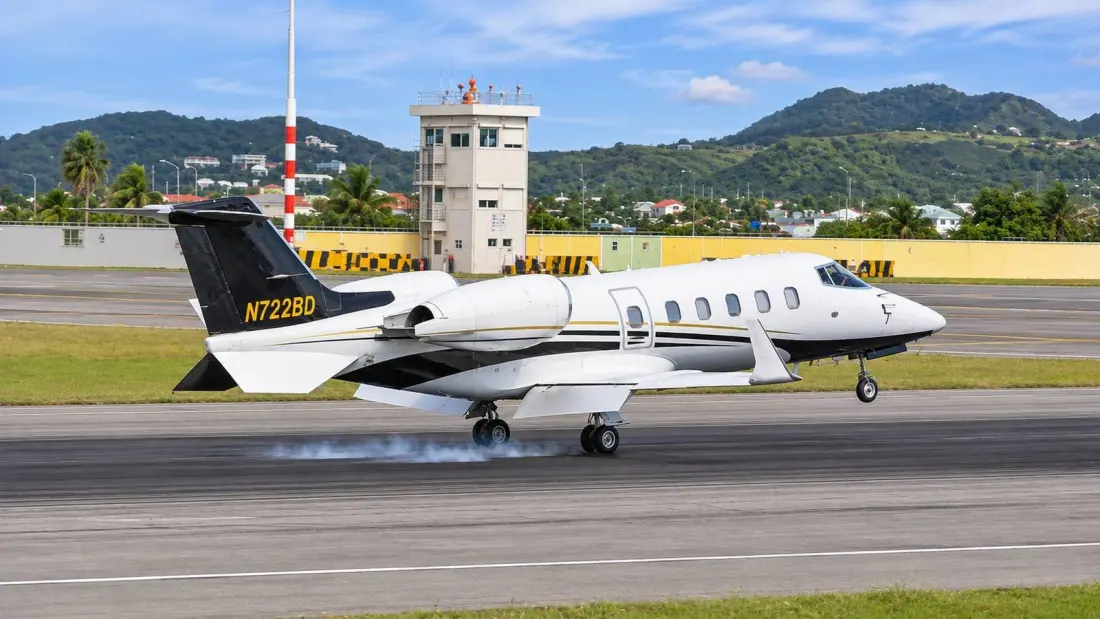
The flight was a charter trip from Austin Bergstrom International Airport to the Bahamas on November 1. The jet, registered N722BD and operated by Aurora Aviation, never made it. Evidence gathered at the site points to a mid-air breakup: a section of the tail was found nearly four miles from the impact crater, a sign the aircraft was already shedding structure well before it hit the ground.
The weather picture appears central to what happened. Air traffic control audio captures co-pilot Nathalia Filgueiras reporting icing conditions and severe turbulence above 700 feet, shortly before the crew issued a Mayday call. Investigators believe the jet flew into a severe convective storm cell along its route. Once the tail control surfaces separated, the aircraft became uncontrollable and went into a nose-down, high-speed descent, slamming into a residential roadway. Heavy rain filled the crater with water, which slowed the early recovery effort until the site could be pumped dry.
The nine victims were identified as two crew and seven passengers. Captain Jeff Gregory, a veteran charter and commercial pilot from Gilbertsville, Pennsylvania, was in command. His co-pilot, Filgueiras, was just 20 and a Brazilian American who grew up in Boca Raton. Among the passengers were Austin tech entrepreneur Adam Robinson, founder and CEO of software platforms Retention, RB2B and MoltSets; his wife Helen Sharep; their two children, aged four and two; family friends Rachael Reed and Charmi Fehr; and the family's nanny, Anita Maria Cetina.
With the scene documented, attention now turns to the lab. The NTSB will reconstruct the flight track against radar and storm data, examine the tail assemblies to pin down the sequence of structural failure, and analyse the cockpit voice recording. A preliminary report is expected within weeks, though a final probable-cause determination could take up to two years.
Why does this matter to travellers? Anyone booking a private or charter flight — a popular option for Bahamas trips from Florida and Texas — is effectively buying into an operator's safety culture and judgement calls about weather. This accident is a stark reminder that severe convective storms and icing remain among the most dangerous conditions in general and charter aviation, and that go/no-go decisions rest heavily on the crew and operator. Until the NTSB's findings are in, the specific lessons will stay unclear, but the broad takeaway for flyers is unchanged: ask operators about their weather-minimum policies and their aircraft's equipment, especially for storm-prone routes in the Atlantic hurricane season. A deep dive into the recorded audio and radar data should, in time, give the industry concrete answers about how this flight went so badly wrong.
Reported first by Simple Flying.