Forget the cobblestones and costumed reenactors for a moment. Ten miles southwest of Williamsburg sits a very different kind of colonial attraction: Historic Jamestowne, the actual site of the 1607 Jamestown settlement, where much of the story is still literally buried in the ground.
For decades, James Fort — the triangular wooden palisade the first colonists built — was thought lost to James River erosion. Then in 1994, archaeologists with the Jamestown Rediscovery project found its footprint, and they haven't stopped digging since. More than three million artifacts have come out of the soil, ranging from wells and cellars to entire churches and barracks. Digging happens live on weekdays from 9am to 4pm, weather permitting, so you can watch history being uncovered in real time.
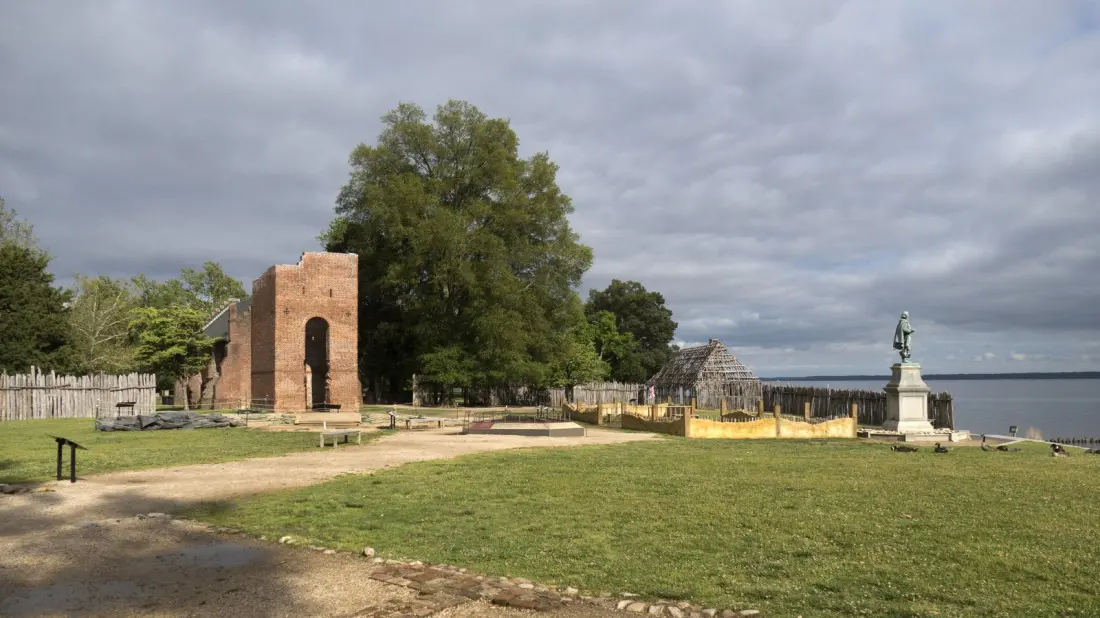
The site itself is more understated than your average attraction. A 17th-century church tower — the only original above-ground structure left — statues of John Smith and Pocahontas, and a 104-foot granite obelisk honouring the 104 first settlers mark the grounds. Reconstructed sections of the fort's palisades help you picture the one-acre enclosure as it stood.
The real showpiece is the Archaearium, an award-winning museum half a mile from the Visitor Centre displaying over 4,000 finds from the fort and its surroundings: arms and armour, Native American beads, even colonists' remains. It was built over the original Jamestown Statehouse, sections of which you can see through the glass floor. Exhibits are refreshed regularly as new discoveries come in, which makes repeat visits genuinely worthwhile.
Jamestown Island has more to offer than archaeology. The National Park Service runs Island Loop Drive, a 3- or 5-mile circuit with 11 stops tracing the land from colonial days through the Civil War. Walk out to Black Point at the island's tip for river views and a decent shot at spotting bald eagles hunting over the water.
Practically speaking, the site sits about 57 miles southeast of Richmond and 50 miles northwest of Norfolk — an easy day trip from either, right off Interstate 64 via Route 199. It's generally open 9am to 5pm daily. Admission pricing varies because the park is jointly run by the National Park Service and Preservation Virginia. And don't confuse it with Jamestown Settlement, the living-history museum nearby — many visitors do both in one day.
Jamestown also anchors Virginia's Historic Triangle: Williamsburg, about five miles away, offers restored colonial streets and interpretive museums, while Yorktown, roughly 20 miles east, brings a waterfront, art galleries and a pleasant Main Street. But if you only pick one, Historic Jamestowne stands apart for its mix of active excavation, a superb museum and riverside scenery — history you can watch being written, or at least dug up.