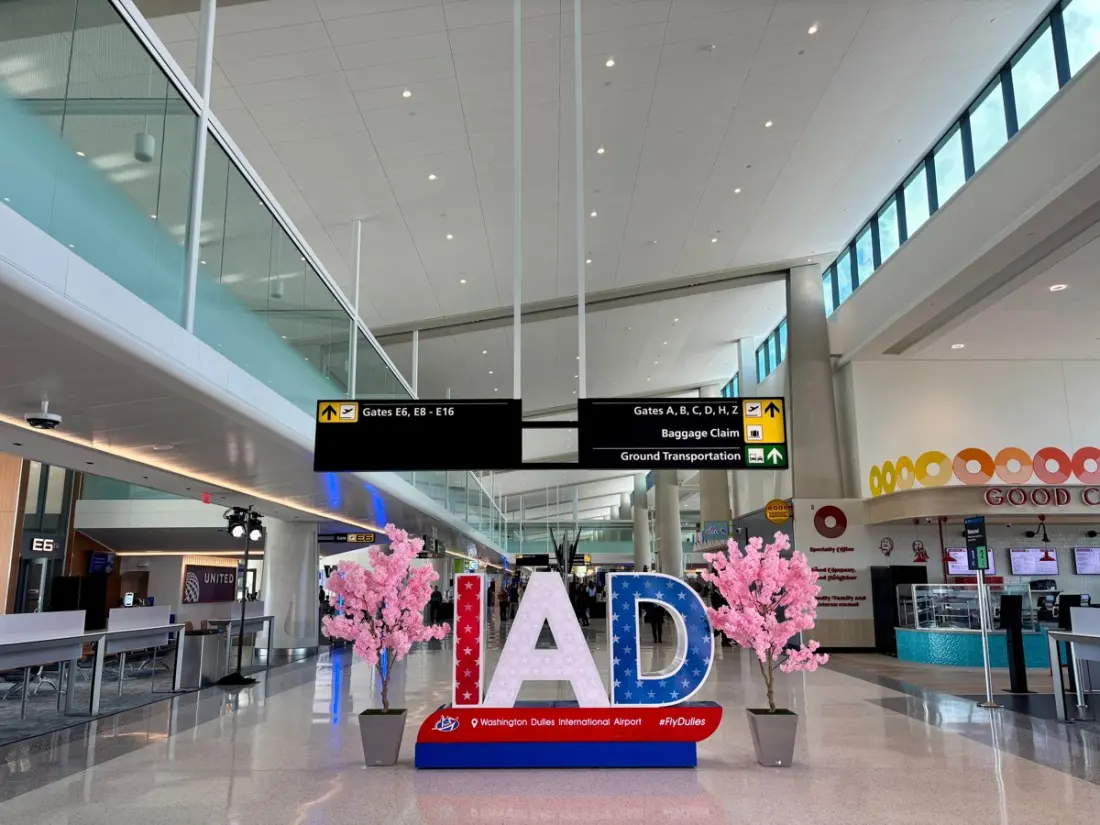
Washington Dulles just took the first big step in what will be a $20 billion redevelopment. The brand-new E Gates concourse welcomed its first passengers on a United flight to Chicago this week, and it's set to become the centre of United's operation at the airport. A ribbon-cutting on Monday preceded the first departures, with United's chief commercial officer Andrew Nocella praising the extra space, bigger gate seating areas and new restaurant options.
The clever part is where the concourse sits. It was built directly above an AeroTrain station that opened in 2010, deliberately positioned to the south of the old Concourse C with exactly this future expansion in mind. Arriving passengers step into a high-ceilinged atrium, and United has moved in with flair: the new United Club there spans 40,000 square feet, making it the second-largest lounge in United's network after the one in Houston. The design leans into the region — a vaulted entryway inspired by the Washington Metro, a cherry blossom mobile in the central seating area, and a Blue Ridge Mountain mural. Even the gate numbers use the font from Eero Saarinen's original terminal design.
The new concourse handles both domestic and international United flights, with a separate corridor for arriving international passengers who then board mobile lounges to the arrivals facility. United plans to grow its Dulles schedule sharply next summer — roughly 20% more departures, reaching around 300 daily flights, up from 250 earlier this year — with a long-term target of about 400 daily departures once all the new gates are online.
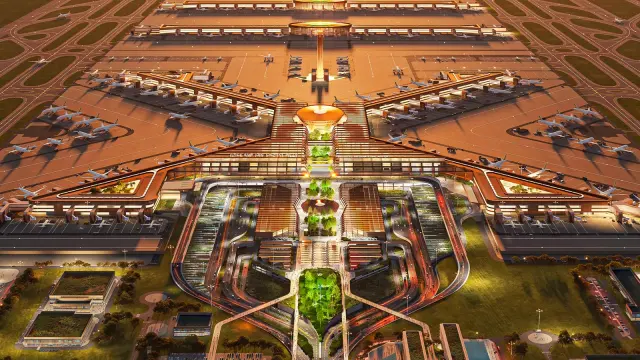
What's coming next is substantial. Plans call for extending the E Gates westward to accommodate up to 50 gates, a modernised and expanded version of Saarinen's iconic main terminal, an AeroTrain extension, and a new international arrivals facility, all targeted for the mid-2030s. Eventually the ageing Concourse C-D goes away, and with it the airport's old-fashioned mobile lounge system for domestic passengers. Airport authority CEO Jack Potter says Concourse E and the first phase of a Concourse G further south should be built out by 2030. One change of plan: the six ground-level regional jet gates at the end of Concourse A, originally slated for replacement, will stay open until construction allows them to be relocated.
Why should a traveller care? Anyone flying United through Washington Dulles in the coming years will notice the difference immediately — more room at the gates, better food options, and a genuinely impressive lounge worth arriving early for. And if your trips are spread over the next decade, you'll watch one of America's most architecturally significant airports transform in stages, so it pays to know which concourse your flight leaves from. Frequent Dulles flyers, Star Alliance connecting passengers and D.C.-based business travellers have the most to gain.