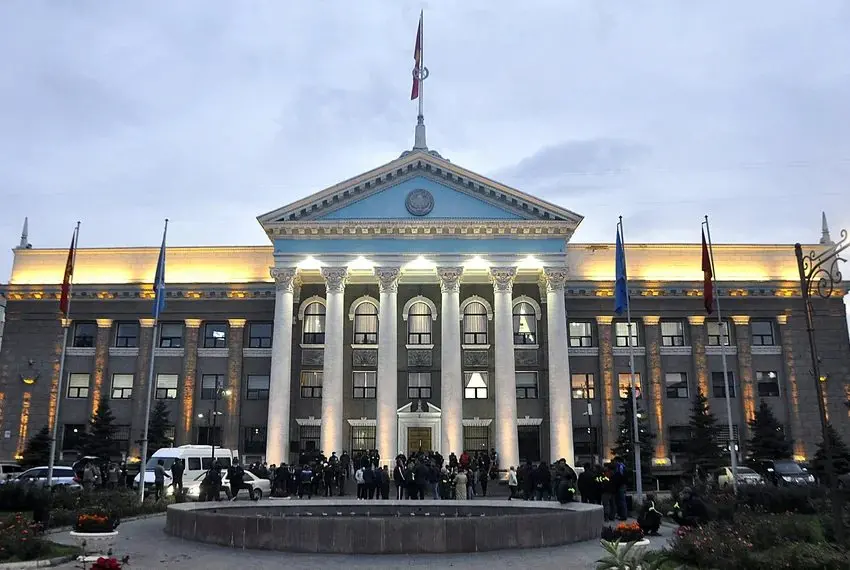
Kyrgyzstan's capital is in the middle of a noticeable tidy-up. Between 19 and 23 October, Bishkek's Land Use Control Department knocked down 77 structures that had gone up without permission — 44 of them lightweight constructions and 33 proper permanent buildings. City Hall says the sweep freed up 7,664 square metres of municipal land in just five days.
The crackdown wasn't entirely heavy-handed. Officials say some owners dismantled their buildings themselves after explanatory talks, while the rest were removed by force. On top of the demolitions, 52 administrative reports were filed for breaches of land legislation, with fines totalling 1,992 million soms.
The typical offences? Squatting on municipal land without authorisation, and quietly expanding plots beyond what was originally allocated. City Hall used the announcement to remind residents that building without permits — or simply occupying public land — is prohibited, and that illegal structures can lawfully be torn down when found.
Why should this register with anyone planning a trip to Central Asia? Bishkek is one of the region's most likeable capitals: a grid of leafy Soviet-era boulevards, bustling Osh Bazaar, and an easy base for treks into the Tian Shan that start practically at the city's edge. Cities in the midst of rapid, loosely regulated growth often feel chaotic to visitors — endless kiosks, half-finished extensions, pavements swallowed by informal construction. A visible enforcement push suggests the centre is being regularised, which tends to mean cleaner streetscapes around key sights and a more walkable downtown over time.
It also says something about where the city is heading. Bishkek has been investing in public space and infrastructure upgrades in recent years, and sweeps like this usually precede redevelopment or landscaping of the reclaimed plots. For travellers, that can translate into new parks and tidier approach routes by the time the next trekking season rolls around.
Worth keeping in perspective, though: this is municipal enforcement news, not a tourism story. Nothing here affects visitors directly — no attractions, transport or borders are involved. If anything, treat it as background colour. Bishkek remains a low-key, affordable gateway city, and a fast-moving local news scene like 24.kg's is a good window into how quickly it's changing under residents' feet.
If you're passing through on the way to Issyk-Kul or the Alay Mountains, the city still rewards a couple of days: museums, monumental Soviet architecture, and some of the cheapest good food you'll find in the region. Just know that the Bishkek you read about from a few years back is actively being reshaped, block by block.
Story reported by Kyrgyzstan: 24.kg.