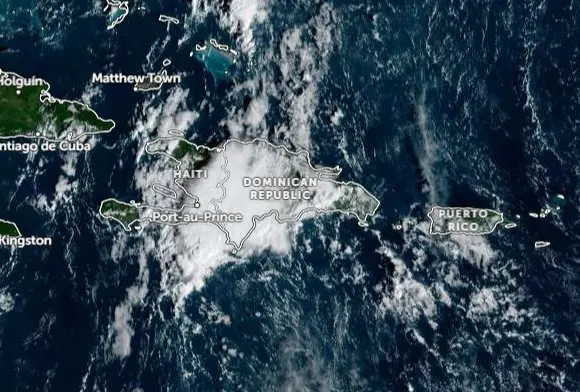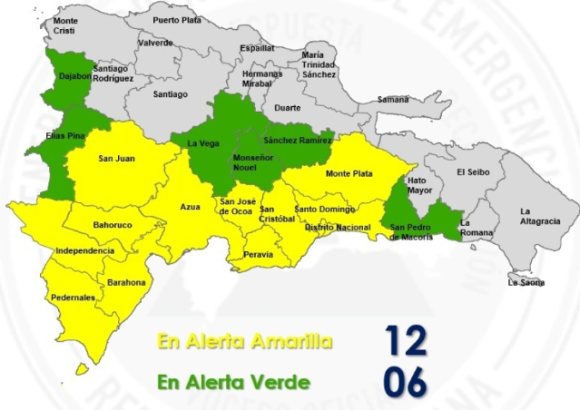
The Dominican Republic's Emergency Operations Center (COE) has placed 12 areas under yellow alert as a trough continues to dump unstable, rain-heavy weather across much of the country. Six more provinces sit on green alert, the lowest warning level, so the situation is being monitored rather than treated as an emergency.
The yellow alert list covers Greater Santo Domingo and the National District — home to most of the country's population and its main international gateway — along with a band of southern and southwestern provinces: Pedernales, Barahona, Bahoruco, Independencia, Azua, Peravia, San Cristóbal, San José de Ocoa, Monte Plata and San Juan. Green alerts are in place for Elías Piña, Dajabón, Sánchez Ramírez, Monseñor Nouel, La Vega and San Pedro de Macorís.
The main risk flagged by the COE is flash flooding. Authorities have told residents to stay out of rivers, streams and ravines where water levels are high — advice that applies just as much to travellers as locals. The southwest, including Barahona and Pedernales, is particularly exposed because rivers run down quickly from the mountains after sustained rain.
If you're in the country or heading there soon, the practical impact is modest but real. Resort zones like Punta Cana and Puerto Plata are not on the alert lists, though downpours can still disrupt excursions, road transfers and boat trips anywhere on the island. Roads between Santo Domingo and the southwest may be affected by rising water, and some rural routes can close temporarily without much warning. Keep an eye on COE updates, which are issued in Spanish, and build some flexibility into any day trips — especially canyoning, river activities or hikes through ravines.
For anyone already booked, there's no need to panic: yellow alerts signal caution, not evacuation. Pack a light rain layer, keep devices charged in case of local power cuts, and follow hotel staff guidance on road conditions before setting out. The weather pattern is tied to a seasonal trough, so conditions should ease once it moves on — but until then, treating swollen waterways with respect is the single most important rule.