The XXX Colombian Architecture and Urbanism Biennial 2026 has handed out its top honours, and unusually for an architecture prize, several of the winners double as places travellers can visit right now. Organised by the Colombian Society of Architects since 1962, the biennial rewards work that balances design quality with social and environmental context — and this year's list leans heavily towards experiences rather than facades.
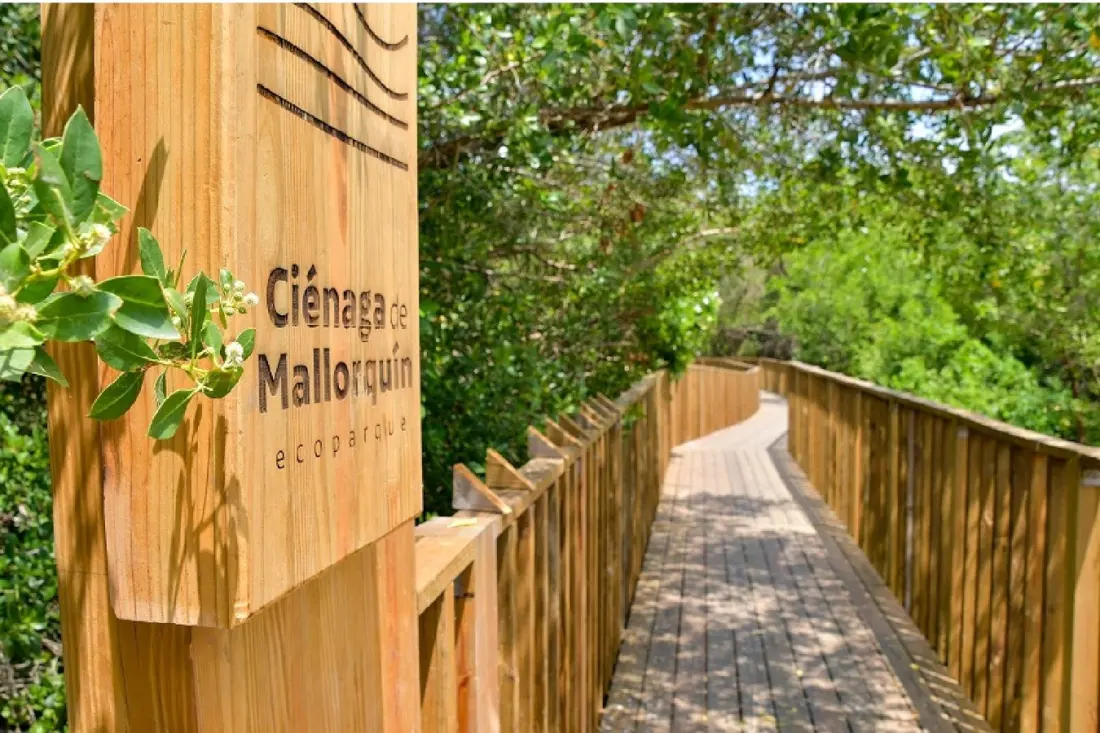
The headline winner is the Cienaga de Mallorquin Ecopark in Barranquilla, which took the 2026 National Architecture and Urbanism Award plus the Elly Burkhardt de Echeverri Award for Urban Design and Landscape. Designed by DEB Architecture with El Equipo Mazzanti, the project revived a degraded wetland on the city's edge into a mangrove park with trails and birdwatching. Local authorities say it has already drawn more than a million visitors, making it arguably Barranquilla's newest genuine attraction.
In Bogota, the story is about how a cinema grew into a district. LUMINA Cultural & Gastronomic District at Hacienda Santa Barbara, developed by Cine Colombia, won the Eugenia Mantilla de Cardoso Award for Interior Architecture. The company's president, Munir Falah, has said the concept started as extra cinema screens but was rethought during the pandemic into something broader: a mix of film, food and social space. It fits neatly into a visit to the upscale Usaquen area, where the hacienda is a long-standing weekend destination.
The most sobering project sits in Armero, Tolima, site of the 1985 disaster in which a volcanic mudflow destroyed the town and killed more than 20,000 people. Acupunturas de Memoria y Paisaje en la Antigua Armero: Iglesia Jardin de San Lorenzo, by Fiallo Atelier and Jesus Fiallo, won the Dicken Castro Duque Award in the Ephemeral Architecture category. Instead of rebuilding, the intervention works with the ruins of the former San Lorenzo church, weaving together wreckage, planting and memory into a walkable site of reflection. Travellers with an interest in memory and history will find few places in the Americas as affecting.
Medellin's recognition went to a city-wide plan rather than a single structure. Corredores Azules: Mi Rio, Mis Quebradas won the Karl Brunner Award for Urban and Regional Planning. The city counts 4,217 streams and 2,261 kilometres of waterways, and the strategy targets interventions at 191 critical points and 17 high-risk zones while upgrading more than 62,000 square metres of public space. In practice, that means Medellin's ravines and streams — long neglected or dangerous — are being turned into green corridors residents and visitors can actually use.
The common thread is access. These are not projects you admire from behind a rope; you hike the mangroves, linger over dinner after a film, walk the ruins, follow the water. For anyone planning a Colombia trip beyond the usual Caribbean highlights, the biennial list reads like a ready-made itinerary of the country's newest public spaces, spread across four very different cities on the Caribbean coast, the Andean plateau, the Magdalena valley and the Aburra valley.