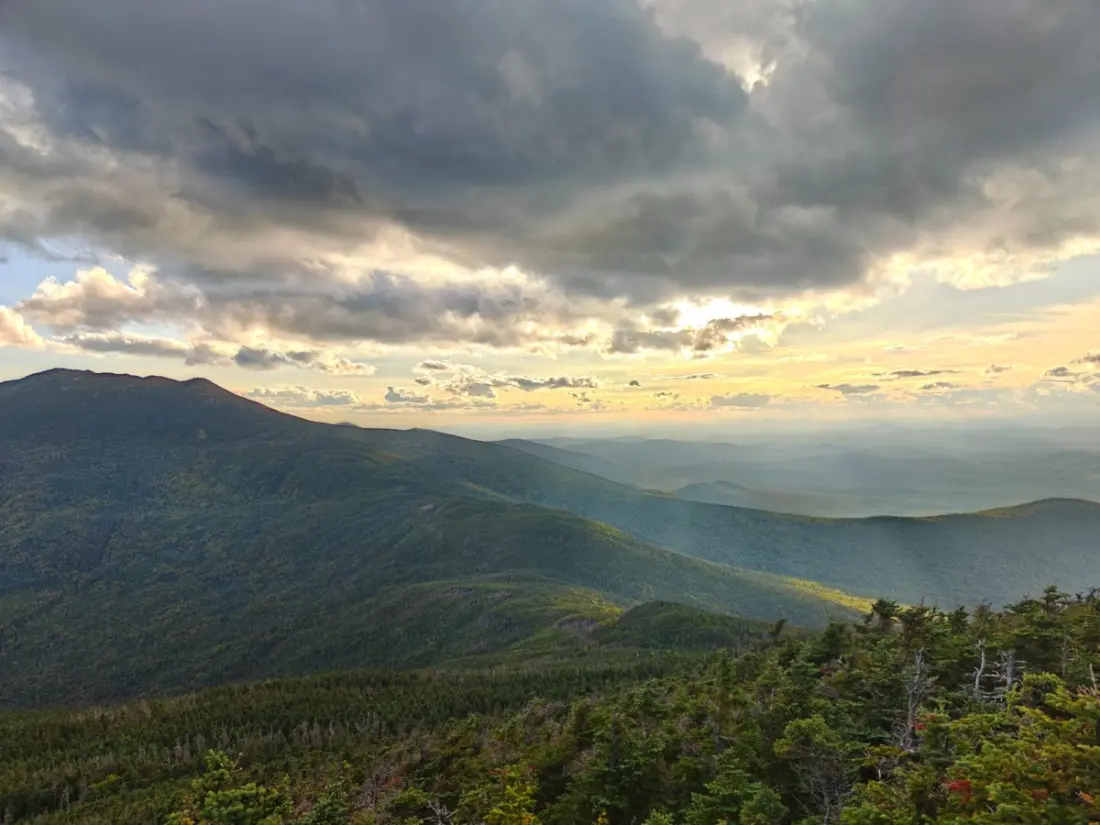
By day 142 of an Appalachian Trail thru-hike, most hikers have a rhythm. But the White Mountains of New Hampshire have a way of resetting expectations — and one stretch of trail above them all keeps drawing hikers onward: the Franconia Ridge.
The day starts at Mount Liberty, reached by a short 0.3-mile blue-blazed side trail that hikers widely agree is worth every step. The summit is exposed and famously windy, but the payoff is a sweeping view over the surrounding peaks. From there, the trail climbs Mount Lincoln and delivers you onto Franconia Ridge itself — a long, high walk above treeline where the trees simply give up and the views take over. On a clear day it's considered among the finest scenery on the entire 2,190-mile trail.
The trade-off for all that exposure is weather. Gusts on the ridge can be strong enough to make walking difficult, and there's nowhere to hide. After crossing the ridge to Mount Lafayette, hikers drop back below treeline for a break from the wind.
One mountain remains: Mount Garfield. It's not the tallest peak in the Whites, but its elevation profile looks almost comical on paper — a near-vertical spike straight up and straight back down. In practice, the bloggers found the steep climb genuinely tough but oddly enjoyable, largely because it's short enough that the misery never outstays its welcome. The reward at the top: a full 360-degree panorama. Sore legs, they reported, were a fair price for the views.
Why should this matter if you're not hiking from Georgia to Maine? Because the Franconia Ridge Loop — Liberty, Lincoln, Lafayette and back via the Falling Waters trail — is one of New England's classic day hikes, doable in a single long day without a thru-hiker's resume. The same dramatic above-treeline walking, the same wind, the same summit views, just with a lighter pack and a parking lot at the end. If you do want the full experience, the route shown here sits mid-way through the Whites, a section many AT hikers describe as the physical and scenic high point of the whole trek. September, as this account shows, is prime time: stable-ish weather, thinner crowds than summer, and early autumn colour starting to show.