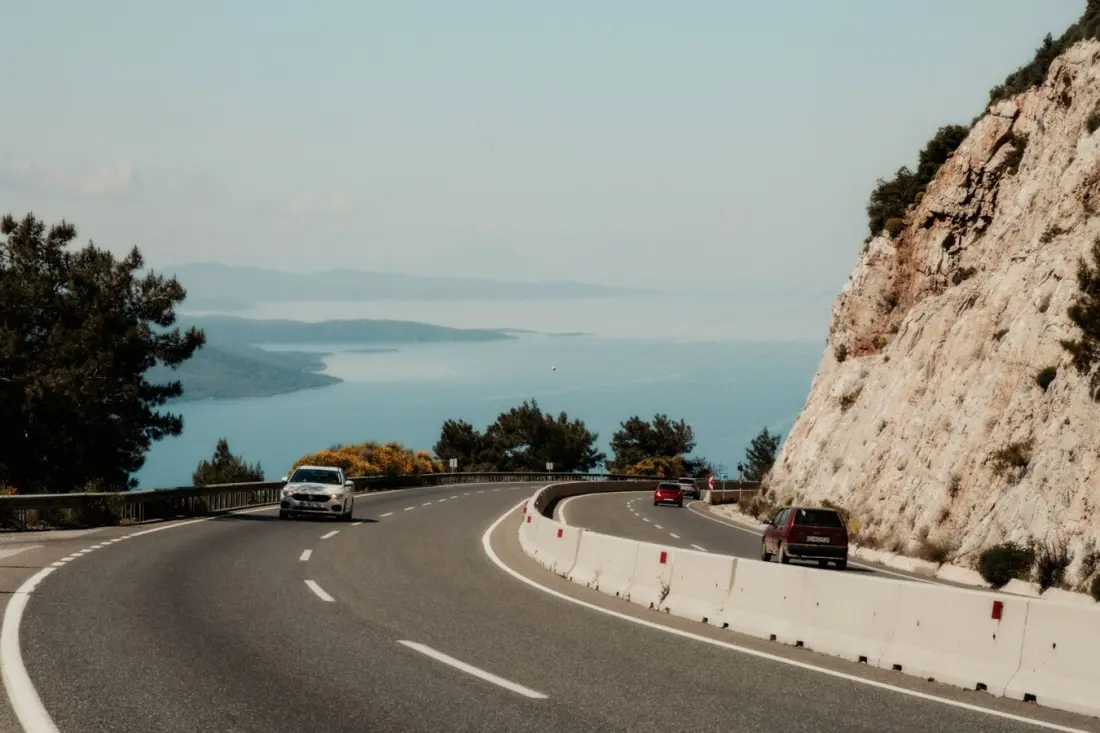
Anyone driving to the Adriatic coast this summer will notice two things about Croatian motorways: they're expensive, and there's a lot of work going on. What you won't get, currently, is any money back for the inconvenience.
Take the Zagreb to Split run, the classic route down to Dalmatia. A passenger car pays 26.40 euros each way - 52.80 euros for the return. Even with the ENC discount of 21.74 percent, three round trips set you back around 124 euros. Those are serious sums for a family holiday, and drivers pay them per kilometre regardless of what conditions are actually like on the road.
Right now, works on the A3 between Nova Gradiška and Lužani have been grinding on since September, due to finish mid-November, with two-way traffic squeezed onto a single carriageway. On the A1 between Gornja Ploča and Sveti Rok, bridge rehabilitation started in early October and runs into December, with the same one-carriageway setup. These are just two examples among many. Under Croatia's Toll Collection Act, discounts are possible in principle, but the rules contain no mechanism for reducing tolls because of roadworks, and the motorway operator HAC offers no refunds when lanes are closed or speeds restricted. When asked whether such a discount was legally possible - or whether it had ever been considered - HAC had not responded by the time the original report was published.
Other countries handle this differently. Slovenia extended the validity of its annual e-vignettes by four months at no extra charge, automatically covering all annual vignettes valid on 1 December 2025, precisely because works were degrading journey quality. Italy, which like Croatia charges by distance, lets drivers on the Autostrade per l'Italia network claim partial or full refunds when works significantly delay them, with expanded rights from June 2026. Spain went further still: the Supreme Court ruled in 2025 that charging full tolls during major delays on a motorway in Galicia was an unfair practice, and a group of 21 drivers won back half what they paid.
Not everyone thinks discounts are the answer. Marko Ševrović of Zagreb's Faculty of Transport and Traffic Sciences warns that cheaper tolls on a works-affected section could actually pull more traffic into an already congested corridor. His view: the real problem is that roadworks in Croatia simply last too long, thanks to labour shortages, rising costs, and a procurement system that rewards the lowest bid without counting what society loses to drawn-out disruption.
For travellers, the practical takeaway is modest but real: budget generously for Croatian tolls, expect delays on key north-south routes while rehabilitation continues, and know that - unlike Slovenia, Italy or now partly Spain - you won't be compensated for the hassle. If your route allows, timing the drive outside peak summer weekends is the only discount currently on offer.