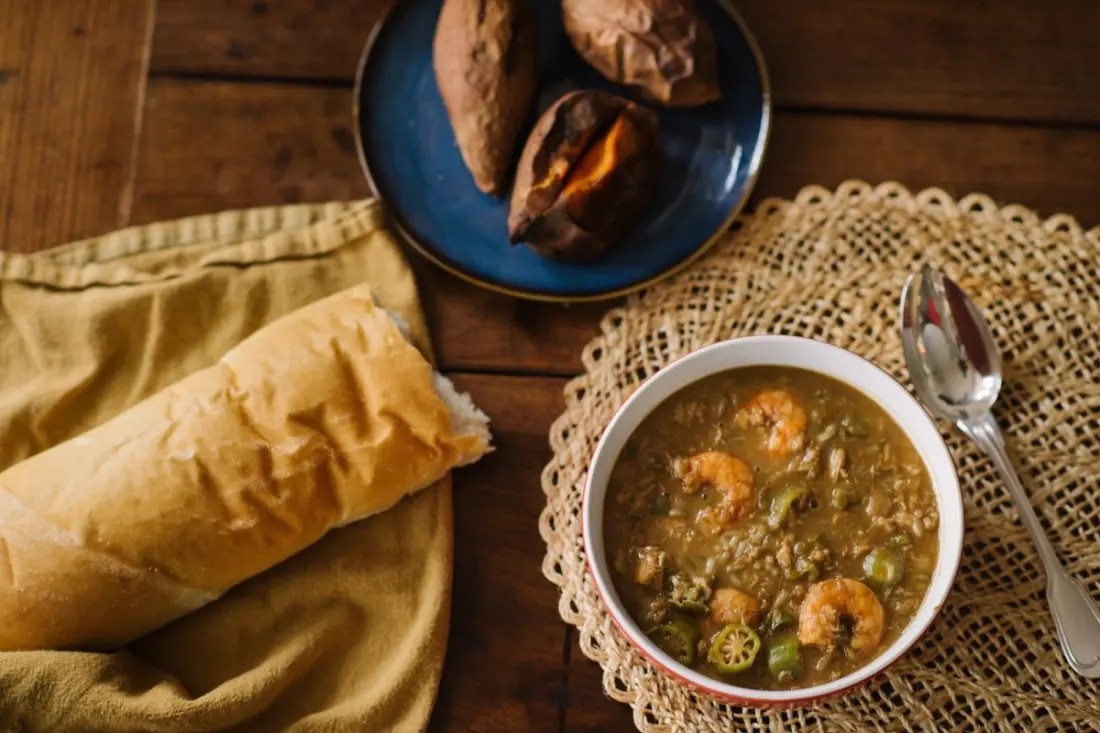
Ask ten Louisiana cooks how to make gumbo and you'll get ten different answers. That's the point. The state's signature dish — a thick, deeply savoury one-pot stew served over rice — has no fixed recipe, and the chefs who cook it professionally will tell you that's exactly what makes it worth travelling for.
The basics are constant enough: oil and flour cooked into a roux until it turns a rich chocolate brown, then the 'Louisiana Holy Trinity' of onions, bell peppers and celery, then protein. That could be chicken and andouille sausage, or blue crab, shrimp and crawfish. Everything after that varies, and the variations map the state's cultural history.
Chef Dee LaVigne, who runs the Deelightful Roux School of Cooking in New Orleans, traces the influences clearly. West African cooks (the word 'gumbo' likely comes from gombo, an African word for okra) brought the dish's roots via enslaved people in the 19th century. Native American Choctaw communities contributed filé powder, ground from dried sassafras leaves. The French brought the roux itself, and Black cooks, as LaVigne stresses, did much of the work developing and preserving the tradition — often without credit.
Geography creates the other divide. New Orleans gumbo tends toward Creole style and usually includes tomatoes. Head 135 miles west to Lafayette, in Cajun country, and you'll generally find no tomatoes at all — Lake Charles cooks favour a dark brown roux with rice, potato salad and saltine crackers on the side. In Lafayette, chef Patrick Mould of Louisiana Culinary Enterprises points to Courir de Mardi, a Mardi Gras tradition where costumed horseback riders go door to door collecting ingredients (sometimes chasing a chicken for the pot) for a giant community gumbo.
For a traveller, the obvious route is eating your way through it — a Creole bowl in a New Orleans kitchen, a Cajun version in Lafayette — or taking it a step further and learning the roux yourself at a cooking school. Either way, you're tasting a state built on bayous, swamps and Gulf coastline, and it doesn't stop at gumbo: jambalaya, crawfish étouffée, boudin, muffuletta and po'boys all belong to the same story. And as Mould says with a laugh, the best gumbo you'll ever eat is 'the one your momma made' — which is precisely why so many locals take theirs personally.
Original reporting by The Independent Travel.