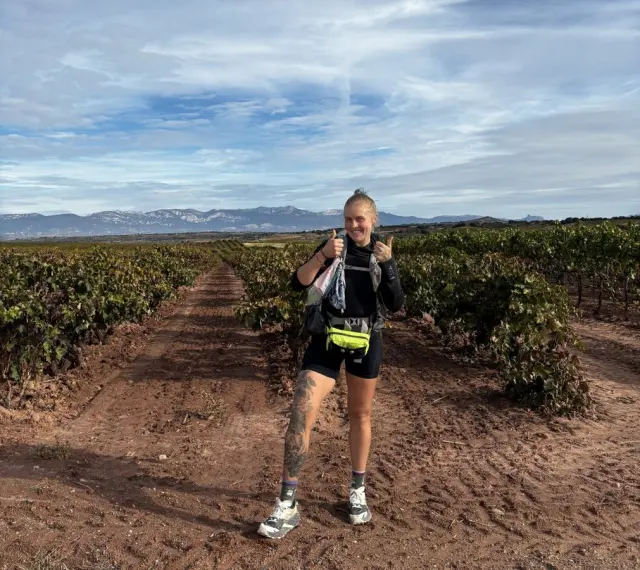
Somewhere between Belorado and San Juan de Ortega, the Camino de Santiago climbs into the Oca Mountains — a stretch of pine forest that medieval pilgrims feared for good reason. Bandits once hid in these woods to rob travellers on their way to Santiago, and walking the route today, with bare trees and a wind that cuts straight through you, it's easy to picture them.
A recent trekker's account of this day covers roughly 15 miles of northern Spain, and it's a useful snapshot of what a mid-Camino stage actually feels like. The day starts early — 6:30 a.m., before anything in Belorado is open — which means learning a hard lesson about Spanish gas stations: they sell fuel, not snacks and decent coffee. The first real stop is Tosantos, three gently uphill miles later, where every pilgrim on the trail seems to queue for the same tea and toast.
The stage is dotted with small curiosities. Tosantos has a hermitage built into a cliff face, said to mark a cave where a statue of the infant Jesus was hidden behind a heavy bell during the eighth-century invasions. In Villambistia, the local tradition is dunking your head in the public fountain to cure tiredness — cold water plus icy wind apparently does the job. By mid-morning, Villafranca Montes de Oca offers truck-stop food done properly: tortilla española, bocadillos, and chips with four ingredients instead of twenty.
Then comes the main event: a steep, 7.5-mile climb through uninhabited forest to the high point of the Oca Mountains. Cuckoos call through the trees, the leafless canopy opens up sweeping valley views, and near the summit a monument remembers 300 people executed there in 1936 during the Spanish Civil War. The descent runs through scented heather and managed pine forest on a wide gravel track, before farmland signals the arrival at San Juan de Ortega — timed, crucially, before siesta closures.
The village reward is a good one: a meal of pizza and wine with fellow pilgrims, a visit to the old cathedral, and a night in a converted centuries-old barn sleeping just 22 people. By 6 p.m., everyone's asleep in their sleeping bags.
For anyone considering the Camino Francés, this stage shows why the pilgrimage appeals even outside summer: quiet trails, small-town rituals, honest food, and accommodation with real character. It also underlines the practical rhythms — early starts, cafés that fill up fast, towns that shut down mid-afternoon, and the value of stocking up on water and fruit before a long wilderness stretch. You don't need to be a hardcore hiker; a steady pace of around three miles an hour covers it comfortably.