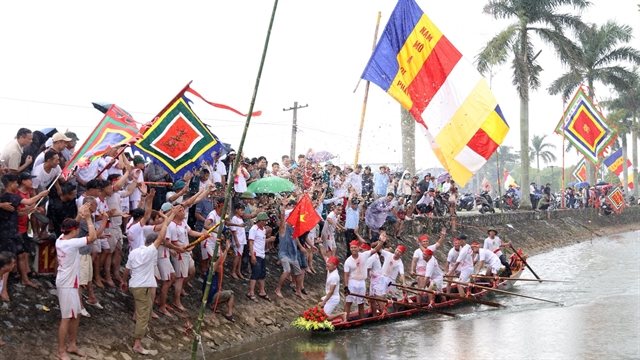
Most boat races ask you to sit down. In Hành Thiện, a village in northern Vietnam, the point is precisely the opposite: the standing boat race, held as part of the Keo Pagoda Festival, features rowers who propel their boats upright — a demanding technique that has been passed down for generations and remains one of the region's most distinctive folk spectacles.
The race is the centrepiece of a much larger event. Keo Pagoda, one of northern Vietnam's best-known ancient temples, anchors an annual festival that blends Buddhist ritual with village tradition. Ceremonies honouring the pagoda's patron monk sit alongside processions, folk games and communal feasting, and the standing boat race is the moment that pulls everyone down to the water's edge. Villagers row, neighbours cheer, and visitors from across the country and beyond gather to watch crews battle it out standing tall in their boats.
What makes the format so striking is the skill involved. Balancing in a narrow wooden craft while driving it forward with long oars takes strength, timing and real coordination — which is why the rowers train within their own village teams and why victory carries genuine local pride. The race is not staged for tourists; it is a community tradition that happens to welcome outsiders, and that authenticity is exactly what draws travellers interested in festivals you won't find on a generic itinerary.
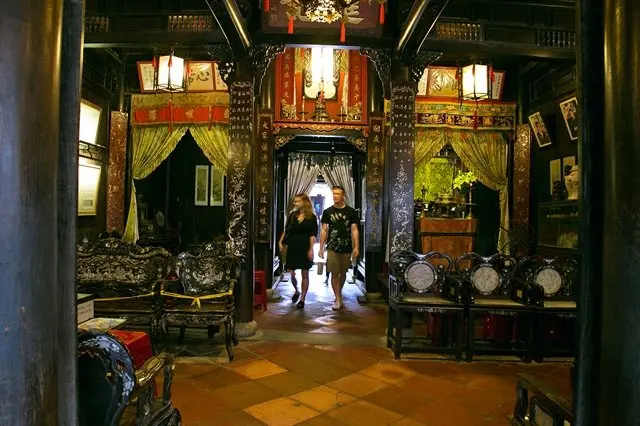
For visitors, the appeal is twofold. There's the spectacle itself — dozens of boats, shouting crews, banks packed with spectators — and there's the setting: a centuries-old pagoda complex with rare traditional architecture, incense-heavy courtyards and a festival atmosphere that spreads through the surrounding village. Food stalls, ceremonies and music round out the day, so a trip built around the race easily fills a full weekend.
Why it matters: if your idea of a good holiday includes witnessing something genuinely local rather than a show laid on for tour groups, time your northern Vietnam trip to catch it. The festival falls in the autumn lunar calendar, typically around the ninth lunar month, so check exact dates before booking. Combine it with a stay in nearby Thái Bình province or the old capital of Ninh Bình, and you get rice-flat countryside, river life and one of Vietnam's quirkier traditions in a single trip.