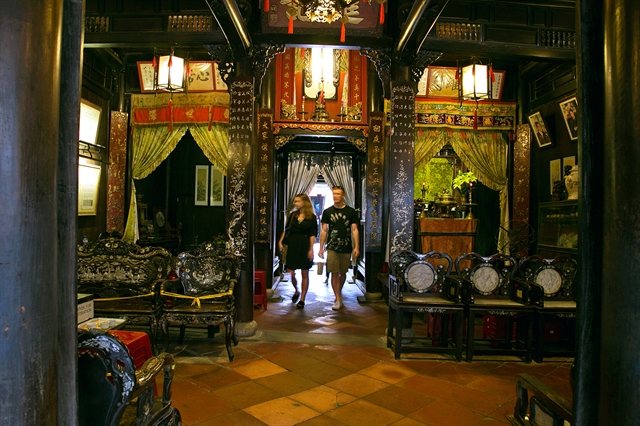
Hội An's lantern-lit Old Quarter is one of Southeast Asia's most beloved heritage towns, but the numbers behind its popularity are getting hard to ignore. Around 19.2 million visitors have passed through between 2012 and this year, generating roughly VNĐ2 trillion (about $80 million) in ticket revenue alone. Tourism now makes up 70 per cent of the town's economy — and the strain is showing.
At a recent conference on the town's future, experts laid out the problems plainly: waste and wastewater management struggles, infrastructure stretched past capacity, and creeping commercialisation. A survey found 38 per cent of residents and tourists feel Hội An's local culture has been gradually watered down by mass tourism. UNESCO research adds a sobering layer — only 35 per cent of the five million visitors in 2025 actually bought tickets to enter the ancient town, and about 40 per cent of the Old Quarter's 3,000 original residents have moved out. Newcomers from Hà Nội and Ho Chi Minh City now make up 30 per cent of the population, often converting old houses into shops. Of 30 structurally weak relics, 19 need urgent restoration, and the state budget only covers 40–60 per cent of the cost.
So what's the fix? Experts are pushing a shift away from sheer volume towards high-value, immersive experiences spread beyond the Old Quarter. A Destination Management Organisation, supported by AI tools, is proposed to coordinate the effort.
The most appealing ideas for travellers involve the villages around town. A green tourism network already links the Old Quarter with Trà Quế vegetable village (named one of the world's Best Tourism Villages in 2024), Kim Bồng carpentry village, Thanh Hà pottery community, the Củi Lũ Driftwood Village, a bamboo workshop in Cẩm Thanh, and conservation experiences on the Chàm Islands. There's also talk of a herbal wellness retreat zone connecting Phan Bội Châu and Phan Châu Trinh streets with Cẩm Hà village — think macrobiotic food, herbal cuisine, hands-on farming and cooking sessions, potentially extending to herb-growing ethnic minority communities in the mountains of Tây Giang and Nam Trà My.
For visitors, this matters because Hội An is actively trying to rebalance. Heading out to Trà Quế for a morning of farming with local families, or taking a boat to the Chàm Islands, doesn't just spread your money beyond the crowded core — it's exactly the kind of low-impact, community-based tourism the town wants more of. Go early in the day, buy the heritage ticket that funds restoration, and treat the craft villages as destinations in their own right rather than a footnote. Hội An has 1,175 relics and old houses in its protected core, and keeping them standing depends on travellers engaging more deeply, not just passing through for a photo by the Japanese Bridge.