Twenty miles from the nearest road — even a rough dirt one — Hawks Rest in Wyoming's Teton Wilderness holds the title of the most remote point you can hike to in the contiguous United States. It sits just outside Yellowstone's southeastern boundary, but unlike the park itself, where roads keep civilization within reach no matter how wild it looks, Hawks Rest delivers genuine isolation.
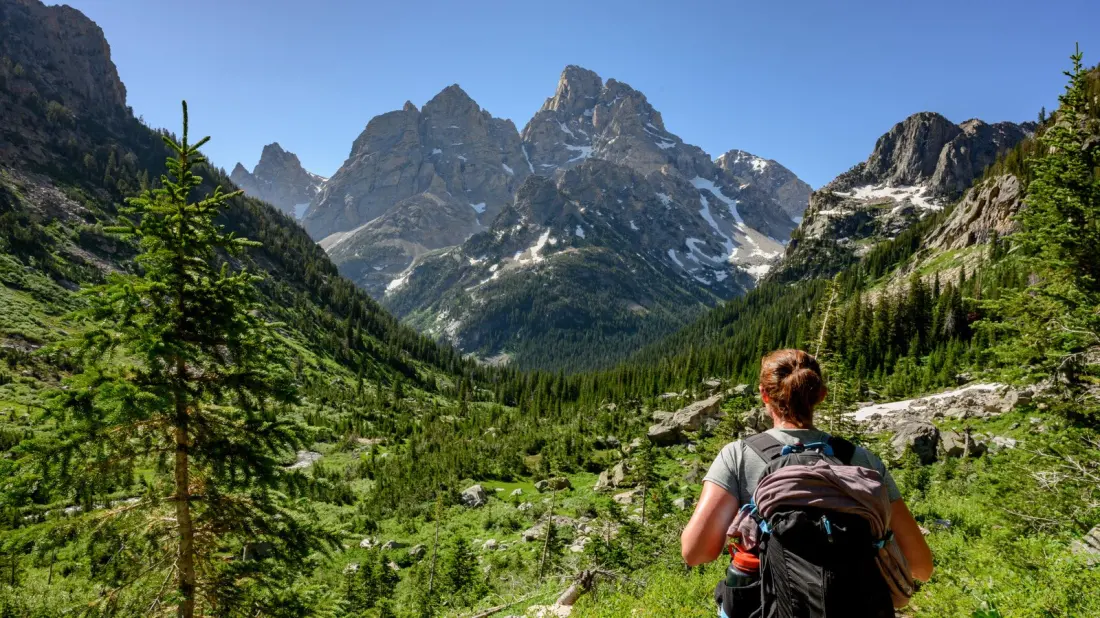
The setting is the Teton Wilderness, a 580,000-acre protected area established in 1964 that ranks among the wildest corners of the Lower 48. Hawks Rest sits near the Yellowstone River, and the landscape here belongs firmly to the animals: grizzly bears, wolves, bison, moose, elk and bighorn sheep all roam the region. Hikers and horseback riders are visitors in someone else's territory, and that's exactly the appeal for those chasing a true wilderness experience.
Getting there is the hard part. There's no shortcut — it's a two- to three-day hike one way, on foot or horseback only. Most independent trips start at the Hawks Rest Trailhead (6K5) on the eastern edge of Yellowstone National Park. You'll need to carry all your own camping gear, food and water, navigate without cell coverage, and take wildlife precautions seriously. Bear spray is non-negotiable, food needs to be stored properly, and anyone attempting this solo should be honest about their backcountry skills and fitness before committing.
If that sounds like a lot, there's a middle path. Outfitters such as Yellowstone Outfitters run guided horseback trips into the Teton Wilderness near Hawks Rest, with meals included. The catch is scale: minimum group size is five people, and the shortest package runs four days, extendable to ten or more. It's a real investment of time and money, but it removes much of the navigation and risk from the equation.
Why bother? Because genuinely remote places are vanishingly rare in the contiguous US. Of the 63 national parks, the 51 in the Lower 48 rarely offer a feeling of remoteness that matches the map. Hawks Rest is the closest most travellers will ever get to an Alaskan-style expedition without boarding a plane to Anchorage. This is not a casual day hike or a scenic drive — it's a serious multi-day commitment best suited to experienced backpackers, groups comfortable with horses, or wilderness veterans looking to tick off a genuine bucket-list outlier. If your idea of a holiday involves actual silence, wildlife on its own terms and a night sky with zero light pollution, few places in the Lower 48 come close.
Note that the window for this trip is narrow: high country in the Tetons holds snow well into early summer, and grizzly season means every trip requires preparation. Anyone planning a 2025 or 2026 attempt should book guided spots well ahead and check current trail and bear activity reports through the Bridger-Teton National Forest before setting out.