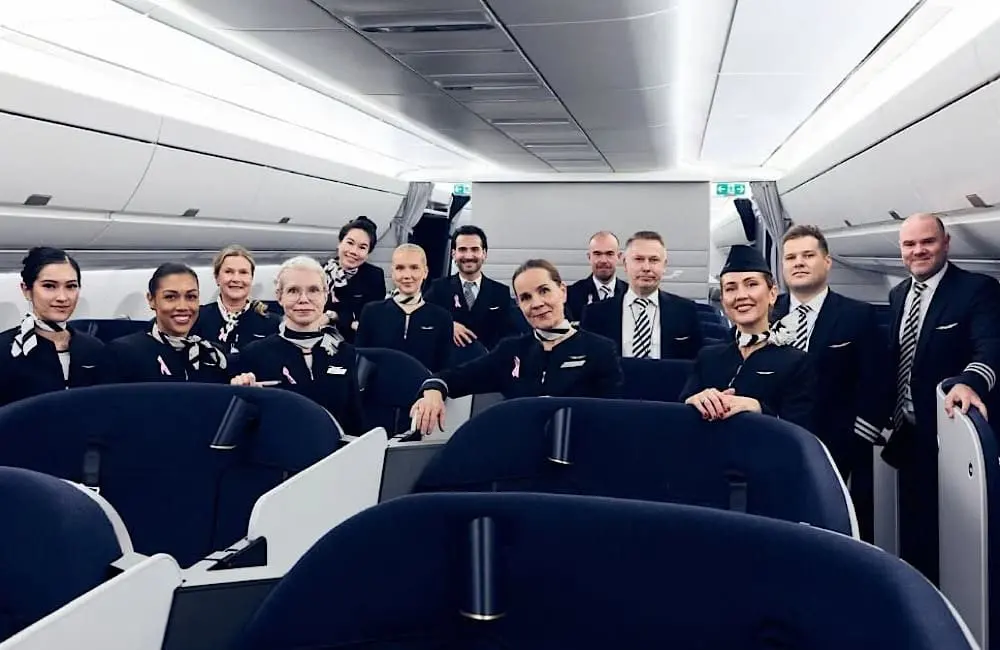
Melbourne now has a bragging right no other Australian city can claim: it's the only one served by a European Union carrier. Finnair's inaugural flight AY145 touched down on 26 October 2026, marking the Finnish flag carrier's first Australian service on its own aircraft and code.
The route runs daily with an Airbus A350, flying Melbourne–Bangkok–Helsinki. The clever bit is the Bangkok leg, which Finnair sells as a standalone sector thanks to fifth-freedom rights. That means you can book it simply as a Melbourne–Bangkok flight for a Thai beach break, or push on to Helsinki and connect to roughly 90 destinations across Europe. One ticket, three ways to use it.
Melbourne Airport values the service at about $190 million a year to the Victorian economy, and it's arriving at a moment of big change on the ground. The airport is pressing ahead with a third runway and a $4.5 billion international terminal expansion, all part of a $17 billion transformation program.
On board, the A350 offers three cabins: economy, premium economy and business. The business class centrepiece is Finnair's AirLounge seat, a fixed contoured shell that converts into a fully flat bed — a design that has built a loyal following among long-haul regulars. Helsinki itself is pitched as one of Europe's smoother transit hubs, which matters when you're connecting onward to the continent.
There's also a seasonal angle worth noting: Finnair flies year-round from Helsinki to Rovaniemi in Finnish Lapland, the official hometown of Santa Claus. For families planning a winter trip or travellers chasing the northern lights, Melbourne to Lapland in a single itinerary is now a realistic booking.
For Melbourne-based travellers, the practical upshot is choice. Until now, flying to Europe on a European airline usually meant starting in Sydney or routing through the Gulf or Asia on non-EU carriers. Finnair's arrival puts an EU carrier on the tarmac locally, giving Victorians a one-stop option to Finland and beyond, plus an alternative way to reach Bangkok without changing airlines. It also works in reverse: the service funnels European visitors directly into Melbourne and Victoria, which the airport and state hope will boost inbound tourism as much as outbound convenience.
If you're weighing it against the usual Gulf carrier routings, the selling points are a shorter northern detour via Helsinki, the flexibility of the Bangkok stop, and a fresh business class product on a modern aircraft. The catch, as always with new routes, is that schedules and fares can shift early on — but for a daily A350 with this much route flexibility, the odds look good that it's here to stay.