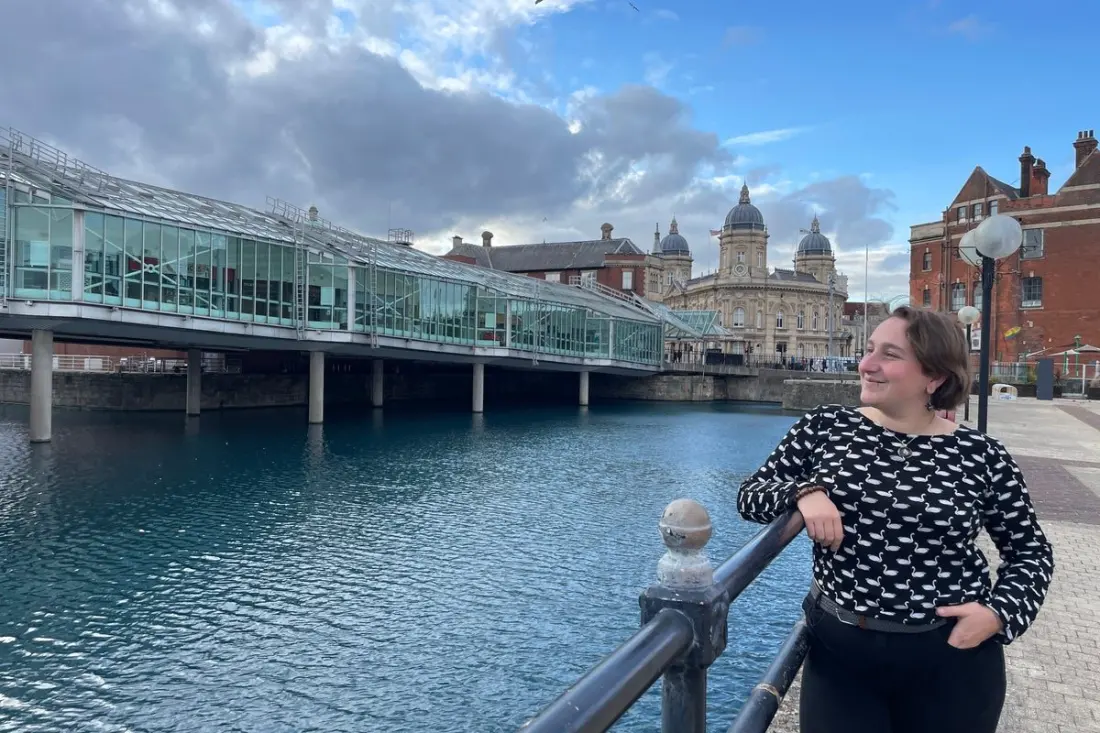
Hull has spent years being called Britain's 'crap town' and the worst city in Yorkshire. The joke is wearing thin. A decade after being named UK City of Culture in 2017, the city has had a £50m makeover via the lottery-funded Hull Maritime project, with five heritage sites reopening in 2026 — and it's finally telling the stories that made it interesting in the first place.
The centrepiece is the Maritime Museum, reopened after six years and a £20m renovation. Inside are thousands of seafaring artefacts, including the world's largest collection of scrimshaw (etched whalebone) and a huge baleen whale skeleton suspended mid-air. The city's maritime pride shows up everywhere, from the compass murals at the train station to the tongue-in-cheek 'Hullywood' sign — Hull frequently doubles for Victorian London on screen.
A free guided walking tour runs every Thursday and Saturday and covers the quirkier side of the city's past: the Arctic Corsair trawler (Hull's answer to the Cutty Sark) moored at the old shipyard, and the 2021 Mary Murdoch bridge, shaped like a whale skeleton in honour of the city's first female GP. There's also the moving story of the Headscarf Revolutionaries — four fishing wives who campaigned for safety reforms after the 1968 Triple Trawler Disaster and changed the industry worldwide, only to be shunned locally for it. Nearby Wilberforce House covers the city's most famous son, the MP who devoted his life to abolishing slavery.
Culture isn't all heritage. The Ferens Art Gallery holds one of the finest collections in the north, and The Deep is a genuinely world-class aquarium worth a Sunday morning. Humber Street, once a rough dockside, is now the liveliest cobbled corner in town: an independent gallery, a micro-bakery (Flour & Feast's pollen and tangerine bake is the order), Humber Fish Co for a locally sourced Skipper's lunch, and Ambiente Tapas for sherry flights. The street also hosts summer festivals — the Folk & Maritime Festival in July and Humber Street Sesh in August, showcasing local artists.
And yes, the party reputation is real. The Welly club runs until 3am on Saturdays, then you can contemplate jellyfish at The Deep by 10 the next morning. It's that mix — history, nightlife and low expectations from everyone else — that makes Hull a satisfying surprise for a city break.
Getting there is easy: Hull Trains runs direct from London in two hours 45 minutes from £60, and LNER also serves the city. The Hideout, a set of self-catered apartments between the old town and the clubs, has doubles from £100 a night — earplugs thoughtfully included.
For travellers bored of the usual York-and-Leeds circuit, Hull delivers an underrated, affordable weekend with real stories behind it. Credit: The Independent Travel