Spotting a red flag usually calls for caution. In the Peruvian Andes, it calls for a drink. A scrap of red cloth — sometimes a plastic bag or balloon — fluttering outside a home or shop means a fresh batch of chicha is ready, and anyone passing by is welcome to come in before it sells out.
Chicha is an ancient fermented corn drink that predates the Inca Empire and still threads through Andean daily life. Leo Silva, who manages Indigenous community relations at Mountain Lodges of Peru, explains its ceremonial weight: during Inti Raymi, chicha is offered to the Sun, and at pago a la tierra ceremonies around Cusco and the Sacred Valley, the first sip is poured for the earth — Pachamama — before anyone drinks. It also shows up at hair-cutting ceremonies, house inaugurations, and communal work parties known as minka and ayni.
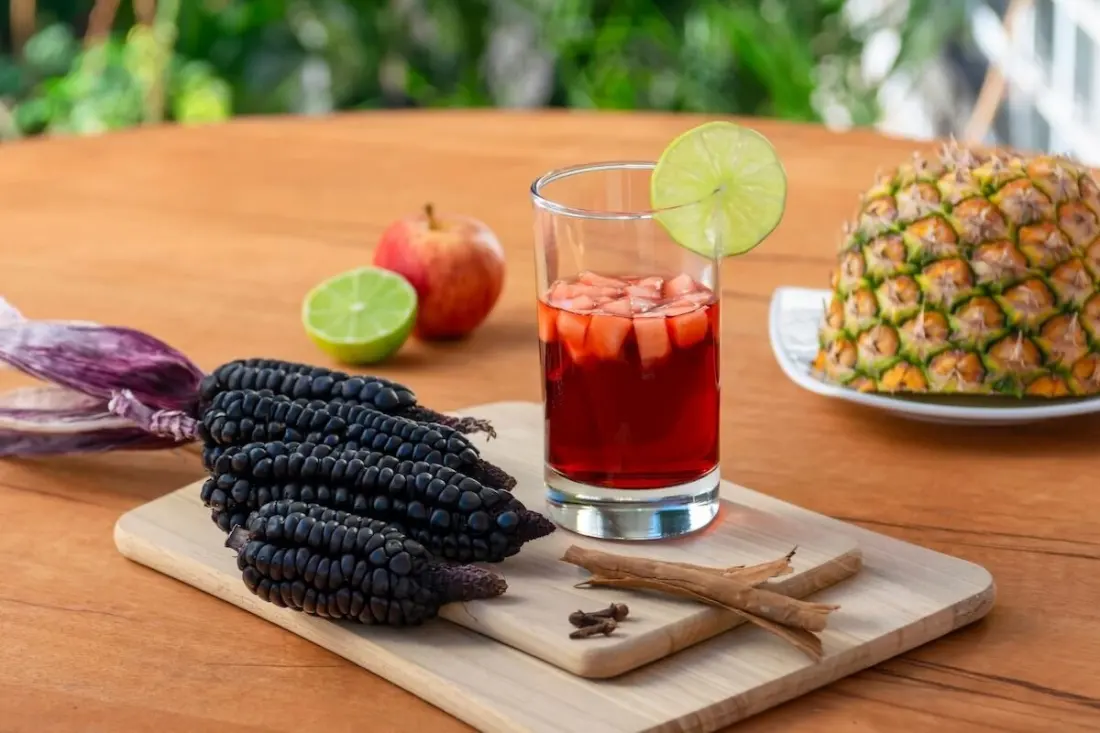
Two versions dominate. Chicha de jora, made from germinated yellow corn, ferments for several days into a mildly sour, faintly fizzy brew around five percent alcohol — think kombucha's country cousin. Chicha morada skips fermentation entirely: purple corn boiled with pineapple, cinnamon, cloves and sugar. Non-alcoholic and hydrating, it's a smart companion at Cusco's 3,400-metre altitude. Regional variants worth hunting down include frutillada (strawberry-infused), chicha de güiñapo (black corn from Arequipa) and chicha blanca (white corn or quinoa).
To drink it like a local in Cusco, follow the flags to a chichería — often a family home with a kitchen out back and a communal table where the flag stays up only until the batch is gone. Picanterías, informal lunch spots descended from chicherías, pour handmade chicha alongside regional plates: slow-roasted cuy, fried trout, chicharrón, quinoa soup. Try Picanteria Mamatrini in San Blas, or La Chuccha in Santa Ana, a weekend-only family home specialising in frutillada — arrive early, the food sells out. For a dressier take, Gastón Acurio's Chicha near the Plaza de Armas serves Andean classics with chicha-based cocktails, and Salineras Ranch runs hands-on chicha de jora workshops in the Sacred Valley. Vendors at the Maras salt terraces also fly the flag at their stalls.
Lima has its own chicha scene. Mixologists are pairing chicha morada with pisco: Bijou Bar in Miraflores pours a Moradita (purple corn, pisco, tonic, blueberries), while Joel Chirinos's Limaq Bar rotates guest bartenders through creations like El Combinao, blending purple maize, pisco and horchata. For chicha in its most everyday form, Mercado de Pueblo Libre sells homemade versions alongside ceviche and fresh fruit.
It's an easy, low-cost way into Peruvian culture — no tour required, just a willingness to duck through an unmarked doorway when you spot red cloth on the breeze. Bring cash, an appetite, and remember the ritual: earth first, then your toast.