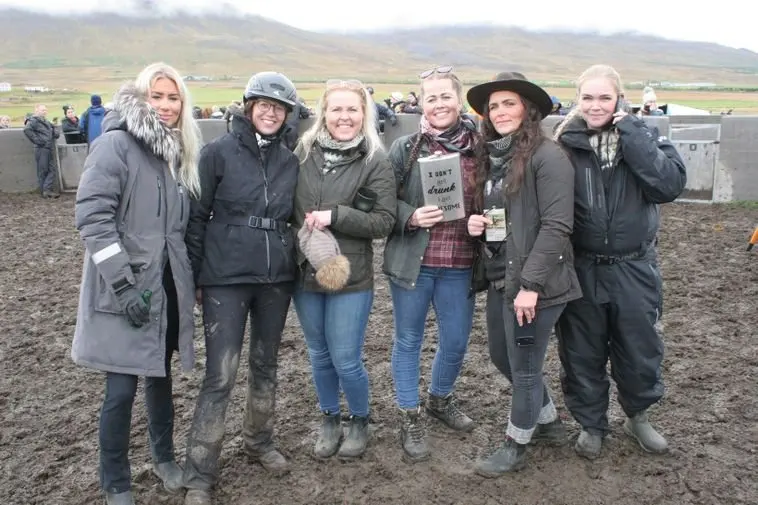
Picture a valley in North Iceland filling with hooves: around 1,500 horses thundering down from summer pasture, herded by some 300 riders on horseback, while crowds line the corrals to watch. That was the scene at Laufskálarétt on a recent Saturday, when the annual horse roundup went ahead in drizzly weather and, by all accounts, went off without a hitch.
Roundup manager Bergur Gunnarsson, a farmer at Narfastadir, told Morgunblaðið the event was a great success despite the damp. Riders ride out into an uninhabited valley nearby — prime summer grazing land — to bring the horses home. It's a tradition that has largely died out elsewhere in Iceland: the southern terrain simply doesn't suit it, so the north has kept this piece of rural heritage alive.
The logistics are fascinating. The sheep are brought down first, with the horses following two or three weeks later. The horses are gathered into an enclosure the weekend before the main sorting, and that's when the public gets involved — visitors are invited to join the ride into the valley to help collect them. People travel from all over Iceland with their own horses to take part.
On sorting day, many of the animals are untrained, which is exactly what makes the réttir (as these roundups are known) such a spectacle. Handlers help one another funnel the horses into the right pens, and while recognising your own animals used to be a skill in itself, every Icelandic horse is now microchipped — a quick scan settles any dispute. There's real energy in the corral, and some risk too: if a group bolts, you don't want to be in the way. Bergur, though, is relaxed about it. These are experienced horse people, he says, and it has always gone well. Horses, he notes, are far more likely to flee than sheep, which are stubborn creatures of an entirely different temperament.
The whole thing is steeped in atmosphere — the traditional passing of a flask among riders, crowds in wool hats, and that unmistakable autumn-in-the-north feel.
Why should a traveller care? Because the horse réttir is one of Iceland's best excuses to get off the Ring Road in September. Unlike many folk festivals, this one actively welcomes visitors into the action — you can literally ride out with locals to bring the horses home, then watch the sorting chaos from the edge of the pen. If you love horses, it's the perfect pairing with a riding tour; if you just love a good spectacle, it's Iceland at its most authentic, weeks before the winter darkness sets in. Timing is everything: the Laufskálarétt horse roundup happens roughly two to three weeks after the local sheep roundup, typically in mid-to-late September, so check dates locally before you book.