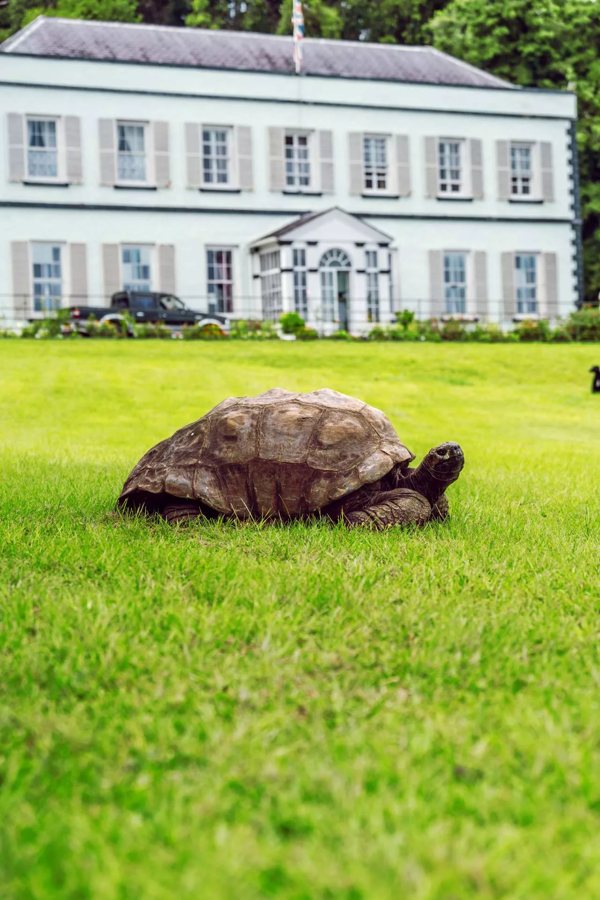
Jonathan has been around since roughly 1832 — before the invention of the telephone, the lightbulb or the aeroplane. At about 194 years old, the Aldabra giant tortoise on the remote South Atlantic island of St Helena is the oldest known living land animal, and he has now become the subject of serious scientific attention.
An international team of researchers sequenced and studied Jonathan's genome and epigenome — the chemical markers that switch genes on and off — with results published in Science Advances in October 2026. What they found is striking: chemical patterns linked to mitochondrial function, the cellular machinery that produces energy and degrades with age, looked remarkably similar to those of far younger tortoises. The team also identified genetic variations connected to DNA repair, metabolism, immune function and cancer suppression, all processes tied to healthier ageing.
Importantly, the scientists are cautious. There is no single 'longevity gene' here, and the study worked with a very small comparison group, so it is not yet clear whether these traits are common to giant tortoises or unusual even by their standards. Still, the findings suggest Jonathan's cells have been unusually good at preserving the functions that keep an organism running — which may matter well beyond reptiles.
For travellers, the story doubles as a reason to know about St Helena itself. Jonathan arrived on the island in 1882 and lives on the grounds of Plantation House, the governor's official residence, where he has become the island's most famous resident. Despite blindness and the usual indignities of extreme old age, he is still cared for daily by his keepers and remains a genuine draw for the small number of visitors who make it to this isolated British territory — most famously reached via the long flight to St Helena Airport or the occasional cruise ship call. Seeing a living creature who predates the Victorian era, in a subtropical island outpost that few travellers ever reach, is the kind of experience that justifies the effort of getting there.
The science, meanwhile, may eventually inform human ageing research, though that remains speculative. For now, Jonathan's lesson is simpler: longevity may be less about how long you live and more about how well your cells keep doing their job.