Eleven miles separate the walled medieval town of Los Arcos from Viana in Spain's Navarre region, and as one pilgrim's trail diary shows, that stretch packs in just about everything the Camino de Santiago is famous for: quiet hamlets, improbable history and the odd emotional breakdown over breakfast.
The day started late and cool — around 9 am at roughly 45°F (7°C) — with a walk out through one of Los Arcos' arched stone gates while local kids headed to school. With town cafes still shut, the first coffee stop came a few miles on in Sansol, a tiny hilltop hamlet. There, over breakfast with a guitarist playing nearby and fellow pilgrims from Australia and Brazil, the table drifted into conversation about faith and personal reasons for walking the Way. One traveller, moved by the discussion, ended up in tears — the kind of unguarded moment with near-strangers that long-distance walking seems to manufacture regularly.
The route between Sansol and the next village, Torres del Río, is barely half a mile apart, but it crosses a 2,000-year-old Roman bridge on the way. Torres del Río's standout sight is an unusual six-sided church, thought to carry Moorish-era Islamic architectural influence, and the view back to Sansol perched on its opposite hill is the better reward since the church doors were locked.
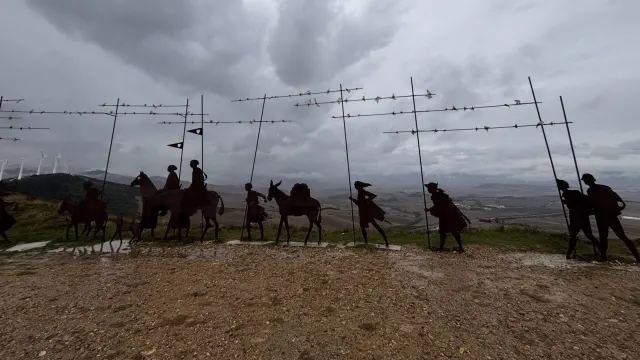
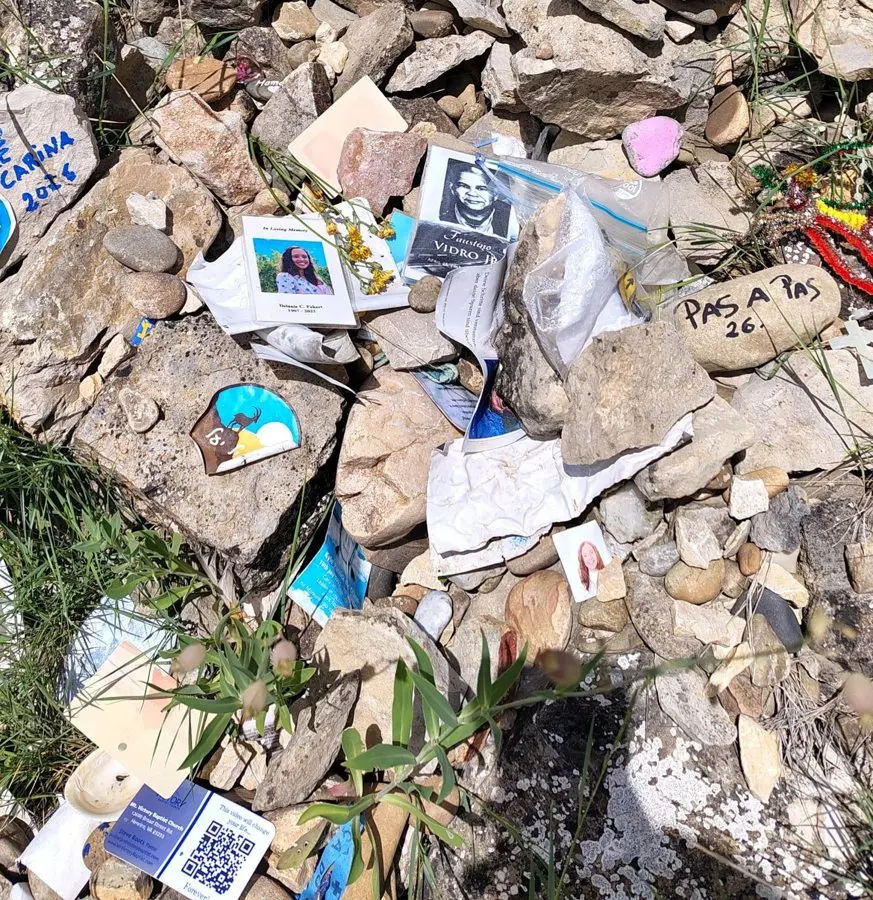
Beyond town, the trail climbs about 300 feet through wildflower-strewn paths — bright orange poppies among them — and past ancient vineyards with thick, gnarled trunks being pruned for the season's wine. Near the high point sits a tiny chapel dedicated to the Virgin, ringed by pilgrim-built shrines: photographs, handwritten notes, ribbons and keepsakes left in memory of lost loved ones. It's one of the more quietly moving things you'll stumble across on any walking route in Europe.
What makes this diary entry genuinely useful for anyone planning the Camino Francés is the pacing decision. Rather than following the standard guidebook stage all the way to Logroño, the writer split the distance and stopped in Viana — a town of two cathedrals, one largely destroyed by a structural collapse in 1844, the other intact and richly carved. That meant a very short hiking day afterwards, proving you don't have to march to the guidebook's rhythm.
There's a practical Spanish lesson in there too: most kitchens close around 3 pm for siesta and don't reopen until 8 pm for dinner, which is rough timing after ten hours on your feet. The fix is knowing where to find food outside those hours — or simply planning shorter days so a late dinner is a pleasure rather than a problem.
For anyone weighing up the Camino, this stage is a good argument for walking it: low daily mileage, historic towns every few kilometres, and a trail culture where strangers end up talking about the meaning of life by mid-morning. Slow it down, stop where the mood takes you, and let the itinerary breathe. — The Trek