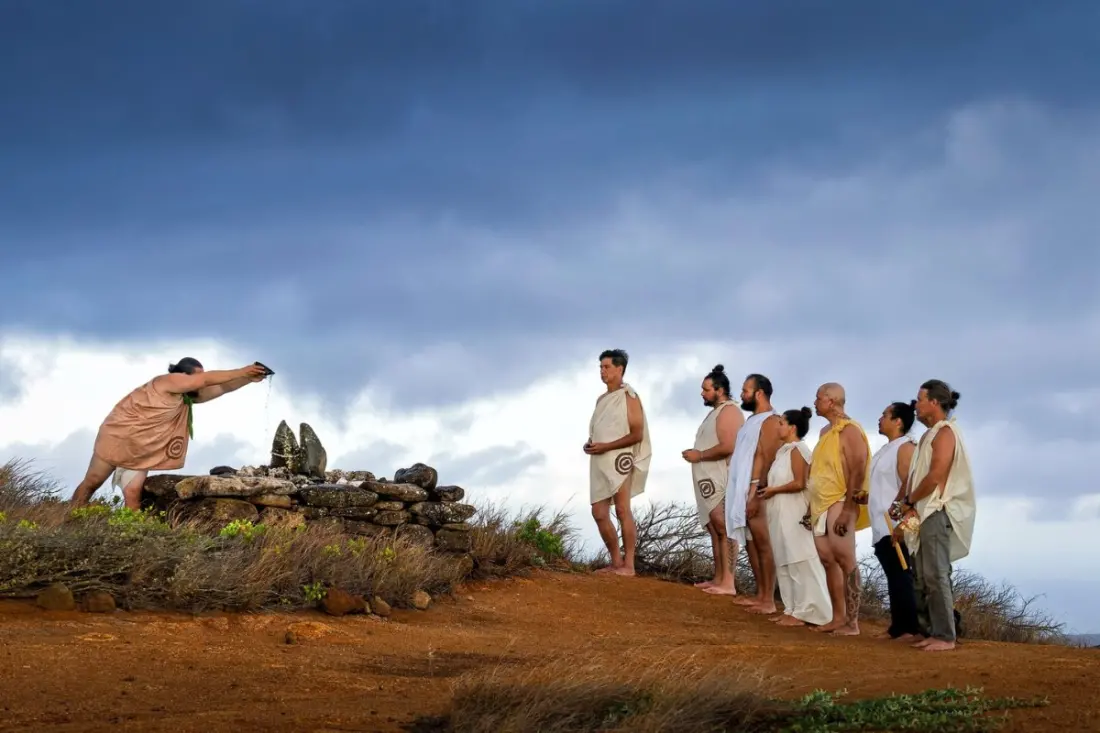
Kahoʻolawe, the small island about seven miles southwest of Maui, spent decades as a U.S. military bombing range. Explosions scarred its red earth and disturbed the waters around it — Maui residents still talk about hearing the blasts. But for Native Hawaiians the damage ran deeper than the physical. Ancient Hawaiians held the island sacred as Kohemālamamalama o Kanaloa, the body of Kanaloa, god of the sea, and its Kealaikahiki point — "the path to Tahiti" — trained ocean navigators for voyages across the Pacific.
Everything changed on 4 January 1976, when nine activists — including George Helm, Walter Ritte and Emmett Aluli — landed at Kūheʻeia on the island in defiance of the military. The protest drew national attention to the destruction of Hawaiian lands and gave rise to Protect Kahoʻolawe ʻOhana and the broader modern aloha ʻāina (love of the land) movement. In 2026, the organization marks 50 years since that landing.
The anniversary is being celebrated with cultural practices, educational programs and community events across Hawaiʻi, and the Bishop Museum in Honolulu is hosting a three-month series in partnership with the ʻOhana. Two evening panel discussions — "Maʻa: Establishing our Pilina to Kanaloa" on 22 October and "Paʻa: Kanaloa kānaka i Kanaloa" on 12 November, both 6–8 p.m. — explore stewardship, identity and community resilience. The centerpiece is a museum-wide celebration on Friday 13 November, 5–9 p.m., on the Great Lawn, launching the "50 Years of Aloha ʻĀina" album with performances by artists including Keahi Piʻiʻōhiʻa, Pōkiʻi Seto, Kiliona Young, Kaʻikena Scanlan, Kimié Miner and Ikaakamai Nahuʻewai. There will also be a silent auction, educational booths, health screenings and a new exhibit, "Kanaloa ka Lāʻa o Kohemālamalama: Unconquerable is the Divinity of Kohemālamalama," on the third floor of Hawaiian Hall.
Travellers should know that Kahoʻolawe itself is off-limits. It and its surrounding waters form the Kahoʻolawe Island Reserve, and access is restricted to authorized restoration, education and cultural purposes — largely because unexploded ordnance remains on the island. But the Bishop Museum events offer a meaningful way to engage with the island's story from Honolulu, and the museum's Hawaiian Hall is one of the best places anywhere to understand Native Hawaiian history and navigation traditions. Details and tickets are at bishopmuseum.org/pko.
For visitors to Hawaiʻi, the anniversary is a reminder that the islands' story includes activism, sacrifice and an ongoing relationship between people and land — not just beaches and resorts. Even without setting foot on Kahoʻolawe, you can see its influence in the resurgence of Hawaiian language, navigation and cultural practice across the state.