St Moritz's grandest old hotel is quietly getting an art-world makeover. The Kulm Hotel, perched 1,865 metres up in Switzerland's Engadin valley, has appointed art consultancy Artiq to look after and rethink its collection as the property goes through a multi-million-franc transformation designed by Foster + Partners under the Kulm Masterplan.
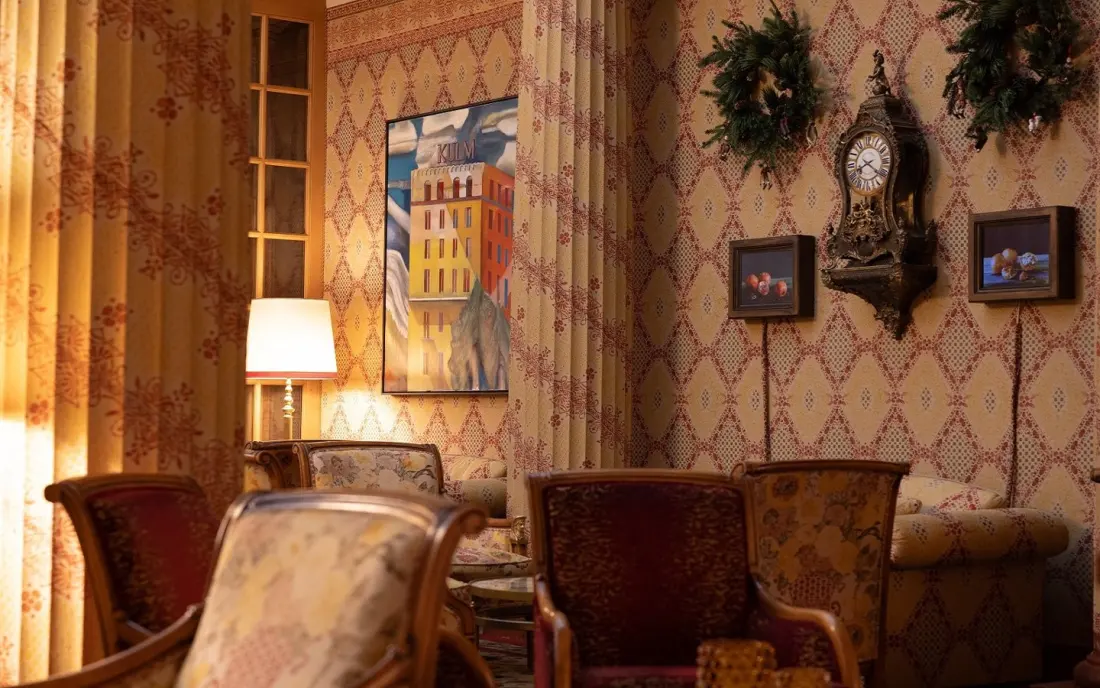
The collection itself is more impressive than most people would guess. Built up over generations since the hotel opened more than 170 years ago, it includes works by Jean-Michel Basquiat and Gary Hume, early video installations, and a marble sculpture that ties together skiing, peace and the Alpine landscape around the hotel. Until now, though, nobody had a complete picture of what the Kulm actually owned.
That was Artiq's first job: a full audit, photographing, cataloguing and assessing every piece to establish what the collection is, what matters in it, and what could be done with it. The point isn't just housekeeping. As Kulm Group's Brand and Commercial Director Yves Dewaegenaere put it, the art has a role to play both in preserving the hotel's heritage and in shaping what guests experience once the renovation is done.
What makes this interesting is the approach. Rather than hanging everything once and leaving it, Artiq plans to keep the collection live — works will be moved, repositioned and shown in new contexts over time. Familiar rooms will reveal something different, and returning guests will have a reason to look twice at walls they thought they knew. Patrick McCrae, Artiq's co-founder, describes the art as a layer of placemaking that connects the hotel to its Alpine setting beyond just architecture, interiors and views.
For travellers, this is worth knowing even if you don't consider yourself an art person. The Kulm isn't a gallery, but a well-handled collection changes how a hotel feels — you notice a Basquiat over breakfast differently than a stock mountain print. And because the plan is to keep rotating and reinterpreting the works, a stay here becomes something that shifts between visits rather than a fixed experience.
It also signals where hotel design is heading. The Kulm's renovation is one of the most closely watched alpine projects of the decade, and the decision to treat the art collection as a strategic asset — audited, managed and evolved over the long term — suggests the finished hotel will be as much about culture and atmosphere as about polished interiors. If you've been waiting to see what the new-look Kulm feels like before booking, the art programme is an early hint: heritage first, but not stuck in the past.
St Moritz itself remains a year-round draw — winter skiing on Corviglia, summer hiking and lake swims, and the kind of old-world hotel scene that's increasingly rare. The Kulm, with its views over the frozen lake and its newly curated walls, is positioning itself at the centre of it.