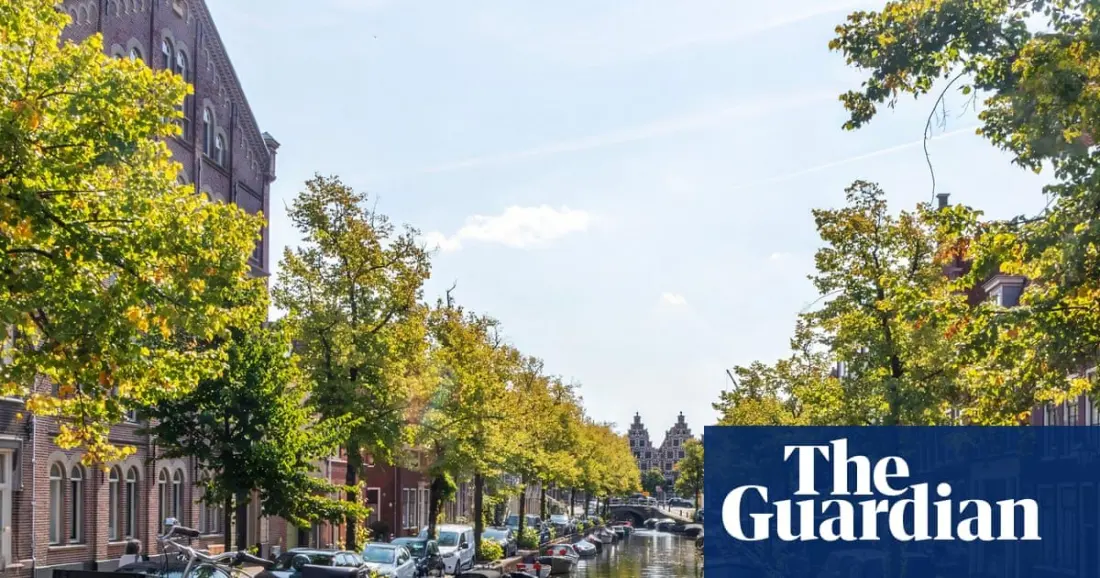
Fifteen minutes by train from Amsterdam, Haarlem manages to feel like a different country from its famous neighbour. Cobbled lanes, gabled houses and a slow-moving web of canals give it the classic Dutch postcard look, minus the crowds. Until 28 February 2027, there's an extra reason to go: the Frans Hals Museum is staging a joint exhibition pairing Frans Hals with Rembrandt, two giants of the Dutch Golden Age who may or may not have ever actually met.
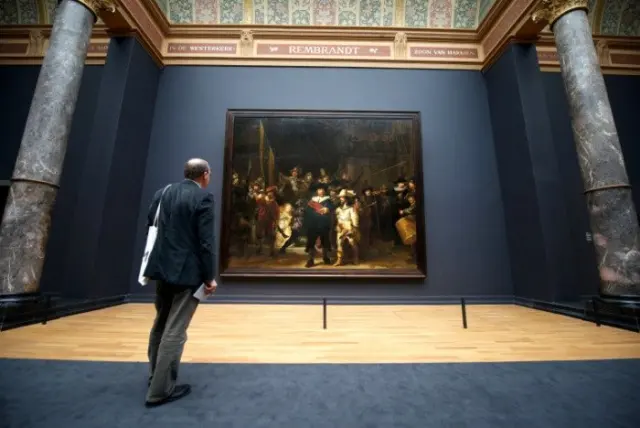
The setting adds to the drama. The museum occupies a former old men's care home where Hals himself spent his final years in poverty. Inside, you'll find merchant portraits, informal 'tronies' of ordinary people (including Rembrandt's touching study of his son Titus), and both painters' celebrated group portraits — closing with Rembrandt's De Staalmeesters from the Rijksmuseum hung beside Hals' painting of the very trustees of the building you're standing in. Hals' civil guard portraits and a couple of 17th-century street scenes that still match today's cityscape are highlights.
The exhibition doubles as a walking route. Peuzelaarsteeg, where Hals reputedly had a studio, now carries only a graffiti version of one of his paintings; the old militia house on Gasthuisstraat still bears crossed muskets above its gate; and an ordinary-looking door near the Proveniershuis opens onto a grand hidden courtyard, once home to the city crossbow guard. Hals is buried in the Grote Kerk, a vast, plain gothic space dominated by one of the world's largest baroque organs — reportedly played by both Handel and Mozart.
Beyond the art, Haarlem rewards aimless wandering. Its hofjes — walled courtyards hidden behind unmarked doors — pop up all over, and global chains are conspicuously absent. The Corrie Ten Boomhuis, two minutes off the Grote Markt, tells the story of a family who hid Jews and resistance members during the occupation, and skips the Anne Frank House queues. Teylers Museum by the river, arguably the country's oldest museum, is a wood-panelled cabinet of curiosities: fossils, crystals, scientific instruments and 19th-century Dutch painting. On Saturdays, the Grote Markt hosts a lively market.
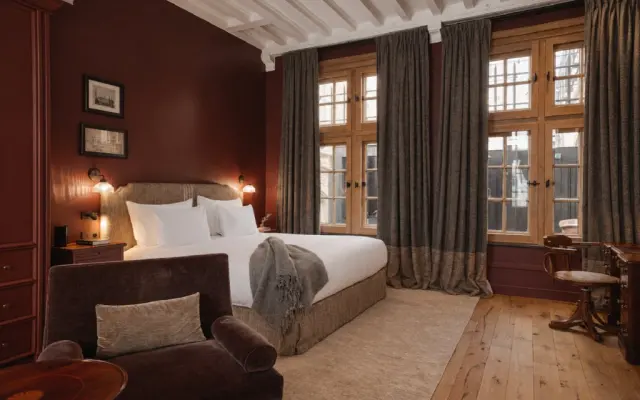
Food and drink lean local and independent. Meneer Frans does flammkuchen in the historic centre, a herring stall on the Grote Markt covers the classics, and In den Uiver — a 'brown cafe' in a former fish shop — pours 35 gins and as many speciality beers. The Jopenkerk brewery taps beer in a converted church; DeDakkas serves a sustainable menu on top of a car park with views to match. Beds range from the ML hotel by the Grote Kerk (doubles from about €119) to the boutique Staats Hotel near the station (from €165).
Cyclists outnumber cars here, and Green Bikes by the station rents them out for the ride west into Zuid Kennemerland national park — dunes, forests and lakes rolling down to North Sea beaches.
For UK travellers, Haarlem is an easy fix: it works as a day trip from Amsterdam, but staying overnight lets you enjoy it after the day-trippers leave. It suits anyone who liked Amsterdam's canals but not its crowds, and art lovers who want the Golden Age without the Rijksmuseum scrum.