Kyoto has hit a milestone few cities could dream of: 62.79 million visitors in 2025, a record driven largely by the city's preserved temples, traditions and streetscapes. Now the hotel world is racing to keep up — and the newest wave of openings is notable for how quietly it does so. Rather than chasing spectacle, Kyoto's latest luxury properties are built around the city's own architecture, crafts and rituals.
The big one to watch is Songtei Kyoto, Shangri-La's ultra-luxury signing on the iconic strip opposite Nijo Castle, a UNESCO World Heritage site. The 77-room hotel stands where the Kyoto Shoshidai once administered the city for the Tokugawa shogunate during the Edo period, and its design borrows the ceremonial grandeur of that era, with rooms looking towards the castle's North Gate. It's only the second property in Shangri-La's Signatures collection, opening in stages from later this year with completion slated for 2027.
Two more openings lean into intimacy. The six-room Hanamiya Hotel, on the Kamo River and due in late 2026, weaves in Kyoto's traditional crafts — textiles, lacquerware, ceramics, decorative paper — and plans seasonal riverside dining from May to October, echoing the noryo yuka platforms that have lined the river since the 17th century. Out on Mount Hiei, a 1,200-year-old centre of Buddhist practice, The Thousand Hiei – Mui Okuyama arrives in spring 2027 with just 33 rooms, wellbeing programmes involving acupuncture, bathing and sacred spring water, and a terrace over Lake Biwa.
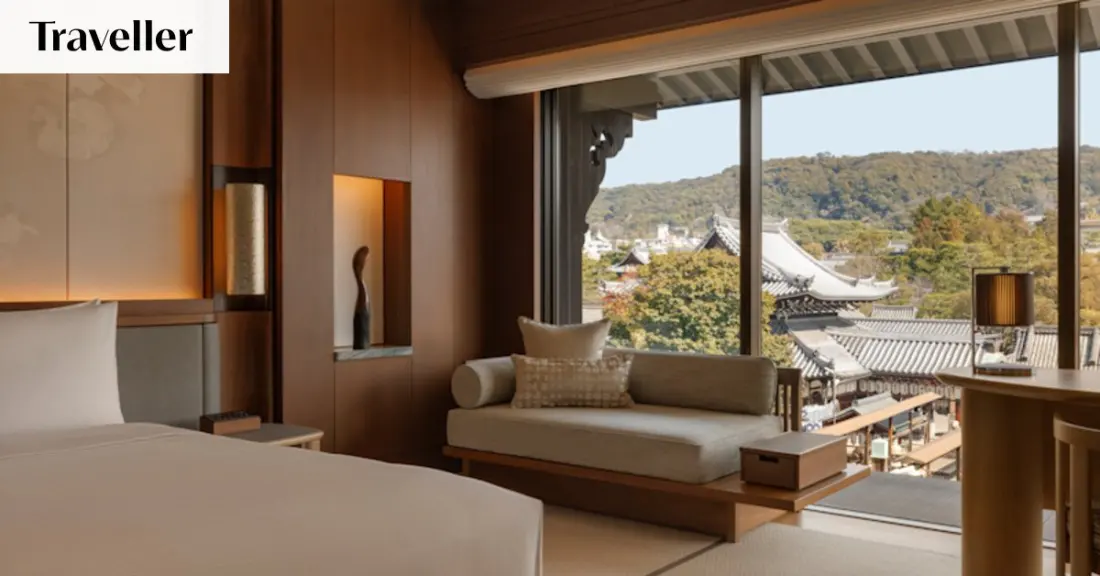
Two hotels are already open. Capella Kyoto launched in March with 89 rooms spread across buildings by Kengo Kuma & Associates, reinterpreting the city's machiya townhouses — narrow-fronted wooden homes hiding deep interiors and courtyard gardens. Guests enter through a shoji-screened passage with the sound of a hidden waterfall before reaching a tranquil courtyard, and reclaimed timber and artefacts from a former elementary school on the site are woven into the design. Also in March, Imperial Hotel Kyoto opened inside the restored Yasaka Kaikan in Gion, a building tied to the city's performing arts heritage.
For travellers, the timing matters. Kyoto's crowds are only growing, and these small, design-led properties offer a way to experience the city's culture without joining the queue at Fushimi Inari. The race now is to book: several of these hotels won't reach full operation until 2027, and rooms at the six- and 33-room properties will be scarce from day one.
Story via Traveller (Sydney Morning Herald).