When Colorado's first rifle elk season opened in mid-October, it collided with the region's first real snowstorm — and Routt County Search and Rescue ended up handling three separate emergencies in just 14 hours.
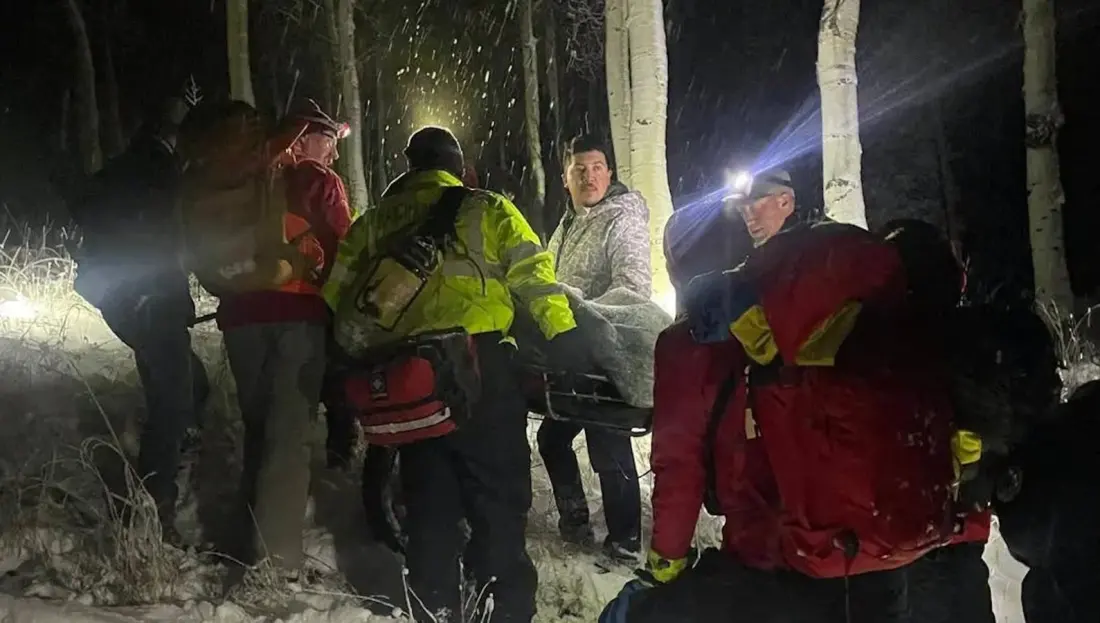
The busiest call came on the night of October 14, when a hunter became separated from their group near Bears Ears, a remote area about 20 miles north of Hayden. The hunter managed to call 911 with coordinates just before their phone died. Getting there wasn't easy: snow-covered roads stretched the drive to the staging area to nearly three hours, and crews then hiked down to find the hunter too cold to walk. Wrapped in a hypothermia wrap, they were hauled roughly 1,500 feet uphill through eight inches of snow on a wheeled stretcher, with bystanders pitching in.
Earlier that afternoon, rescuers located an overdue hunter near Dunckley Pass, a 9,800-foot crossing southwest of Steamboat Springs, shortly after dark. Then in the early hours of October 15, a third hunter was seriously hurt near Bears Ears when a tree reportedly fell onto their tent while they slept.
One party that came close to becoming a fourth rescue: a group of four, including 39-year-old first-time elk hunter Korin Pusillo, who stayed out to process a bull elk as rain turned to heavy snow. Wet gear failed them in familiar ways — a GPS malfunctioning from moisture, a phone screen refusing to respond, and mud so slick under the fresh snow that the group crawled uphill on hands and knees. Fallen trees blocked routes the most experienced member had known for decades. They made it back to camp after four-plus hours by following a camp-location pin Pusillo had shared earlier and reflective tree markers picked up in headlamps.
The warning signs were there. The National Weather Service had flagged four to eight inches of snow above 9,500 feet with 35 mph gusts a day earlier. But the group had checked the forecast for nearby Craig, which predicted only rain, and assumed it wouldn't get cold enough to snow where they were.
Why it matters: shoulder-season mountain trips anywhere in the American West carry this same trap. Valley forecasts often don't reflect conditions a few thousand feet higher, and wet failures — not just dead batteries — can knock out phones and GPS units. Search and rescue volunteers note that help can be hours away, and Colorado agencies recommend monitoring mountain-specific forecasts, planning exit routes, carrying gear for an unplanned overnight, packing backup navigation and spare batteries, and agreeing on check-in times before you lose signal.