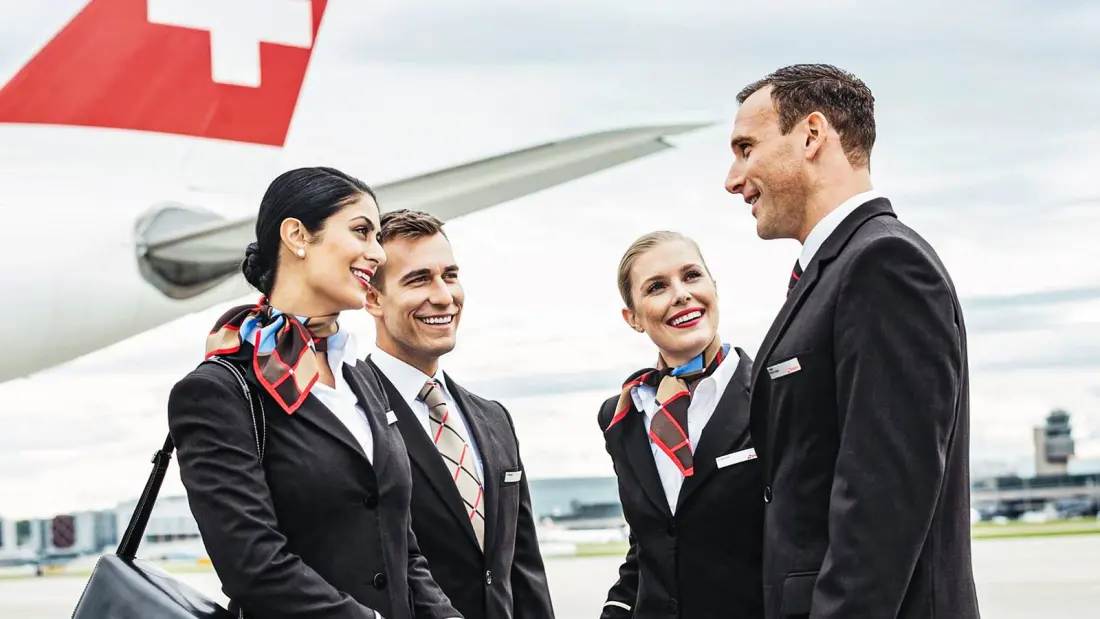
Think getting into an Ivy League school is hard? Try becoming a flight attendant. Only 1% to 4% of airline cabin crew applicants actually get hired, and Delta reportedly received more than 100,000 applications for roughly 1,000 to 1,200 open roles. Emirates, meanwhile, fields over 15,000 applications every month. The glamour of the uniform keeps the pipeline full — which lets airlines be extraordinarily picky.
The sheer scale of recruitment is striking. US airlines generate around 18,500 flight attendant openings a year, and the biggest carriers — Delta, American, United and Emirates — hire anywhere from 1,000 to 5,000 crew annually, spiking to 8,000 during fleet expansions. In January 2024, Emirates announced it was recruiting 5,000 cabin crew to match its new A350 deliveries, after hiring 8,000 people the year before. American Airlines now has the world's largest cabin crew workforce at just over 30,000, with Delta and United each around 28,000-30,000, Southwest about 20,000 and Ryanair over 16,000. Lufthansa added more than 2,000 crew in 2025, Qantas plans 600 hires over five years alongside a new Singapore base, and British Airways maintains roughly 15,000 crew, 12,000 of them at Heathrow.
Even winning a spot doesn't guarantee you keep it. The screening process — applications, online assessments, interviews, assessment days, security and medical checks — takes three to six months, followed by a six-to-eight-week training course. Safety and emergency procedures dominate, exam pass marks are brutal, and about a quarter of each training class typically washes out. Some airlines fund training or pay a salary during it now, which is a relatively recent shift.
The hiring boom isn't slowing. Boeing forecasts demand for 1.02 million new cabin crew through 2045 — about 40,000 openings a year — and CAE's Aviation Talent Forecast projects 678,000 new crew needed globally by 2034, with over 60% of that replacing retiring staff rather than supporting fleet growth. Asia-Pacific leads demand at 38% of projected hires, followed by Europe, North America and the Middle East. Regulations also set a floor: both EASA and FAA require one crew member per 50 passenger seats.
The industry is changing, too. easyJet has doubled its hiring of over-50s compared with 2022 and quadrupled over-60 hires; recruiters increasingly favour hospitality backgrounds and language skills as premium cabins expand; and rules around tattoos, piercings and gender-specific uniforms have loosened. Hiring windows now close fast — sometimes within 24 to 48 hours — so serious candidates need to watch postings closely and reapply promptly, typically waiting three to six months between attempts.
Why does this matter to travellers? Because the crew looking after you are the survivors of a brutally selective process, and their primary role is safety — evacuation, onboard fires and medical emergencies — not just service. For anyone eyeing the career, the advice is blunt: research what the job actually involves, because most failed candidates don't.