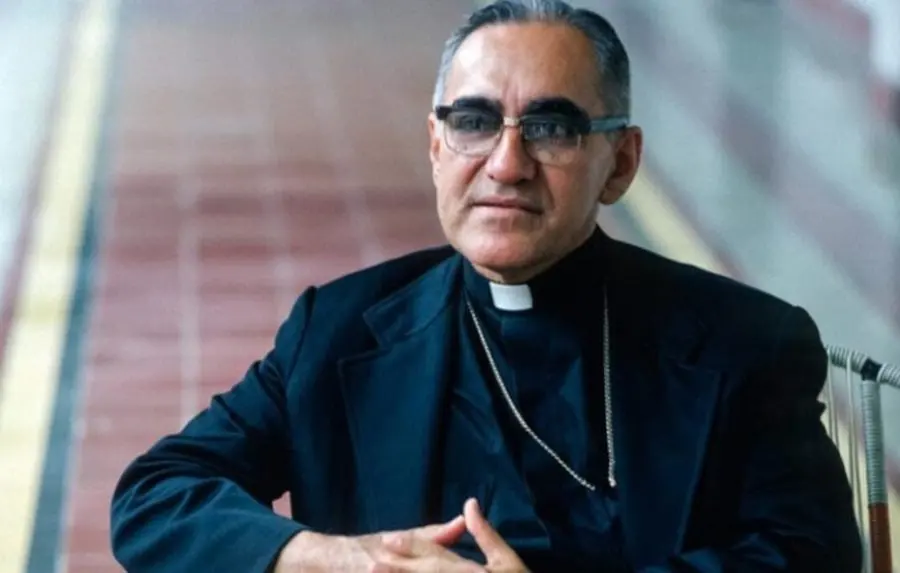
Downtown San Salvador is full of Óscar Romero. His face appears on church walls, in small towns, on murals and in conversation — Salvadorans still call him Monseñor Romero, a title that feels more like family than clergy. For travellers, understanding who he was is one of the fastest ways to understand the country itself.
Romero was born on 15 August 1917 in Ciudad Barrios, in the eastern department of San Miguel. He trained in local seminaries, finished his studies in Rome, and was ordained a priest in 1942 before spending years serving communities in eastern El Salvador. He became auxiliary bishop of San Salvador in 1970, bishop of Santiago de María in 1974, and archbishop of San Salvador in February 1977.
That appointment mattered. He was widely seen as a cautious choice who would not ruffle the country's powerful elite. But the murder of his friend, Jesuit priest Rutilio Grande, near El Paisnal on 12 March 1977 — weeks into his tenure — changed everything. Romero began using his Sunday homilies and the archdiocese's radio station to report killings, disappearances and arbitrary arrests that official channels ignored. As the country slid toward a civil war that would last until 1992, he became known as the Voice of the Voiceless, condemning violence from all sides and even writing to President Jimmy Carter in February 1980 asking the US to stop sending military aid.
On the evening of 24 March 1980, the day after a homily urging soldiers to refuse immoral orders, Romero was shot while celebrating Mass in the chapel of the Divine Providence Hospital in San Salvador. His funeral at the Metropolitan Cathedral six days later descended into gunfire and explosions that killed dozens. A 1993 UN Truth Commission concluded that death-squad leader Roberto d'Aubuisson, founder of the ARENA party, ordered the killing; a 1993 amnesty law stalled justice until it was annulled in 2016.
The Catholic Church moved slowly. Pope Francis recognised Romero as a martyr in February 2015, beatified him that May in an open-air ceremony in San Salvador, and canonised him in St Peter's Square on 14 October 2018 — making him El Salvador's first saint.
For visitors, Romero's story doubles as a practical travel route. The small chapel at Divina Providencia Hospital where he was assassinated is now one of the country's most significant historic sites, and the Metropolitan Cathedral where his funeral took place anchors the city centre. His homilies, many preserved as recordings, offer an unfiltered window into the era. Pairing these sites with the civil-war memory sites around the country gives context that guidebooks rarely capture — and explains why religion still shapes daily Salvadoran life so visibly. Anyone heading to El Salvador who wants more than beaches will find Romero's trail the most rewarding itinerary in the country.
El Salvador Info