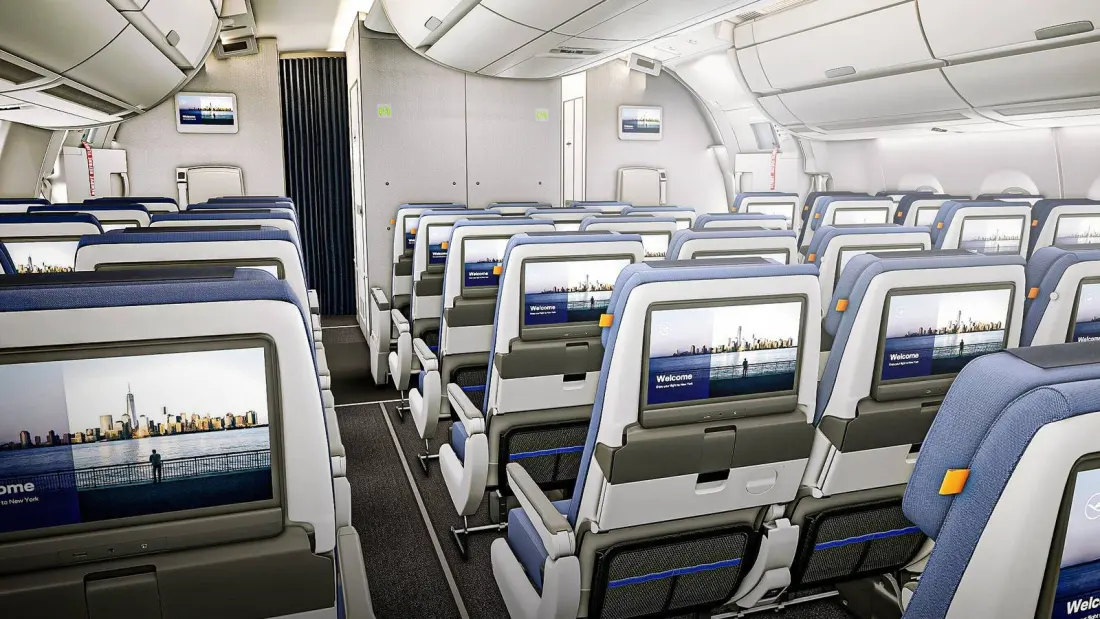
Lufthansa has quietly redrawn the rules for its cheapest European tickets. A new Economy Basic fare, rolled out across the airline's short- and medium-haul network in late spring 2026, strips out the one perk passengers assumed was untouchable on a legacy carrier: the free cabin bag. Travellers on these fares now get a seat and a personal item measuring just 40 × 30 × 15 cm — roughly 18 litres of space, closer to a small daypack than a roller bag.
The detail that has frequent flyers genuinely annoyed is who doesn't get an exemption. Top-tier Miles & More members and Star Alliance elites — people who have spent years earning status — are bound by the same rule when they book Economy Basic. In most full-service airlines' playbooks, elite status guarantees baseline baggage perks no matter the ticket. Lufthansa has severed that link, meaning your status now counts for less depending on how cheaply you booked.
If 18 litres sounds tight, consider the comparisons. Ryanair's free under-seat allowance is about 24 litres, and easyJet's is around 32.4 litres — both more generous than Lufthansa's new baseline. Europe's most famously strict budget carriers are now, in this one respect, softer than a flagship full-service airline. It's a reversal of how the market has always been pitched.
There are workarounds, naturally, and they cost money. Adding a standard carry-on of up to 8 kg starts at about €15 if you pay in advance, and higher fare tiers bundle the bag back in along with seat selection. That's the commercial logic: a low headline fare that looks sharp in online price comparisons, followed by incremental upsells that often bring the real price close to a traditional economy ticket. It's unbundling in its purest form.
Worth noting: the restrictions only apply to short- and medium-haul European routes. Long-haul Lufthansa economy tickets still include carry-on and checked baggage as standard, and the airline isn't about to dilute its premium product on intercontinental routes where fares are higher and expectations match.
For travellers, the practical takeaway is to read the fare name carefully, not just the price. If you're flying intra-Europe with hand luggage only, Lufthansa's cheapest fare may actually cost you more than easyJet once you add a bag — and unlike budget carriers, there's no elite carve-out to save you. Frequent flyers face a genuine trade-off: pay for a flexible or classic fare to keep baggage perks, or accept that the cheapest ticket now levels everyone down to the same tiny backpack. Expect other European network carriers to watch this closely; if it works for Lufthansa, similar fare structures elsewhere likely won't be far behind.