Somewhere between a brisk day hike and full-on rock climbing sits a grey zone that Canadian outdoor writers call scrambling — and, at its spiciest end, "mad scrambling." Explore Magazine has spotlighted the discipline, and it's worth understanding before you set off on a mountain trail that turns out to be more than a trail.
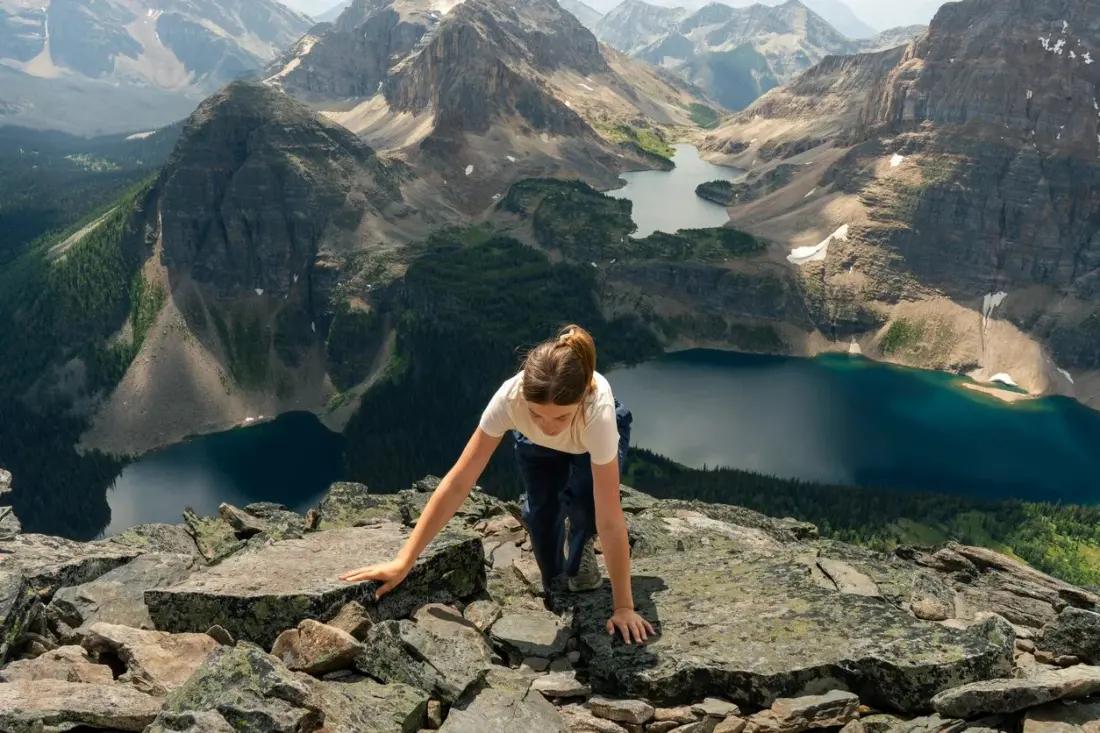
Scrambling is what happens when a route steepens to the point where you need your hands to keep moving, but not so much that you'd routinely rope up and place gear like a climber. Think hands-on rock, exposed ledges and loose gullies on peaks in the Canadian Rockies, Coast Mountains and elsewhere. Easy scrambles can feel like a fun, adventurous hike. Harder ones — the "mad" variety — cross into terrain where a slip could be serious, and where the line between scrambling and climbing gets genuinely blurry.
Why does this matter to travellers? Because some of the most spectacular summits and ridge walks in Canada's mountain parks aren't hikes at all. Route descriptions that sound innocent — "follow the ridge to the summit" — can hide sections of fourth-class ground where falling has real consequences. Hikers who assume trail rules apply everywhere get caught out every season, often on routes that look straightforward from the parking lot.
The practical takeaway: research the specific route and its grade before you go, not just the mountain's name. Guidebooks and local sites usually flag whether a route is a hike, a scramble or a climb, and how exposed it gets. If a description mentions "hands-on" terrain, moderate exposure or route-finding challenges, pack accordingly — grippy footwear, a helmet on popular scrambling peaks, layers for slow progress, and more time than a comparable hike would take. Turn-around discipline matters too: loose rock and early-afternoon storms make speed and judgement part of the safety kit.
For fit hikers ready to level up, scrambling opens up a huge catalogue of summit adventures that sit just beyond hiking reach — and guided courses exist across Alberta and British Columbia for learning movement skills, route-finding and when to say no. It's the natural next step between the trailhead and the climbing gym, done right.