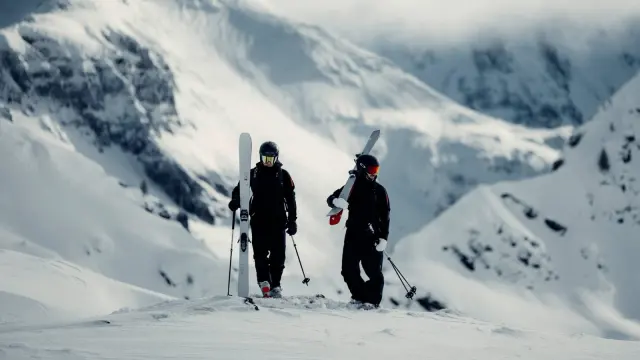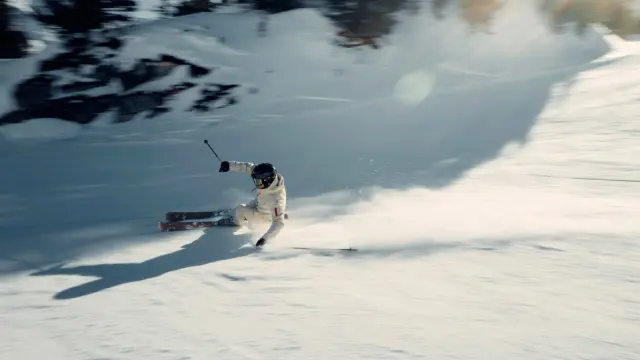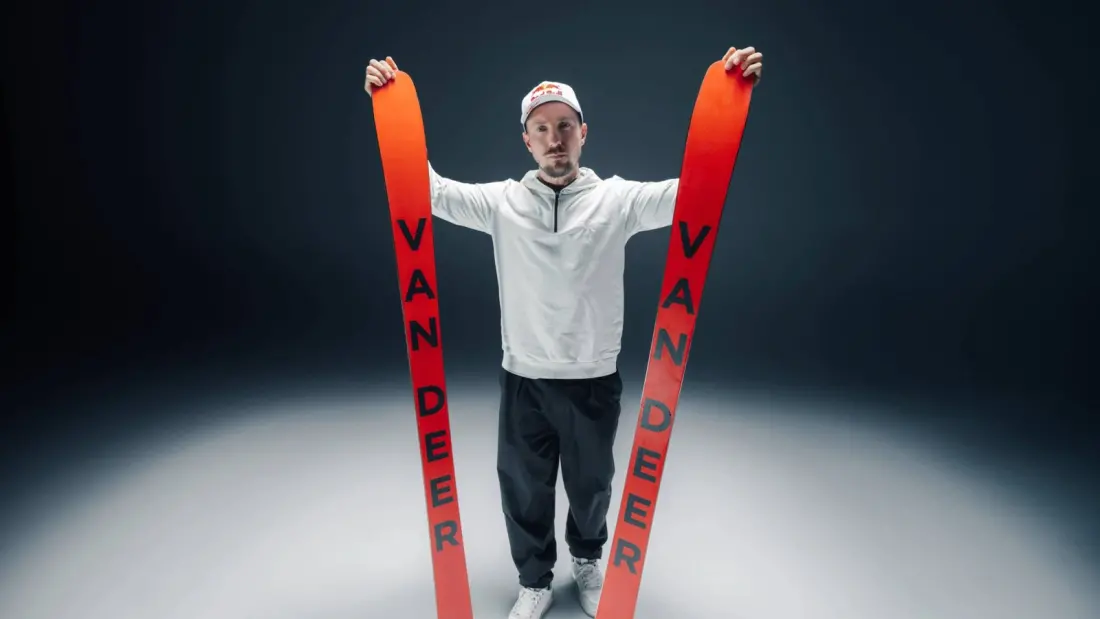
Marcel Hirscher won everything there is to win in ski racing, and since launching VAN DEER-Red Bull Sports he's been pouring that racing know-how into skis for everyday riders. The latest result is the FREERIDE SERIES, a two-ski lineup built in the Austrian Alps and aimed squarely at recreational skiers who want one pair of planks that can do almost anything.
The flagship FREERIDE 98 carries a 98-mm waist, which puts it in genuine all-mountain territory: narrow enough to feel quick and precise on groomers and through bumped-up tree runs, with a surfy tip rocker that adds enough float for powder days. The wider FREERIDE 108, its sibling in the series, leans further toward deep-snow performance if that's more your season.
Under the hood, the build is closer to a race ski than a typical consumer model. There's a beech-poplar wood core reinforced with double titanal and carbon layers, plus full ABS sidewalls that allow individual edge tuning. The intended result is a ski that feels snappy and playful without being nervous, and stays planted when you open it up at speed. Each model also ships with ski-specific tuning recommendations so owners can keep the edges and base close to factory condition for years.
One practical detail worth flagging: although the skis are made in Scheffau am Tennengebirge, a village just south of Salzburg where Hirscher trained as a young racer, you don't need to fly them back to Austria for service. VAN DEER-Red Bull Sports works with factory tuning partners across the United States.
The company runs a deliberately small operation, producing one dedicated series at a time rather than mass-producing a broad catalogue. Skis spend longer in the design and testing phase, and longer under pressure in the press, which the brand says creates a stronger bond between materials and better on-snow performance. Everything is tested at home in the Austrian Alps before it reaches shops.
For travellers, this is a story about gear that suits a particular kind of trip: the one-bag ski holiday where you want a single pair of skis to handle corduroy in the morning, chop at noon and a dump of fresh snow the next day. If you're renting gear for a week in Austria, Colorado or Japan, you may never notice the difference. But if you travel with your own skis, a do-it-all model backed by home-country tuning support removes a real headache, especially in North America where the service network already exists. It's also a glimpse of how former racers are reshaping the consumer ski market, bringing World Cup materials down to a level where confidence, not podiums, is the point.