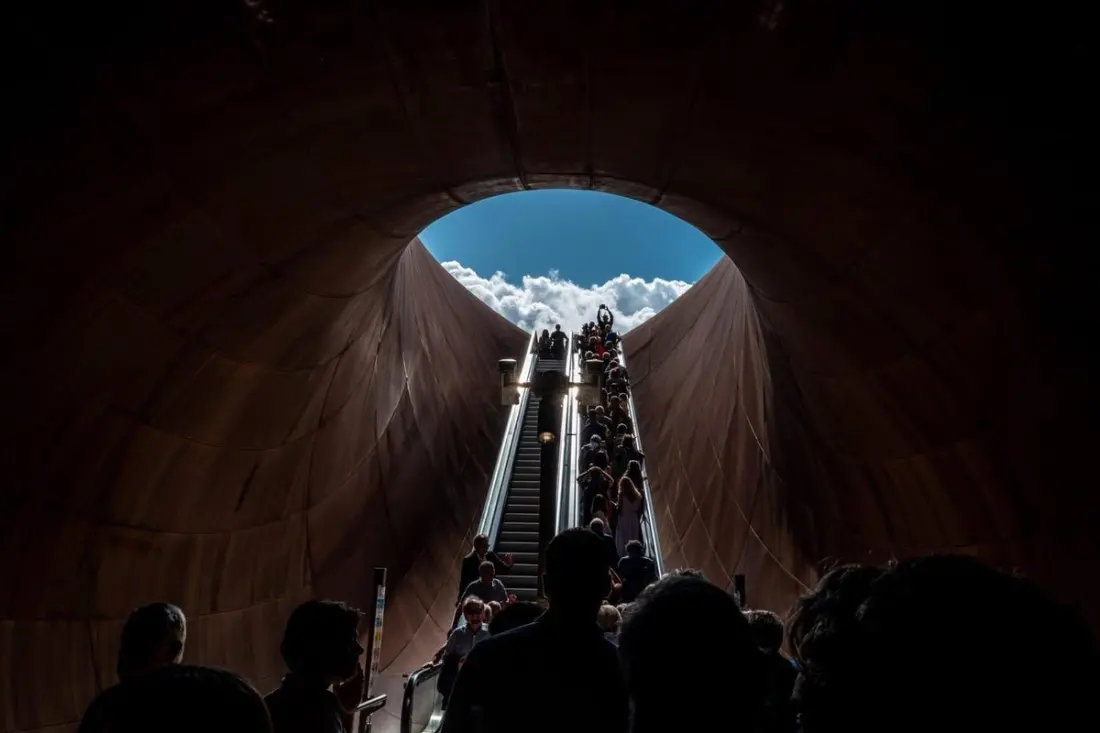
Seven railway stations have been crowned the world's most beautiful for 2026, and the list reads like a destination guide in itself. The awards came from Prix Versailles, the architecture prize scheme tied to Unesco, announced at Unesco headquarters in Paris on 28 September. Judges rewarded creativity, innovation and a connection to local heritage — calling the winners new, iconic urban spaces.
Saudi Arabia and Italy took two spots each. In Rome, the Colosseo–Fori Imperiali Station was singled out for turning a simple commute into an archaeological experience: descending to the platforms is, quite literally, a dive through layers of the city's ancient history. Naples' Monte Sant'Angelo Station earned equally lofty praise — described as a sculpture you enter that sinks into the earth. It was designed by artist Anish Kapoor working with architecture firms Future Systems and AL_A.
In Riyadh, the Western Station features a striking lattice facade, while the National Museum Station takes its silhouette from desert dunes — a nod to the Saudi capital's landscape that also signals the kingdom's big investment in design-led public transport.
Melbourne's Town Hall Station impressed judges with sheer scale: copper vaulted ceilings and wide platforms give it a cathedral-like feel. It's part of the city's new metro tunnel project, and it's the kind of station where waiting for a train doesn't feel like a chore.
France's entry, Lyon Part-Dieu, was recognised for being more than a passthrough. The redesigned hub now includes community spaces, the biggest bicycle parking garage in France and the Place Charles Béraudier gallery — a reminder that the best stations double as public squares.
Rounding out the list, the LAX/Metro Transit Center in Los Angeles was praised for radically rethinking how travellers move between planes, trains and buses — a genuinely useful upgrade for anyone who has endured the old LAX shuttle shuffle.
Why should a traveller care? Because these aren't just pretty buildings — they're places you'll actually pass through, and stations like these can anchor an itinerary. Arrive in Rome and you can step off the Metro straight into the shadow of the Colosseum. In Riyadh, the new stations make exploring a city long seen as car-only far more approachable ahead of the kingdom's tourism push. And in Melbourne, the Town Hall opening reshapes how visitors move between the CBD and its riverside precincts.
Prix Versailles secretary general Jérôme Gouadain framed it well: transport hubs now carry a cultural job — beautiful and sustainable while improving mobility and respecting what's already there. For travellers, that means the era of treating stations as grimy transit gaps between sights is ending. Some of the world's most interesting new architecture is now free to visit, and you see it on the way to the platform.