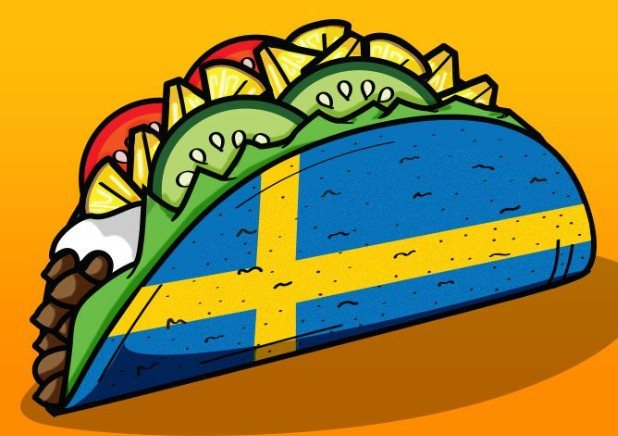
Every Friday evening, millions of Swedish families settle onto the sofa in pyjamas, turn on the TV, and build tacos from packets and jars. It's called Fredagsmys — Cozy Friday — and for most Swedes, it's inseparable from Taco Friday. The ritual is so entrenched that Sweden now tops Europe in per-capita Mexican food consumption, alongside neighbouring Norway, which runs its own taco tradition.
The phenomenon has a surprisingly precise origin story. In 1990, Sweden was shaking off a financial crisis and shoppers were ready to try something new. That same year, TV advertising was legalised for the first time — before then, Swedes had only seen ads at the cinema. Chip maker OLW ran commercials with a jingle proclaiming it was 'cozy Friday time', a slogan so catchy it entered the Swedish dictionary in 2007 and is widely credited with coining the term Fredagsmys itself.
Brands leaned in hard. Old El Paso had struggled to crack the market in the 1980s, but TV spots showing how to assemble a taco changed that. Spice company Nordfalks rebranded as Santa Maria thanks to the popularity of its tortilla and taco range. Food historian Richard Tellström of Stockholm University points out that tacos were genuinely novel — an assemble-it-yourself meal you could eat in front of the television, echoing the smörgåsbord habit of piling everything on one plate. Schools got on board too, with tacos appearing in free school lunches and restaurant taco buffets at teen functions.
The Swedish version of a taco would puzzle many Texans. Alongside the familiar mince, shells, peppers and guacamole you'll find cucumber, peanuts, pineapple and yoghurt-based sauces. Cucumber especially — Sweden has long joked about its 'cucumber time' summers, and the vegetable appears on most dinner tables, from pickled sides to kebab pizza toppings. The local spin produced taco pie (frozen, naturally), taco soup, taco pizza and taco burgers. Notably, the tradition has resisted gourmet upgrading: no slow-cooked meats or homemade shells, just the same packaged spice mixes as ever.
Why should a traveller care? Because Fredagsmys explains a lot about modern Sweden — the love of routine, the comfort-focused hygge-adjacent culture, and the vast Tex-Mex aisle you'll find in every ICA or Coop supermarket, sometimes bigger than the baked goods section. It's also a low-effort way in: accept a Friday dinner invitation and you'll experience the tradition firsthand. For Swedes, as Tellström puts it, the point isn't nutrition — it's that food is a reason to spend time together. Friday is prime time on Swedish TV, not the graveyard slot it is in the US.
One honest caveat: the tradition isn't universal. Aftonbladet reporting shows Tex-Mex sells less well in immigrant-heavy neighbourhoods, and the habit skews towards middle-class Swedish families. But three decades on, Taco Friday remains a fixture — chips, pick-and-mix sweets and all — and a genuinely charming piece of living food culture you can taste the moment you land.
Credit: Cuenca High Life