Miami International is about to demolish one of the most disliked corners of any major US airport. The D60 expansion, a $1 billion project at American Airlines' biggest international hub, will replace the cramped regional boarding area at Concourse D with 17 proper contact gates - and that means no more shuttle buses or outdoor boarding in South Florida heat.
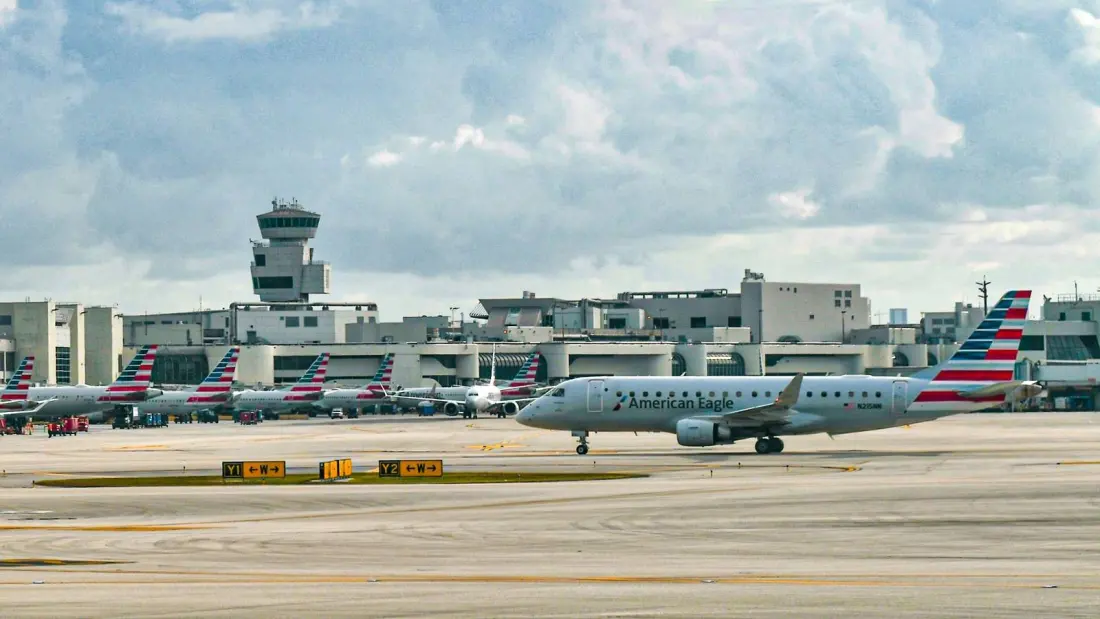
Right now, the 17 regional aircraft positions at D60 share one ground-level waiting space. Passengers flying American Eagle on Embraer and CRJ aircraft operated by Envoy, Piedmont and PSA are bussed to planes parked outside or walk across the tarmac, sometimes queuing in the same crowded hold room as passengers for several other flights. At a hub this size, it's an anomaly.
And Miami is enormous for American: the carrier moves over 60% of all passengers at MIA (61.7% per US DOT data, versus 6.9% for second-place Delta), runs roughly 400 daily departures there, and leans on the airport to stitch together the US with Latin America, the Caribbean and Europe. The airport itself handled 55.3 million passengers in 2025, and Miami-Dade County says its activity generates about $212 billion in business revenue a year.
The new D60 will be a three-level extension of Concourse D. Each of the 17 gates gets its own hold room, and the gates are built for larger regional jets and narrowbodies, giving American flexibility to upsize aircraft as demand shifts. There'll be new dining and retail, an upgraded baggage system, and - crucially - third-level connections to the Customs and Border Protection facility, meaning the gates can handle international arrivals, not just regional hops. Think Bogotá, Panama City, São Paulo and Lima, all among Miami's busiest international routes.
For travellers, the headline change is the end of bus boarding: air-conditioned gate waiting areas, direct jet-bridge access, and a far better experience for anyone with reduced mobility, young kids, or heavy luggage - especially in summer thunderstorm season. Ground handling should get simpler for the airline too, though turnaround gains depend on staffing and scheduling.
Timing to know: ground breaks in 2027, with completion targeted for 2030, though the airport's own capital plan lists 2033, so expect a long construction window. Funding comes mainly from airport bonds plus $34 million in Florida Department of Transportation grants.
If you're connecting through Miami on American in the late 2020s, some D60 disruption is possible, but the end result - a conventional, weatherproof, international-capable set of gates at the busiest concourse of the airport's dominant carrier - should make layovers noticeably less stressful.