The Queen of the Skies almost never existed — at least not as we know it. The Boeing 747, which carried passengers across the globe for more than half a century, traces its origins to a contract Boeing actually lost: the US Air Force's CX-HLS heavy-lift cargo programme in the 1960s.
The programme was born from Cold War strategy. In 1961, the Kennedy administration adopted the doctrine of "Flexible Response", moving away from all-or-nothing nuclear retaliation towards a wider set of options, including the ability to rush conventional forces anywhere Soviet pressure flared up. That meant one thing: massive, fast airlift capacity. President Kennedy announced a buildup of airlift forces in his first defence message to Congress, and the CX-HLS competition followed. Five companies bid — Lockheed, Boeing, Douglas, General Dynamics and Martin Marietta — with General Electric and Pratt & Whitney competing on engines. Defence Secretary Robert McNamara greenlit development in December 1964, and although the Air Force reportedly preferred Boeing's design, Lockheed's lower-cost bid won in September 1965. The result was the C-5A Galaxy, delivered to Altus Air Force Base, Oklahoma, in December 1969. The USAF still flies 52 of them, each capable of hauling over 280,000 lb (127,460 kg) of payload nearly 5,500 miles unrefuelled.
Boeing, stung by the loss, pivoted to the commercial market — and the timing was perfect. Air travel was booming, with traffic expected to double roughly every five years, and airports were already clogging up. Boeing's engineers calculated that meeting 1970s demand with 707-sized jets would mean some 20 million departures a year; shifting long-haul flying to 350-400 seat aircraft could cut that to around 12 million. Bigger planes were the obvious answer.
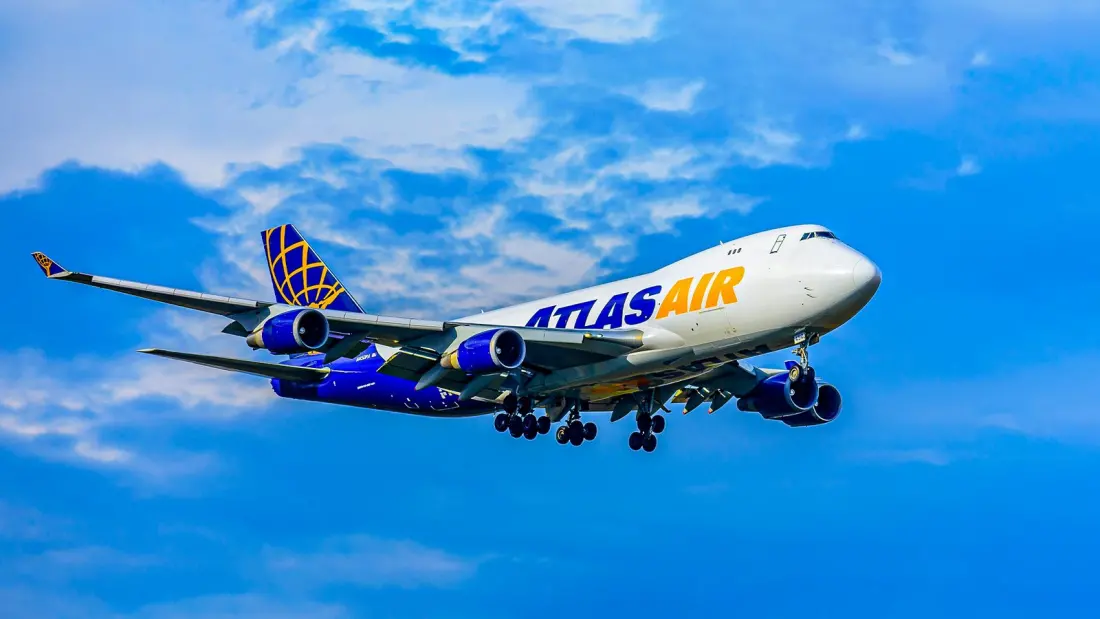
Chief engineer Joe Sutter — later known as the Father of the 747 — reworked the failed cargo design for passengers. The high wing and rear ramp went, but nose loading survived, which pushed the cockpit above the main deck and created the famous hump. Pan Am ordered in 1966, the first aircraft rolled out in 1968, first flight came in 1969, and entry into service followed in early 1970. In its first year, the 747-100 fleet carried over seven million passengers.
The family grew across five generations and 25 variants. By the mid-1980s, more than 670 aircraft had flown some 670 million passengers, and the 747-400 brought fuel savings of 11-15%. The final passenger model, the 747-8i, entered service on 1 June 2012 — 467 seats, a 13,100 km range and General Electric GEnx-2B engines — with Lufthansa as its largest operator at 19 aircraft. But by then twin-engine jets like the 777 could fly the same routes far more efficiently, and production wound down. For aviation fans, the story is a reminder that some of travel's most iconic machines exist because their makers lost the job they were built for.