In 1981, Jack Niedenthal left Pennsylvania for a two-year Peace Corps posting on Namu Atoll, one of the outer islands of the Marshall Islands. Forty-five years later he is still there — former secretary of Health Services, author of an oral history of the Bikini Atoll people, and president of a film company that has made six Marshallese-language features. His recent reflection on how the country changed him is a compelling read for anyone who thinks a stint abroad is just a line on a CV.
Niedenthal's central point is that real cultural immersion demands giving something up. Arriving with typical American assumptions — individual achievement, managed time, measurable success — he found himself among a couple of hundred people whose priorities ran the other way. On the outer islands, relationships outweighed personal ambition, community obligations came first, and generosity was simply expected. Food moved between households, and refusing it counted as an insult. Children circulated freely among relatives; extended family was the basic unit of existence.
He is careful not to romanticise. Island life, he writes, has its conflicts, jealousies and injustices like anywhere else. The hard part was accepting that his own cultural instincts were not automatically correct — that what looked inefficient might serve a purpose he hadn't grasped yet, and that silence often carried meaning. He spent six years on the outer islands mostly listening, and credits Marshallese elders, many with no formal higher education, with teaching him more than any classroom.
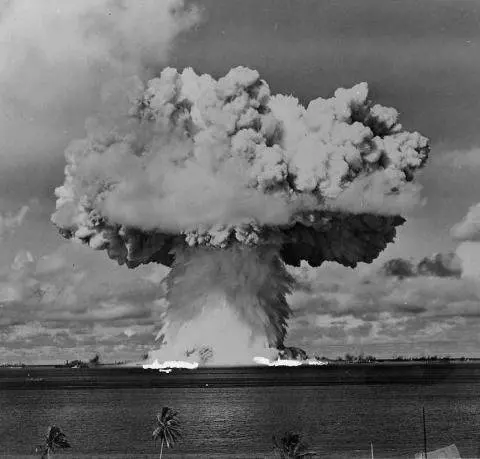
A large part of his life has been spent working with the people of Bikini Atoll, displaced from their homeland by US nuclear testing. Listening to decades of testimony about losing home — not just land, but family networks, traditions and belonging — shaped his views on dignity, justice and forgiveness in ways he says no American life could have.
His most useful insight for travellers is a warning: living somewhere doesn't change you by itself. He has watched foreigners spend decades in the Marshall Islands without ever really leaving home emotionally. Transformation only happens if you let another society challenge not just what you think but how you think — which means tolerating confusion, embarrassment and being flat-out wrong, sometimes for years.
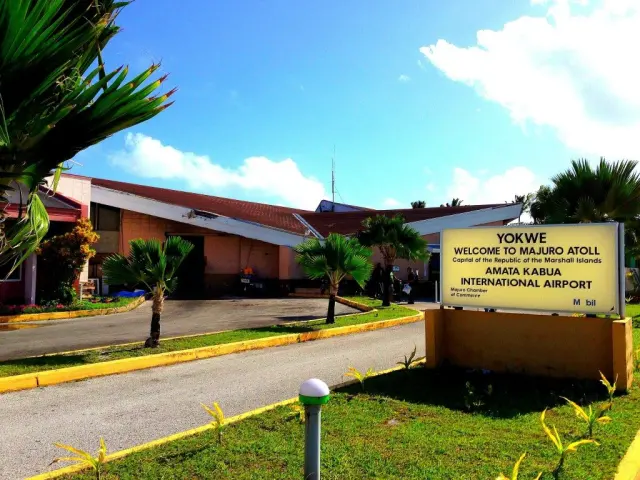
Why does this matter to a holidaymaker? The Marshall Islands see very few visitors, and it's easy to pass through Majuro without engaging with much beyond the lagoon. Niedenthal's story is a reminder of what's on offer if you go slower: a culture where sharing is structural, where elders hold knowledge refined over generations of island survival, and where hospitality runs deep even when material wealth is thin. For those considering longer stays — volunteering, teaching, research or remote work — his account is also a realistic preview: the discomfort is part of the deal, and it's where the value lives.
You don't need 45 years to take the lesson. Go with the assumption that you may be the one who doesn't understand, ask before you photograph, accept the food, and let the place argue with your worldview a little. As Niedenthal puts it after four and a half decades, he's still being humbled — and that, arguably, is the point.