A startled dog, an open gate, ten seconds of panic — that's all it takes to lose a pet. But the gadget you clip onto a collar or implant under skin won't necessarily do what you expect, and a recent breakdown by Antonio Condor, head of innovation at Hunter Peru and Hunter Pet, makes the case for layering your tech rather than trusting one device.
His framing is simple: each tool answers a different question. Who owns this animal? How do you reach the owner? And where is the pet right now?
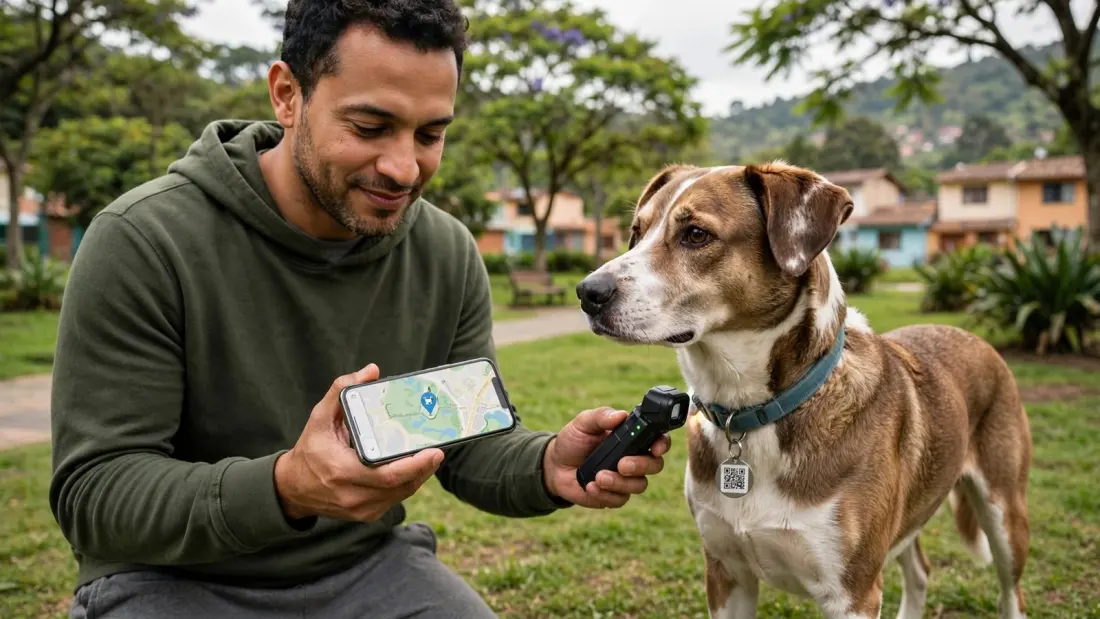
Microchips are the identity card. A tiny implant carries a unique registration number, but it has no battery and no GPS — someone has to actually find your pet and scan it with a reader before you hear anything. QR tags on a collar are the visible middle ground: a finder scans the code with a phone and gets the owner's contact details, depending on how the registration is set up.
GPS trackers are the only option that actively shows location, using satellites plus a mobile network to push updates to your phone. But they're not magic. Many devices report periodic positions, so the app may be showing the last known spot rather than where your pet stands at that moment. Tunnels, tall buildings and roofs can block satellite signals, and no phone coverage means no data getting through. Many models add geofencing — virtual boundaries that ping you when your pet crosses them.
Worth knowing the difference between these and Bluetooth tags like Apple's AirTag. AirTags have no satellite tracking at all and rely on nearby Apple devices to relay a location, which makes them decent in crowded cities and weak on farms or in forest. On price, one Colombian pet-tech guide puts AirTags at roughly US$13-60, while GPS collars run about US$60-150 plus a monthly subscription of roughly US$6-15 — figures from a commercial source, so treat them as ballpark. AirTags need no subscription.
So which setup? Condor suggests GPS trackers suit escape artists, roamers, keen explorers and pets that travel often; a microchip works as permanent identification for every animal; a QR tag adds visible ID anyone can act on. The microchip-plus-QR-tag combination is a sensible baseline, with GPS reserved for animals whose lifestyle makes wandering likely.
Two practical caveats. Veterinary dean Maria Lourdes Velarde of Peru's Universidad Cientifica del Sur warns that a badly fitted or oversized collar can cause skin irritation, injury or entrapment — check the fit, especially for small animals. And Colombian owners getting a chip implanted can register it in Bogotá's online animal registry, which ties the chip to the caretaker's details and helps reunite lost pets with their people.
For travellers, the takeaway travels well: before a move, a road trip or a holiday with the dog, check that registrations are current, the tracker's subscription is active and the collar fits. No single gadget brings a lost pet home — a layered setup does.
Story via Colombia One.