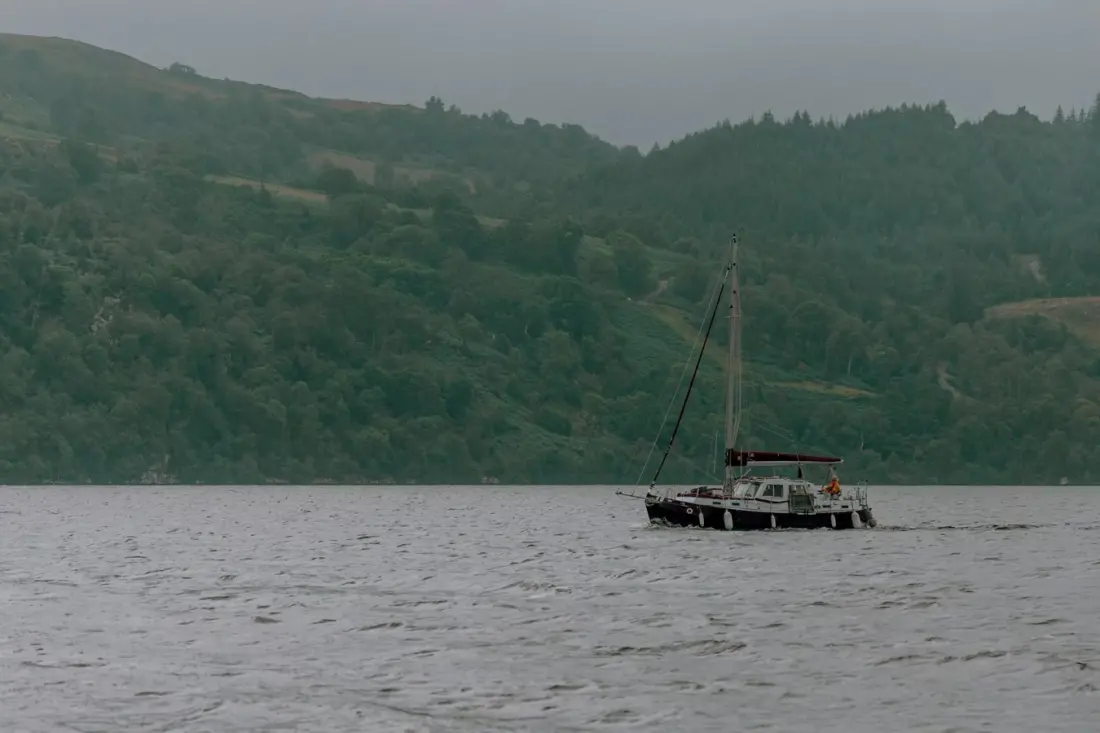
Loch Ness looks like exactly the kind of place a monster would live. The loch stretches about 37km through Scotland's Great Glen, plunges to roughly 230m, and the Highlands mist can swallow the shoreline in minutes. Small wonder the world's most famous lake monster set up shop here.
The legend is older than you'd think — and younger than you'd expect. A story from AD 565 tells of St Columba scaring off a water beast near the River Ness, but it appears in a book of miracles written over a century later, and describes a river creature, not a resident of the loch. Scotland's folklore already brimmed with kelpies and the each-uisge, a water horse that lured people to watery deaths. Nessie as we know her is a 20th-century creation.
The modern era kicked off in 1933, when hotel manager Aldie Mackay reported an enormous creature in the water and the Inverness Courier ran the story. Later that year, George Spicer and his wife described a long-necked animal crossing the road in front of their car — and the classic Nessie image was born. Better roads and hungry newspapers did the rest, and monster-hunters began arriving at the loch.
Then came the famous 1934 'Surgeon's Photograph', published by the Daily Mail and credited to London surgeon Robert Kenneth Wilson. The grainy image of a long neck rising from the water convinced the world for decades. It was faked: big-game hunter Marmaduke Wetherell, snubbed by the Mail after an earlier assignment, built a small model head and fixed it to a toy submarine. The Science Museum Group now officially records it as a hoax — a putty-covered toy.
That doesn't mean every witness was fibbing. The loch's dark water, shifting light and boat wakes can easily masquerade as humps, and researchers point to otters, deer, birds and floating logs as likely culprits. Once a place is famous for a monster, every ripple becomes a sighting.
Science has weighed in, too. Operation Deepscan in 1987 scanned the loch with a fleet of sonar boats and logged some unexplained contacts, none confirmed. In 2018, geneticist Neil Gemmell of the University of Otago led a study of environmental DNA from 250 water samples. No plesiosaur, shark, catfish or sturgeon — but plenty of eel DNA, leaving open the possibility that unusually large eels explain some sightings.
So why go? Because standing at the loch's edge, with the ruins of Urquhart Castle above the water and mist drifting over the glen, the mystery feels less like a puzzle to solve and more like the best atmosphere in the Highlands. Nessie may be folklore plus a toy submarine, but she's the best excuse you'll ever get to linger by a loch. Source: Getaway South Africa