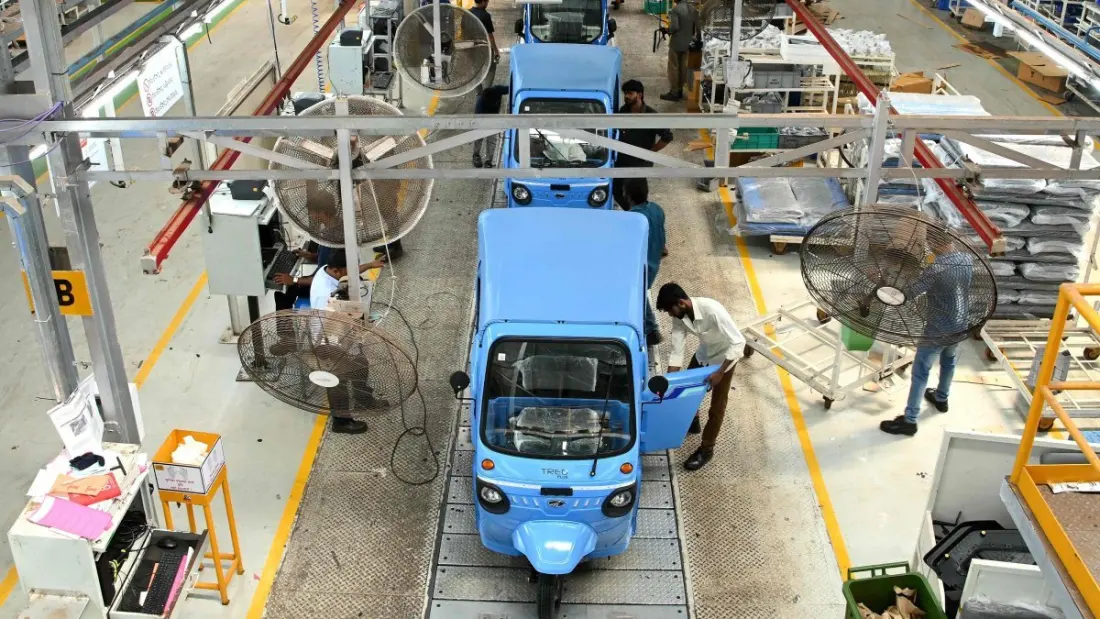
Every 90 seconds, an electric three-wheeler rolls off a production line in India. That pace is a fair snapshot of a country quietly leading the world in one corner of electric transport: the humble auto rickshaw, the vehicle most visitors end up riding at least once.
In September, more than one in two new three-wheelers sold in India was electric — a striking contrast with electric cars (8.5% of new sales) and two-wheelers (11.6%). Mahindra's last-mile mobility arm, one of the biggest manufacturers, says its EV penetration has grown sixfold in five years. The company is even a finalist for Prince William's Earthshot Prize, due to be awarded in Mumbai on November 17.
The shift started modestly. E-rickshaws first appeared on Delhi's streets over a decade ago, often cobbled together in roadside workshops with Chinese batteries bolted onto modified pedal tricycles. Today they're a mainstream industry, and in cities across northern India they've replaced the growl of petrol tuk-tuks with something far quieter — queues of them now line up outside railway stations and markets.
What's driving it isn't green idealism, but maths. Drivers like 31-year-old Afroz Alam in Hyderabad, who swapped his gas model for an EV this year, save several hundred rupees a day on fuel — enough to pay off the loan on the pricier electric version. Research from think-tank CEEW found petrol three-wheelers cost more than twice as much per kilometre to run over their lifetime. For a vehicle that works dawn to dusk, the savings stack up fast.
The change also matters to policymakers: India imports most of its oil, and cheaper transport fuel helps. Climate think-tank Ember reckons India already consumes less transport fuel per person than China did at a similar income level.
There are still bumps. Adoption is patchy — e-rickshaws are everywhere in Lucknow but scarce in Mumbai, where drivers have nowhere to park and charge. Supply chains wobble too: China's restrictions on rare-earth magnets last year forced some Indian makers to slow or halt production, and most battery cells are still imported.
So what does this mean for your trip? Practically, a lot. In much of northern India, the rickshaw that ferries you from the station will be electric: quieter, no exhaust fumes in your face, and often cheaper. Drivers are generally happy to chat about it — several quoted in the original report say the savings speak for themselves. Just be aware that in bigger cities like Mumbai, finding an e-rickshaw can be trickier than in places like Lucknow or Delhi. And don't be surprised if your ride is near-silent; hail one before it glides past you.