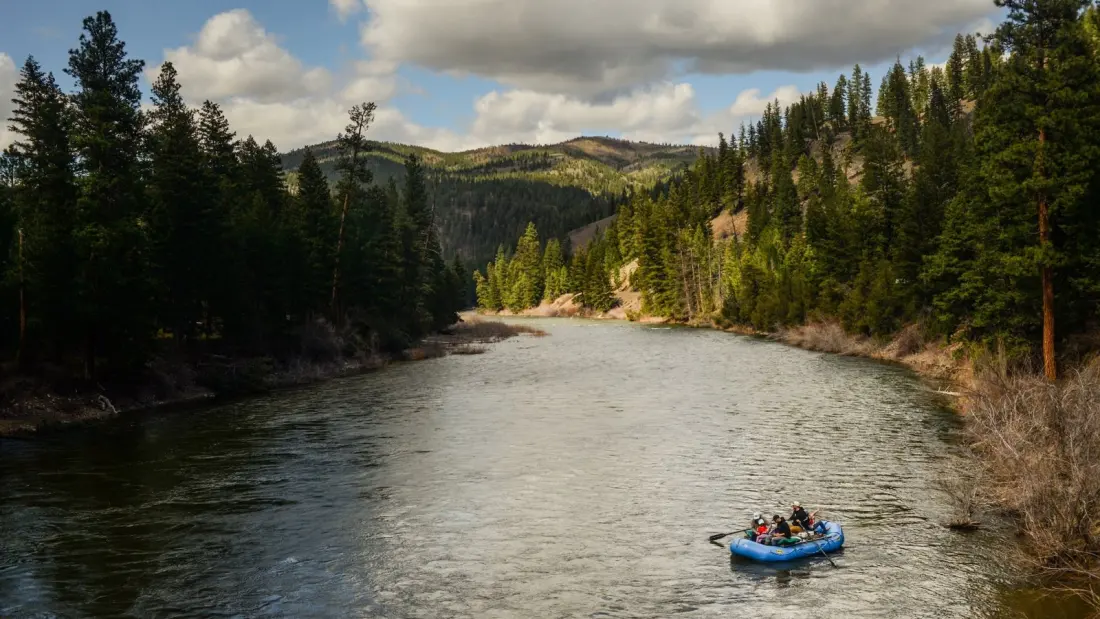
Bonner, Montana — population around 2,700 — sits 100 yards from the Blackfoot River, the snow-fed, 130-mile trout stream made famous by A River Runs Through It. In March 2026, residents learned that Idaho tech firm Krambu wanted to convert the historic Bonner Mill, a 169-acre former sawmill on the riverbank, into a 240,000-square-foot AI data center cooled with river water.
The numbers worried people. The proposal called for drawing 16 million gallons from the Blackfoot in July and August — precisely the months when the river runs lowest and trout need cold water most. Activists with the Montana Environmental Information Center also flagged the power draw: roughly a megawatt, about what 800 homes use in a year. Companies like Krambu specifically hunt for old mill sites because their energy infrastructure is already in place.
What happened next is a case study in local organizing. Bonner resident Brenna Love, who grew up rafting the river, started with one-on-one conversations between neighbors, then helped fill a March 20 public meeting at Saint Ann Catholic Church to standing room only. Over the following months, opposition spread through HOAs, libraries, coffee shops and social media, and a petition drew more than 50,000 signatures. Krambu reworked its application five times between March and June; each version met the same wall of public pushback. On July 6, 2026, the mill's property manager withdrew support, and the project died. A Krambu spokesperson later said new leadership has no plans to revive it.
The ripple effects go beyond one town. Missoula County commissioners responded with a one-year moratorium on new zoning permits for large-scale data centers while they draft tougher rules. And Bonner's fight fits a much bigger pattern: Public Lands Intelligence counts 1,302 data centers proposed or under construction across the US, with projects crowding close to treasured landscapes — near Mammoth Cave National Park in Kentucky, two miles from Horseshoe Bend in Arizona, and around 115 miles from Yellowstone's north entrance, where an 8-square-mile campus has been proposed.
For travellers, this matters because the wild rivers and quiet towns that draw people to the Rockies are increasingly in the path of big tech's buildout — and because Bonner shows those places aren't defenceless. Montana's constitution actually guarantees a clean and healthful environment as a fundamental right, and outdoor recreation pumps $3.8 billion a year into the state economy, so locals have both legal and economic muscle. Advocates warn other states aren't so lucky: water-use details are often hidden behind NDAs, and regulation is fragmented. If you care about the places you visit, the Bonner lesson is simple — organized local voices can still win.
Story reported by Outside Online.