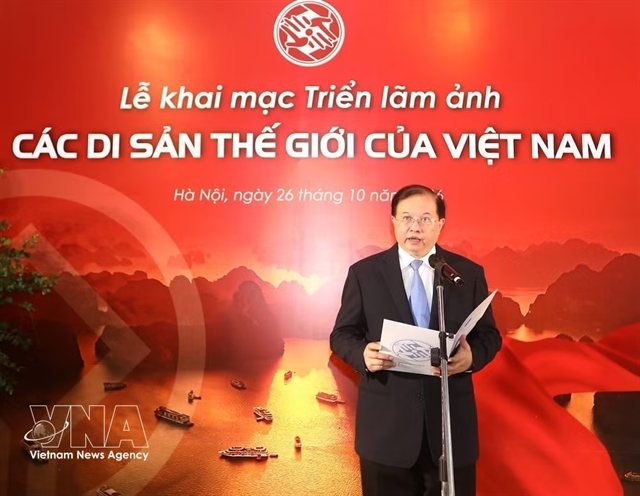
A new photo exhibition in Hanoi is packing three decades of UNESCO recognition into a single viewing trip. World Heritage Sites of Việt Nam opened on October 26 at the 29 Hàng Bài Exhibition House in Cửa Nam Ward, timed to run through November 3 — just ahead of Việt Nam Cultural Heritage Day on November 23 and Vietnam Culture Day on November 24.
The show features 100 photographs covering 30 Vietnamese heritage sites and assets, spanning everything from world cultural and natural sites to intangible traditions and documentary collections. That means a visitor can move from images of Hạ Long Bay's limestone towers to portraits of artisans practising Cham pottery-making without leaving the building.
The headline sights are all here: the Complex of Huế Monuments, Hội An Ancient Town, Mỹ Sơn Sanctuary, Phong Nha-Kẻ Bàng National Park, Tràng An, the Imperial Citadel of Thăng Long, the Hồ Citadel and the Yên Tử-Vĩnh Nghiêm-Côn Sơn, Kiếp Bạc complex. But the more intriguing material is the intangible list — Huế royal court music, the Central Highlands gong culture, Bắc Ninh quan họ folk singing, Phú Thọ xoan singing, southern amateur music, bài chòi, Then practices and Thái xòe dance.
There's also a deliberately sober corner: heritage flagged as needing urgent protection, including ca trù singing, Cham pottery-making and Đông Hồ folk painting. Documentary treasures get their own spotlight too, among them Nguyễn Dynasty woodblocks, the doctoral laureate steles at Hanoi's Temple of Literature and an archival collection tied to composer Hoàng Vân.
Deputy Minister of Culture, Sports and Tourism Tạ Quang Đông used the opening to argue that heritage deserves promotion through imagery and wider public access, especially as Vietnam digitalises and integrates internationally. Photography, in this framing, isn't just art — it's a preservation tool and part of the cultural economy.
For travellers, the exhibition works as a planning shortcut. Vietnam's UNESCO list is spread across the length of the country, and most first-time visitors see only Hội An and Hạ Long Bay. Seeing all 30 together — including obscure entries like the Hồ Citadel in Thanh Hóa or the newly inscribed Yên Tử complex — is a useful way to decide which secondary sites deserve days on a second trip. The intangible entries are handy too: they point towards experiences like quan họ singing in Bắc Ninh or gong performances in the Central Highlands that rarely make standard itineraries.
If you're in Hanoi before November 3, entry is free-flowing and the venue sits centrally in the old French quarter grid, an easy hop from the Temple of Literature — whose steles appear in the photos — or the Imperial Citadel, so you can pair the exhibition with a real-world site the same afternoon.