The Dominican Republic's Ministry of Education has called off Tuesday classes in schools located in flood-prone parts of the country, after weather authorities placed a large swath of the south and southwest under alert. The preventive measure affects schools near rivers and ravines, along the coast, or in landslide-risk zones across provinces covered by a yellow alert.
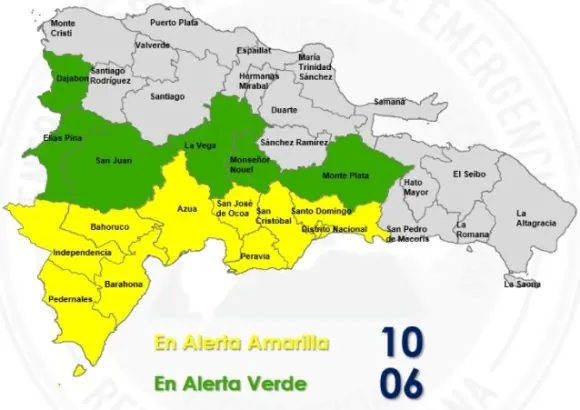
The move follows a bulletin from the Emergency Operations Center (COE), which currently has ten areas on yellow alert: Greater Santo Domingo, the National District, Pedernales, Barahona, Bahoruco, Independencia, Azua, Peravia, San Cristóbal and San José de Ocoa. Another seven provinces sit on green alert, the lower level: Elías Piña, Dajabón, La Vega, Monte Plata, Monseñor Nouel, San Juan and Sánchez Ramírez.
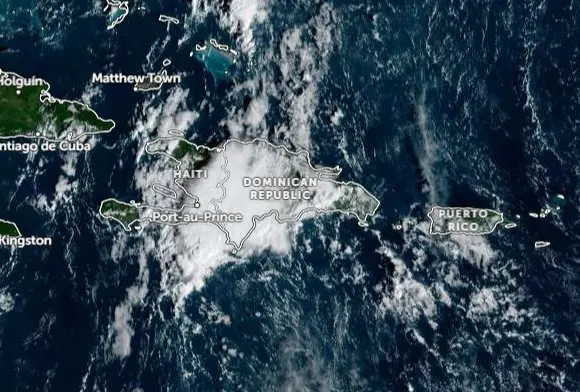
The culprit is a trough sitting over the island, bringing the kind of persistent rain that swells rivers and inundates low-lying neighbourhoods. The Education Ministry's risk management directorate said local education officials had flagged conditions that could put students and staff at risk, hence the closures. Regional and district education authorities are handling the logistics of putting the suspension into effect.
For travellers, this is a useful snapshot of how the Caribbean's wet season plays out in the Dominican Republic. The provinces on yellow alert include some of the country's most visited and most scenically dramatic ground: the capital Santo Domingo and its surrounding metro area, the surf-and-desert far south of Pedernales, and the lush Barahona-Bahoruco coast along the Caribbean's southwestern shore. Heavy rain here can mean localised street flooding in Santo Domingo, washed-out rural roads, and river crossings that become impassable without warning.
If you're in the country during an alert, keep an eye on COE bulletins, which are published in Spanish and picked up widely by local media. Expect occasional disruptions: excursions to waterfalls and mountain areas in places like San José de Ocoa or La Vega may be paused, and coastal boat trips can be pulled at short notice. Roads between the capital and the southwest (the Barahona route) can suffer rockfall and flooding in wet weather, so build in extra time and check conditions before driving.
The closures also underline something practical: Dominican authorities move early on weather risk, suspending school and activating alerts before conditions peak. Travellers should treat those alerts as a genuine signal rather than a formality — adjusting plans, avoiding riverbanks and ravines, and staying out of floodwater are the standard advice. Storms tied to troughs typically pass within a day or two, so a flexible itinerary usually absorbs the disruption without much drama.
Bottom line: if you're heading to the DR's southern provinces during the wetter months, pack patience along with the sunscreen, follow COE updates, and be ready to shuffle a day of activities if the rain arrives.